What are the US Marines being turned into?
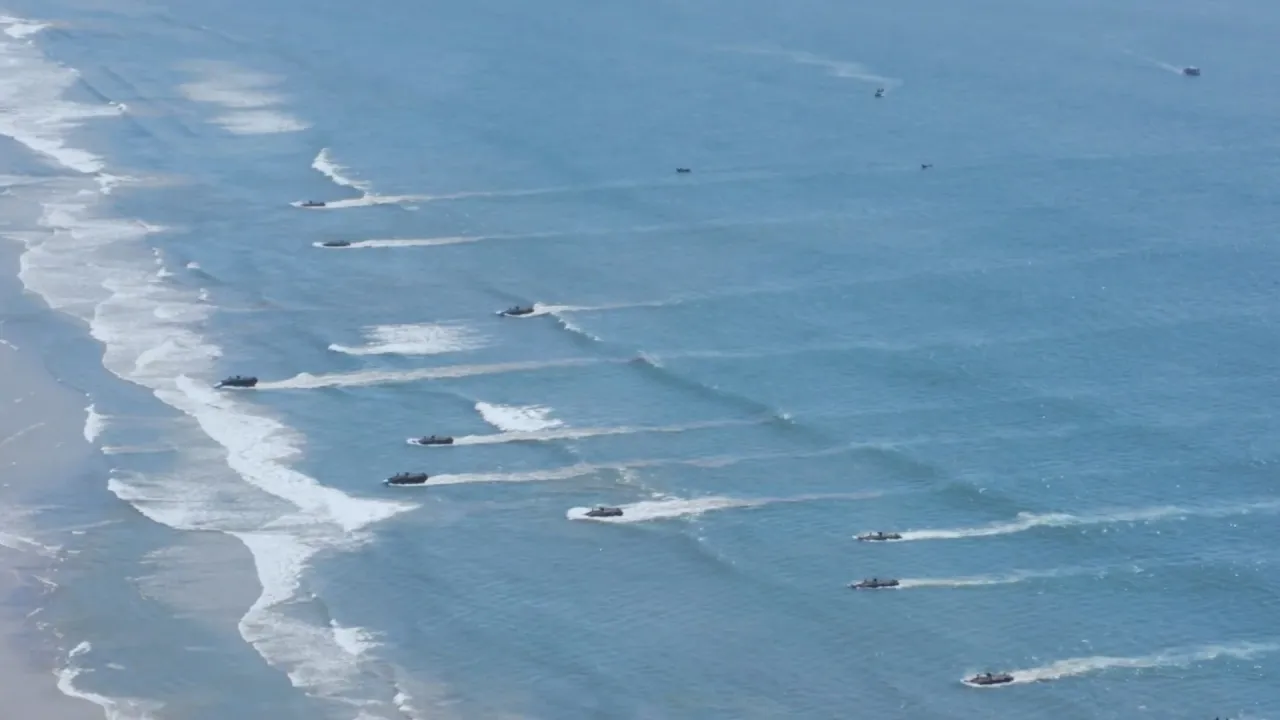
Armored vehicles on their way to the shore
The US Department of Defense (Pentagon) is implementing a major Marine Corps restructuring program called Force Design. It primarily affects several types of combat and support vehicles: some of these designs have already been deployed to combat units and are participating in exercises. A recent event demonstrated how the Corps's image is changing in practice.
Anniversary events
In 2025, the US Marine Corps celebrated its 250th anniversary. A number of celebratory events were held to mark the anniversary. One of these took place in late July 2025 at the Camp Pendleton training grounds in California: a demonstration exercise showcased the Corps's updated look and modern capabilities.
The exercise opened with an amphibious landing on the coast, which was defended by enemy forces. The Marines reached the shore by water and air, employing almost the entire range of available landing craft, amphibious and aviation techniques.
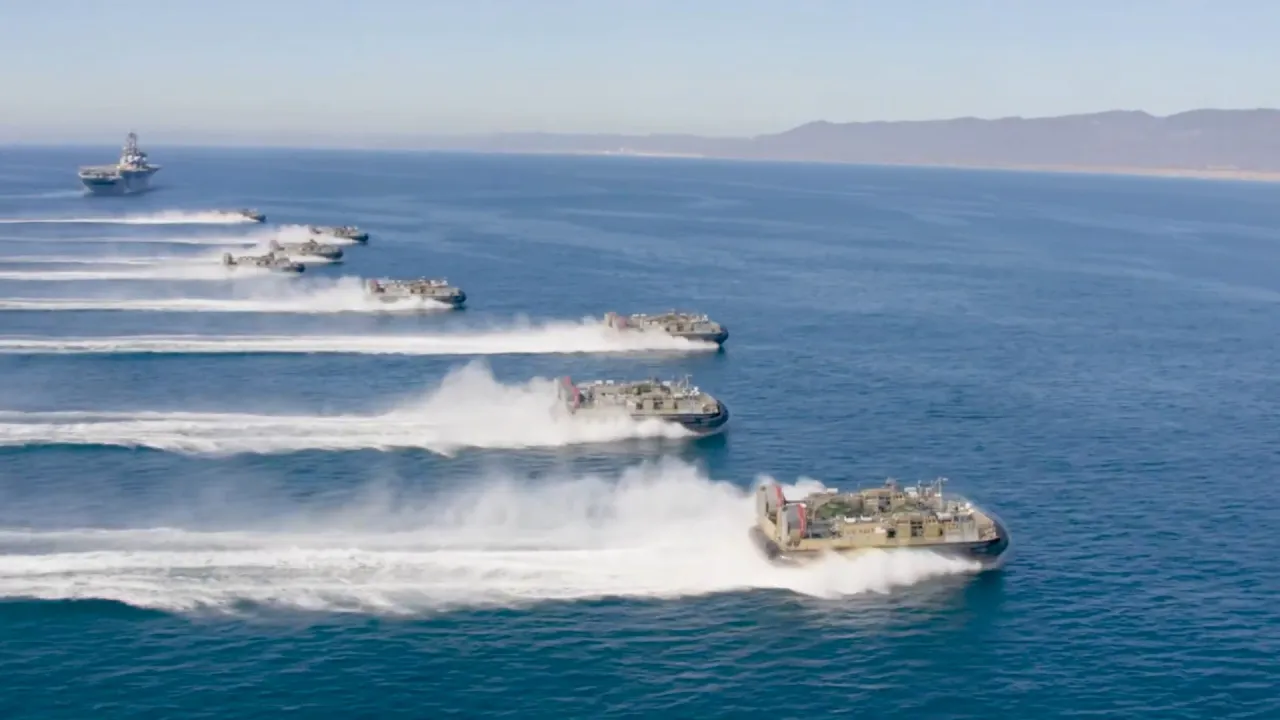
LCAC boats with non-floating equipment on board
The Marine Corps was assisted by the Navy. The amphibious assault ship USS Boxer (LHD-4) played a significant role in the exercises; one of the San Antonio-class transport docks was also involved. These ships delivered amphibious vehicles to the naval training area and supported helicopter operations. The Navy also provided LCAC hovercraft, which landed some of the combat vehicles directly on the beach.
Amphibious armored vehicles (ACVs) made their way to shore under their own power, while wheeled armored vehicles (LAV-25s) were also on display at the training ground. Several vehicle modifications, each with a different armament and equipment, participated in the exercise. Those equipped with electronic warfare systems stood out from the crowd—presumably to protect other vehicles from modern threats such as strike aircraft. drones and high-precision munitions with radio command guidance.
The boats delivered JLTV armored vehicles, M142 HIMARS multiple launch rocket systems, NMESIS launchers, and other equipment. LCACs also brought M777 towed howitzers ashore and deployed them.
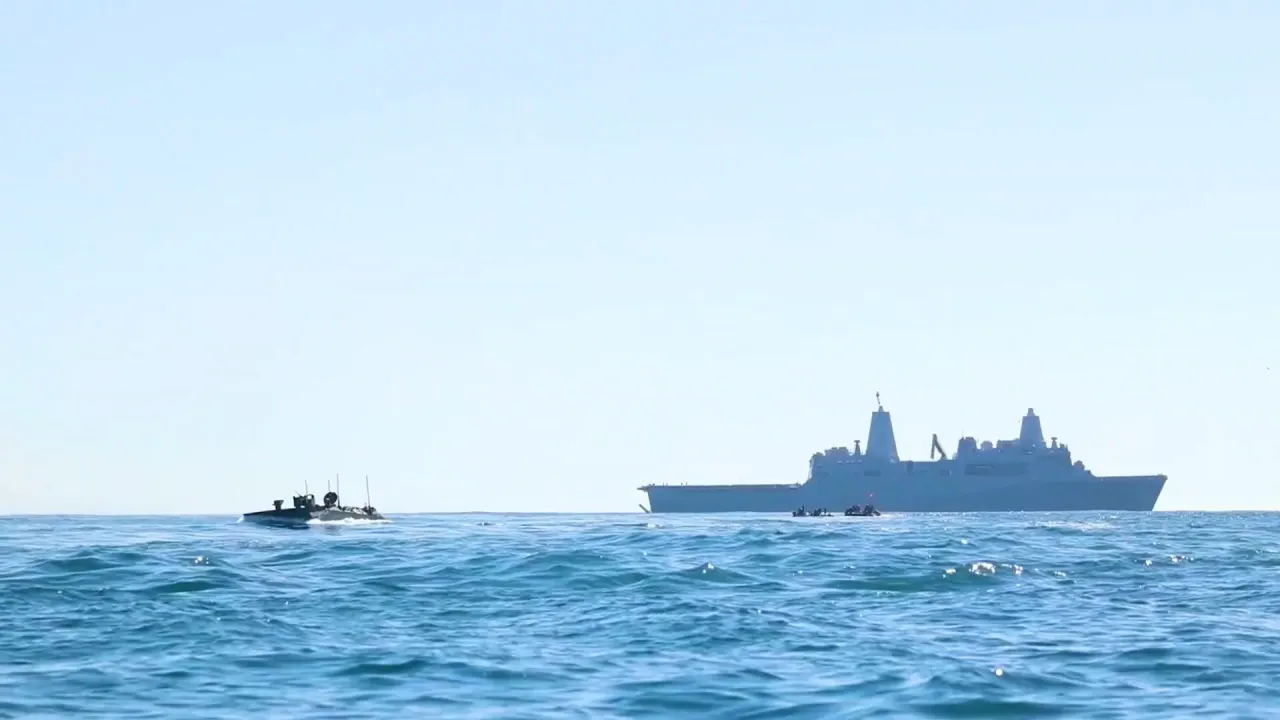
An ACV armored personnel carrier in front of a San Antonio-class landing ship.
An airborne assault also took place. CH-53 Sea Stallion helicopters of various modifications and MV-22 Osprey tiltrotor aircraft landed troops on the shore; the scenario also included a paratrooper landing. F-35B fighter jets supported the landing from the air.
The units then moved on to operations against a simulated enemy: they practiced maneuvering on land and deploying to positions. The riflemen stormed a simulated building, and artillery и missile The systems were operating at distant targets. Live fire was conducted at the firing range.
Following the exercises, the Pentagon press service produced a promotional video. Footage from the naval and land training grounds accompanied speeches by officials and statements about the role of the Marine Corps and its importance to national security.
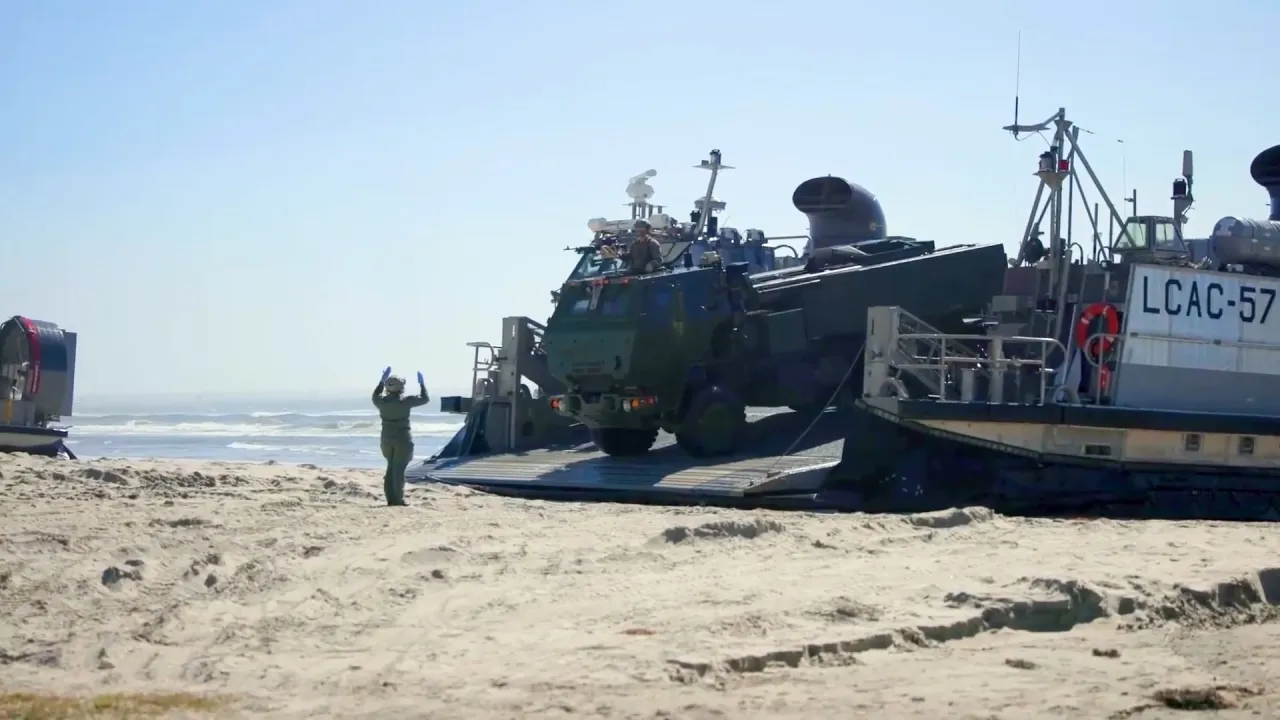
Unloading the HIMARS MLRS
New look
The Marine Corps regularly undergoes modernization programs of varying scale. The latest major modernization plan, Force Design, is currently underway.
Development took place in the second half of the 2010s, and the final plan was presented in 2020. Initially, it was called Force Design 2030—the date indicated the implementation deadline. Later, 2030 was removed from the title, but the basic principles remained the same.
Force Design is changing the organizational structure of Marine Corps units. Its core is the Marine Littoral Regiment (MLR). Such a regiment consists of a command element and a littoral combat group—an infantry battalion reinforced by an anti-ship missile battery. These are supplemented by battalions Defense and logistics, as well as headquarters and communications units. It is this missile battery, not the classic regimental artillery, that determines the regiment's combat specialization.
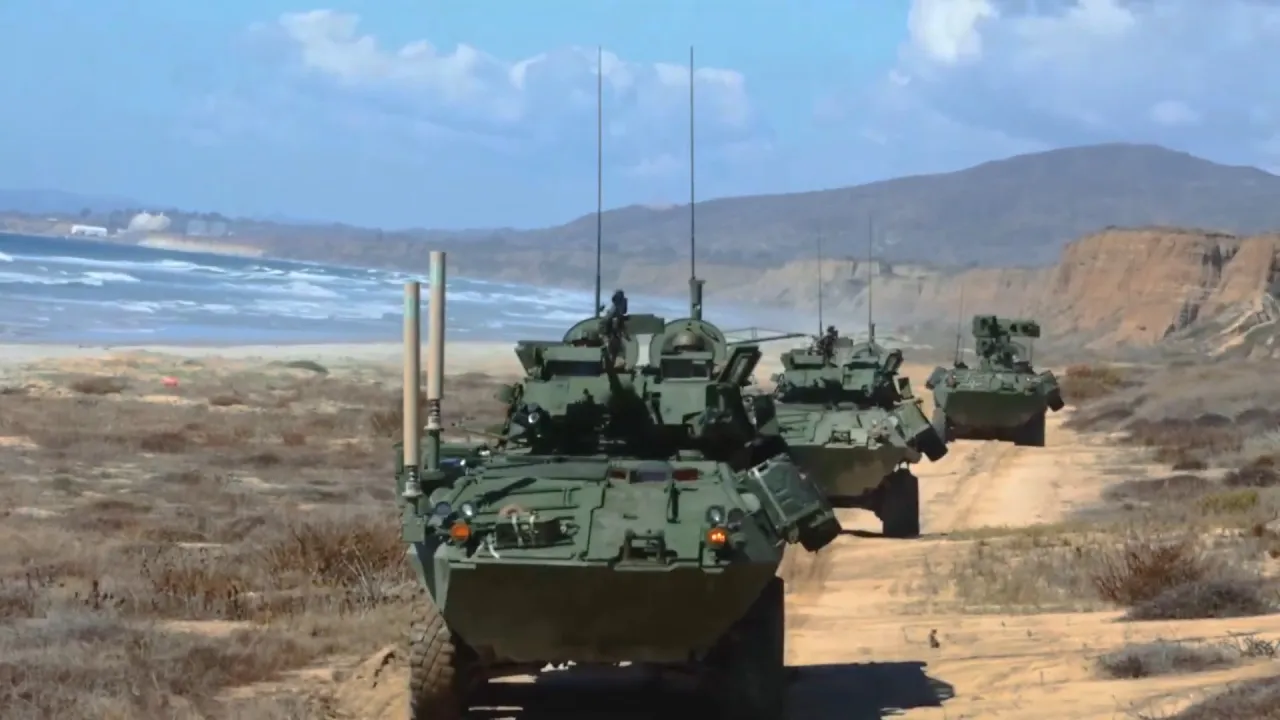
A column of LAV-25 armored vehicles
The program calls for a major rearmament of the units. The Marine Corps has been completely removed. Tanks M1A1 Abrams: Tank battalions were disbanded, and the equipment was transferred to the army and reserves. At the same time, the replacement of amphibious armored vehicles for infantry transport began. The role of tube artillery is being reduced in favor of rocket artillery, autonomous launchers with various types of missiles are being introduced, and special attention is being given to small and medium-sized unmanned aircraft.
The abandonment of tanks and the reliance on missile-focused "littoral regiments" became some of the program's most controversial decisions. A group of retired Marine generals publicly opposed them, arguing that these steps deprive the Corps of versatility and the ability to conduct full-fledged combined arms operations beyond its narrow anti-ship mission. Supporters of Force Design counter that the freed-up resources and personnel are being redirected to missions that are more important in the Pacific theater—anti-ship missiles, air defense, reconnaissance, and DronesThe dispute is not yet closed.
The program also affects the landing force. fleet Navy: construction of large landing ships and new types of boats will continue.
Prospective samples
The Marine Corps' new look is based on a number of advanced equipment models, some of which are already in active service or undergoing field trials.
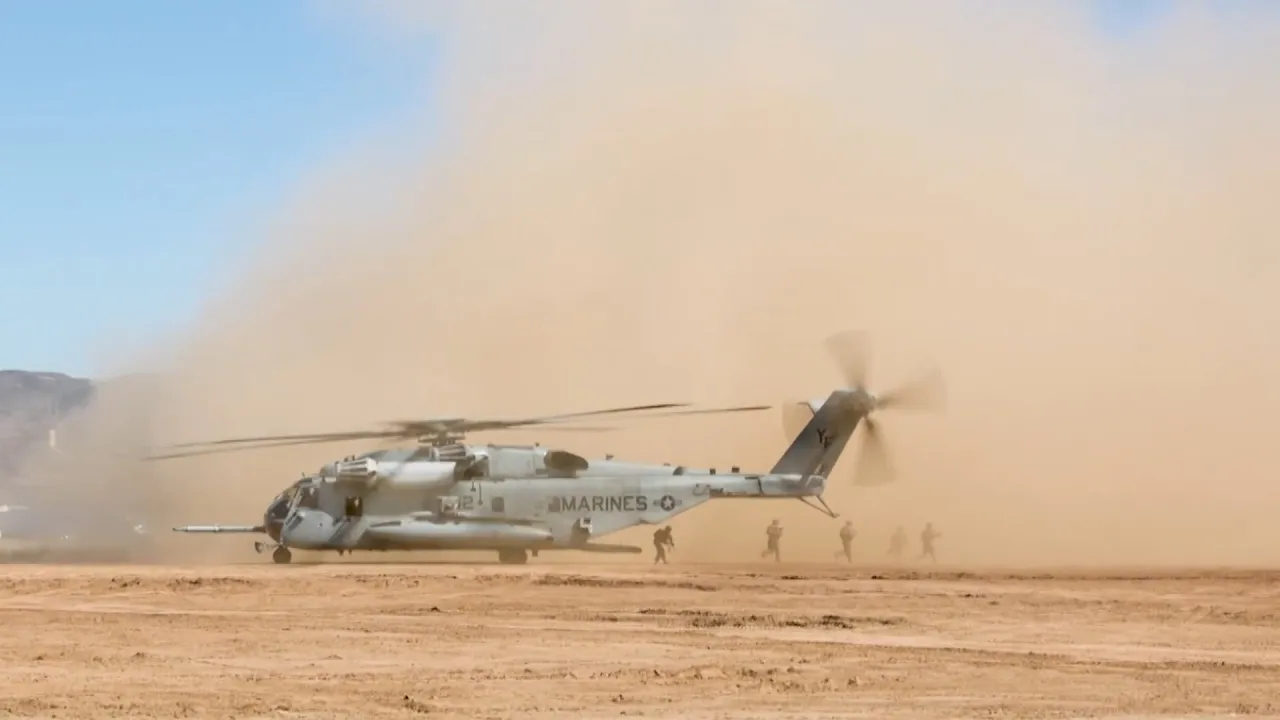
Helicopter landing
One of the major developments of recent years is the ACV family of armored amphibious vehicles on a common wheeled chassis. It comprises four variants: the ACV-P armored personnel carrier, the ACV-30 infantry fighting vehicle, the ACV-C command post vehicle, and the ACV-R recovery vehicle. Currently, the ACV-P and ACV-C are the most widely used vehicles, while the ACV-30 and ACV-R remain in the early stages of development and testing.
The Pentagon awarded the first contract for pre-production production of 116 ACV-P vehicles in 2018. In the following years, contracts for serial deliveries of the ACV-P and ACV-C followed, totaling more than two hundred vehicles. Public reports list the deliveries by individual batches, without a breakdown by year or variant, so the final figures can only be approximated. There is also an order for fighting compartments for the ACV-30, but production of this vehicle has not yet begun.
In total, Force Design plans to purchase approximately 632 ACVs—a reduction from the original plan of over a thousand units. These will replace the AAV7A1 amphibious vehicles, which were officially retired in 2025. However, the new vehicles will be fewer in number than those retired: it's not a one-for-one replacement.
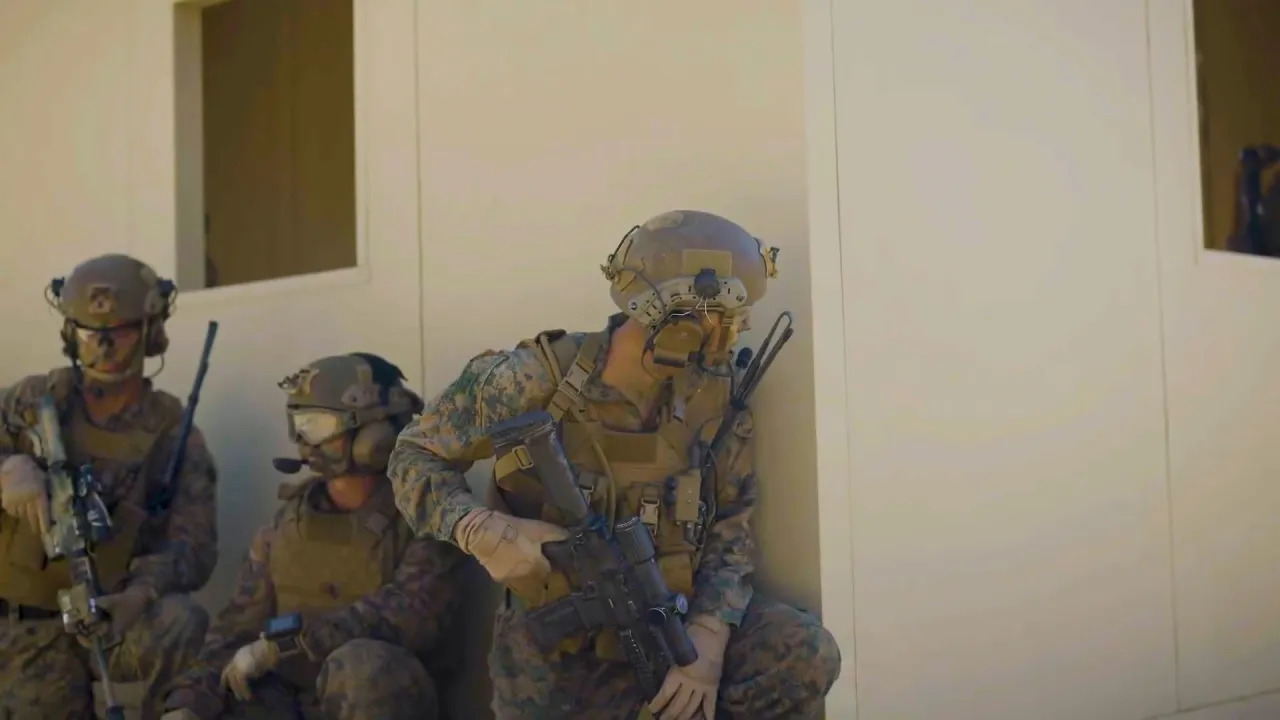
Marines at the training ground
Another important example is the NMESIS coastal missile system. Developed at the beginning of the decade, it is currently undergoing military testing and operational trials, including deployment abroad. The system is assembled from existing components with the addition of new solutions.
Its core is the ROGUE-Fires autonomous self-propelled launcher on an unmanned (unmanned, remotely and autonomously controlled) JLTV chassis. It navigates its route, reaches a firing position, and prepares to launch missiles.
The NMESIS system carries two NSM anti-ship missiles. These are designed to engage surface targets at ranges exceeding 185 km (over 100 nautical miles). Consideration is also being given to equipping the ROGUE-Fires with other types of munitions, including the advanced Maritime Strike Tomahawk cruise missile.
Mobility and efficiency
The program has several key goals. The primary one is to optimize the Corps' composition to meet the Pentagon's current challenges and capabilities. This includes not only restructuring but also downsizing of individual structures.
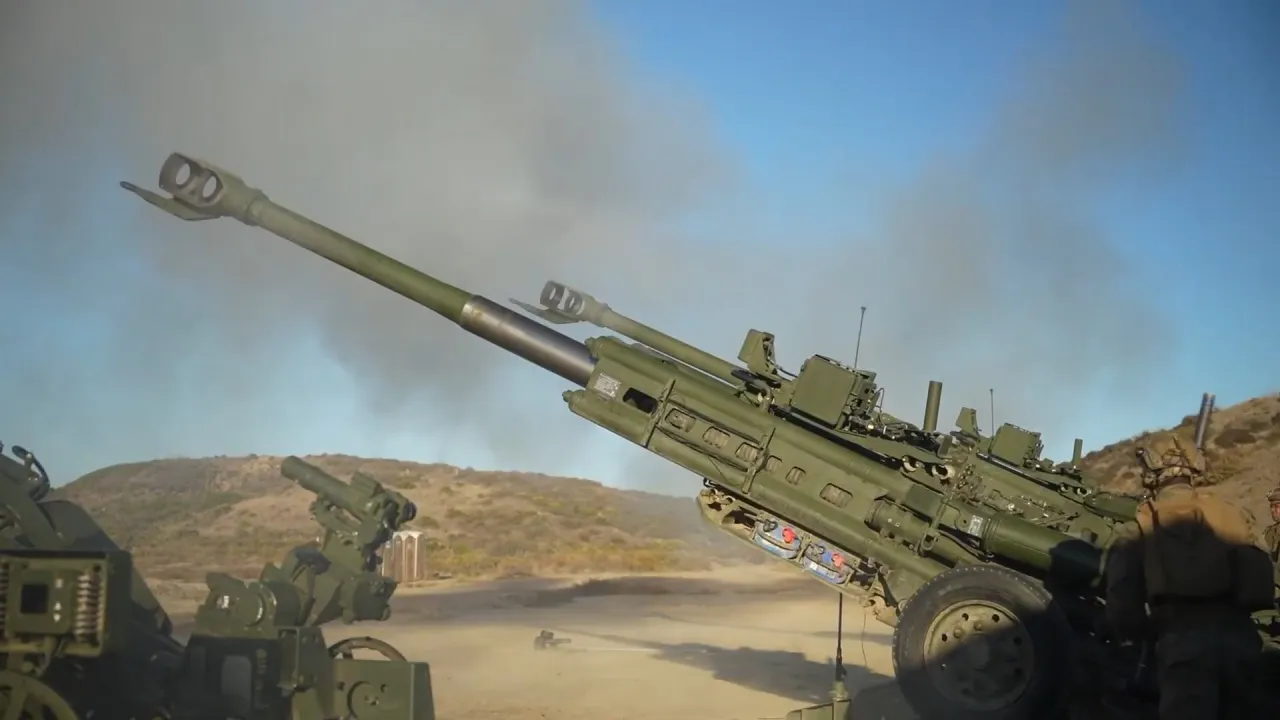
M777 Howitzer Firing Practice
The new Marine Corps units must become more agile: a battalion or regiment must be able to quickly deploy to the battlefield without losing any of its striking power. This is why some of the equipment is being upgraded, introducing systems like NMESIS.
The concept behind this is expeditionary forward base operations (EABO): dispersed small units armed with anti-ship missiles operate from islands and coastal staging areas, threatening enemy fleets and controlling key maritime areas. Current doctrine assigns the Marine Corps' role primarily to the Pacific Ocean region, countering the perceived Chinese threat. Hence the requirement for rapid movement between the continental United States, island bases, and ocean staging areas.
Modernization objectives are generally being met, although some projects are stalling: serial production of the ACV-30 and ACV-R is lagging behind the baseline versions, and the overall ACV procurement plan has had to be scaled back. Significantly, the reduction in volumes and delays are not implementation failures, but rather a consequence of the program's very logic: the Marine Corps is deliberately sacrificing mass production and versatility for a highly specialized anti-ship capability for the Pacific theater. Therefore, the final assessment of Force Design hinges on one question: will the focus on a conflict off the coast of China be the right one? The Corps command and the Defense Department have no doubt this is the right choice and view the recent exercises as confirmation of their course.
Information