Drones at sea: a growing threat?
8 207 89
Drones at sea: a growing threat?

A Chinese destroyer meets an American one at sea. drone highlights future problems with the rules of warfare. As small, unmanned surface or semi-submersible vessels proliferate, the threat they pose will grow, and the rules of warfare will have to adapt to accommodate the emergence of new classes of ships.

What prompted such thoughts was the recent meeting of ships from different eras in the middle of the Pacific Ocean.


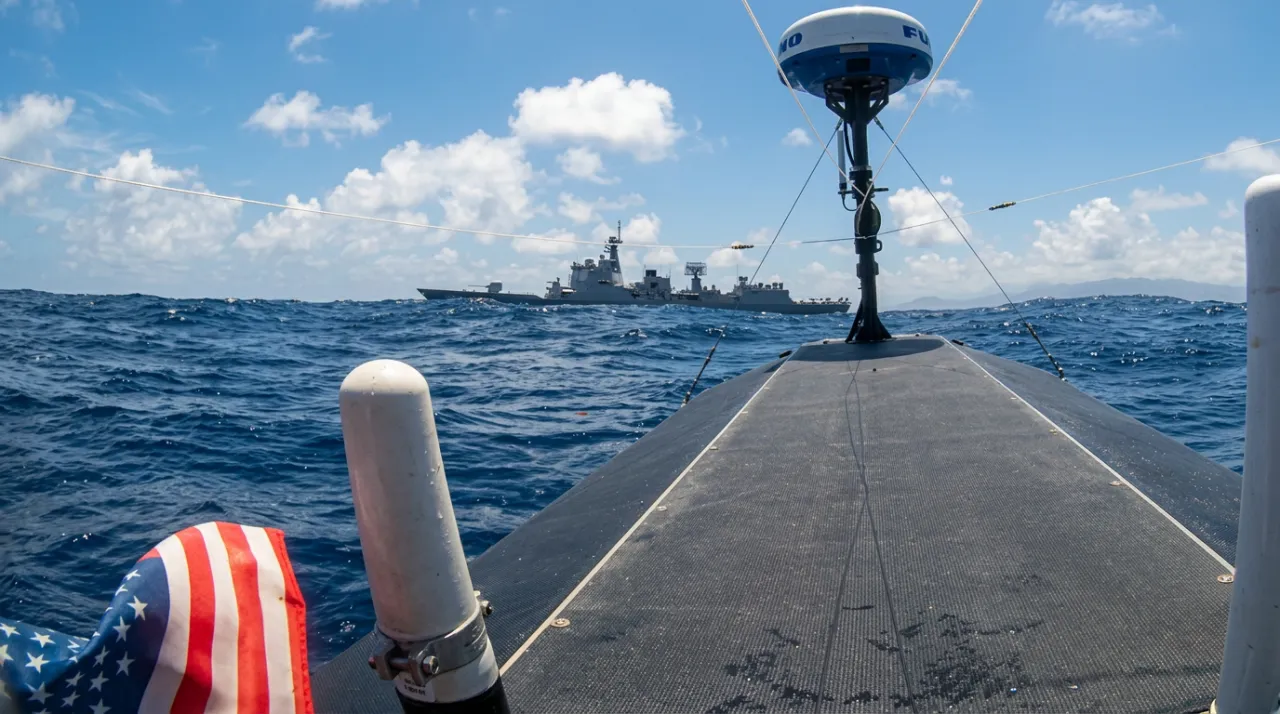
During a long voyage across the Pacific Ocean, near the Philippines, a small unmanned surface vessel (USV) owned by a California company encountered a Chinese Type 052D destroyer.
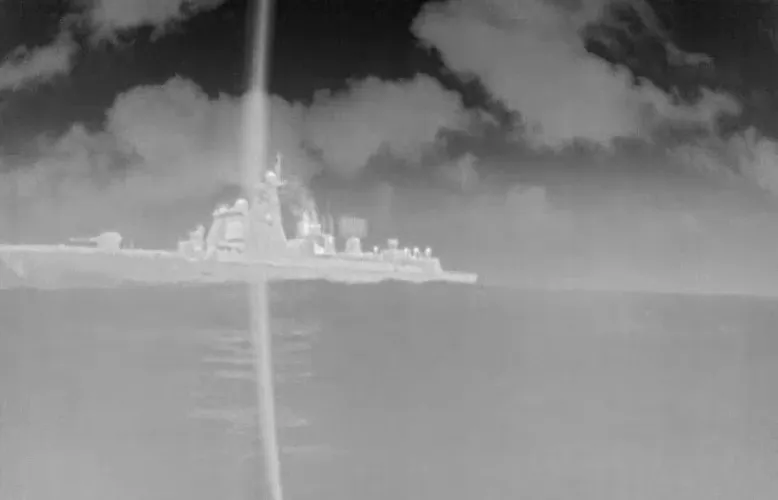

The Seasats USV Lightfish got close enough to the destroyer to capture video of the warship.

Overall, nothing particularly special, just a good illustration of the current situation. This incident highlights the growing presence of unmanned underwater vehicles, especially in the world's most contested regions. The fact that an unmanned vessel came so close to a Chinese surface combatant also highlights the potential danger that unmanned underwater vehicles (UUVs) can pose even to a modern warship.

This also raises the question of the rules of engagement that naval forces and merchant vessels in volatile regions will have to adhere to if they encounter UUVs approaching them. Given the difficulty of obtaining information about UUVs' intentions, such situations should be regulated in some way in the future to avoid serious consequences.
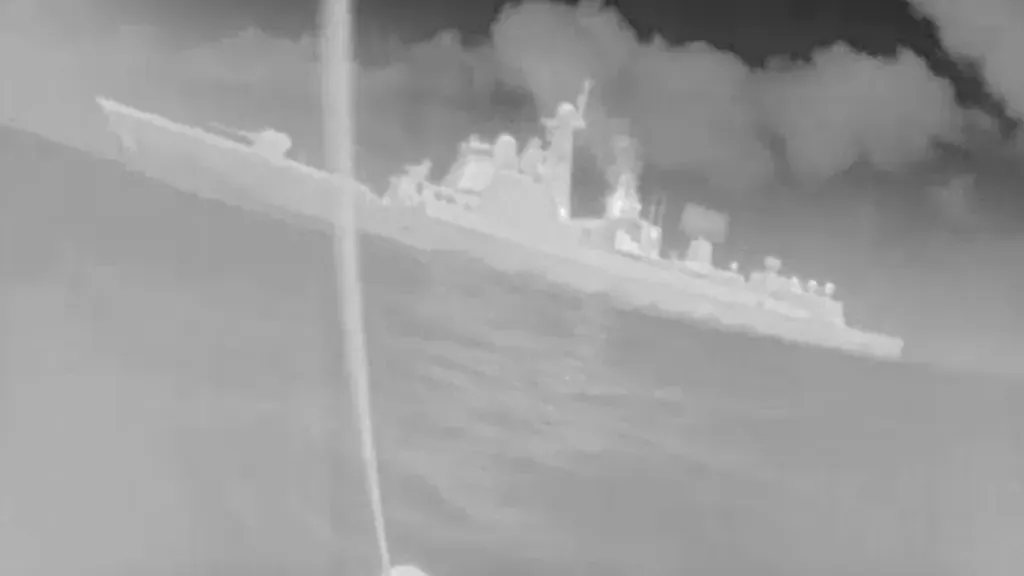

View of Chinese rocket Type 052D destroyer from the Seasats Lightfish unmanned surface vessel

The incident in question occurred approximately 73 miles northwest of the Philippine island of Luzon, according to Seasats CEO Mike Flanigan.

The Luzon Strait is one of the most strategically important waterways in the world and a potential flashpoint. Situated south of Taiwan and north of the Philippines, it provides access from the Pacific Ocean to the South China Sea and back. This area is actively used by the military in the air, sea, and underwater. fleets region, and commercial vessels. If a conflict were to break out over Taiwan, this area would become a zone of application for various types of weaponsIn fact, in a hypothetical future war, due to its unique coastal geography and strategic importance, this region would become a very hot spot, with the ability to employ various types of air, land, surface, and submarine-based weapons.
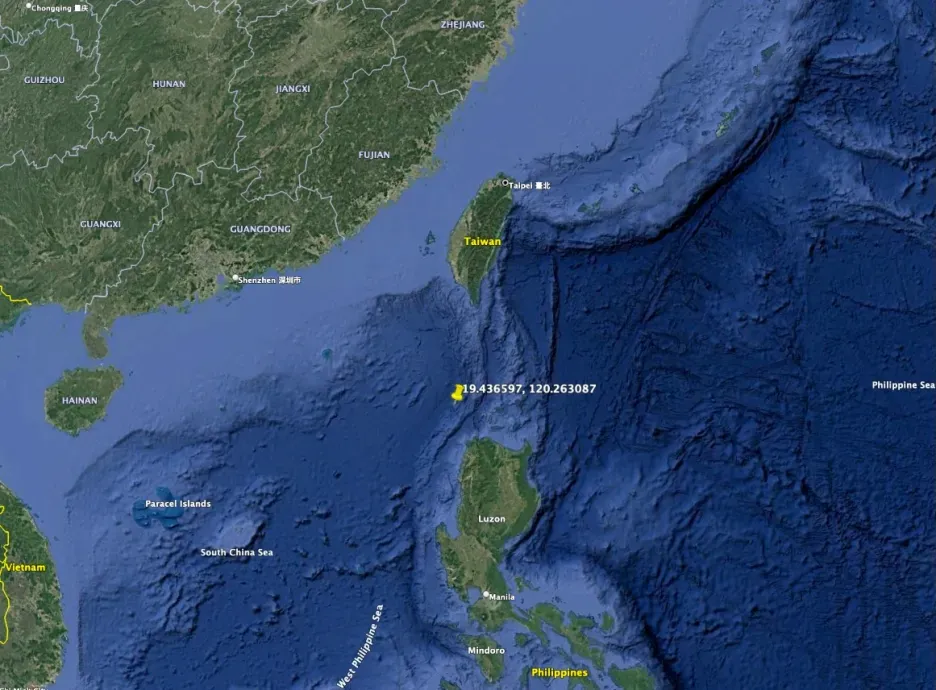

According to Seasats, the Lightfish rendezvoused with a Chinese guided-missile destroyer about 75 miles northwest of Luzon.

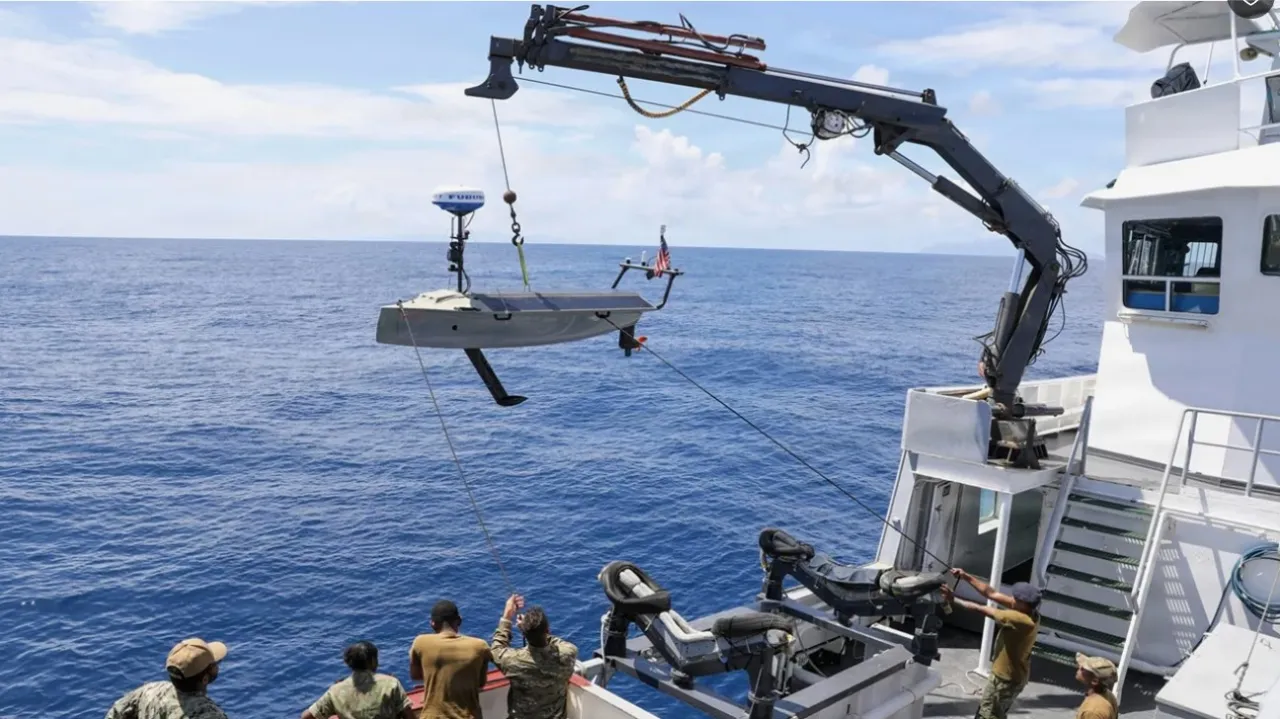
The incident involved the American Lightfish, a 4-metre-long, 140-kilogram submersible that can travel long distances for six months using solar panels and a hybrid propulsion system.

It's worth noting right away that the Lightfish is not a speedboat. Its main advantage is its exceptional autonomy; the device is capable of navigating seas and oceans for extended periods, collecting various data on the state of the seas. Therefore, it would not be able to "stalk" the aforementioned warship, but many other unmanned aerial vehicles are quite capable of this.
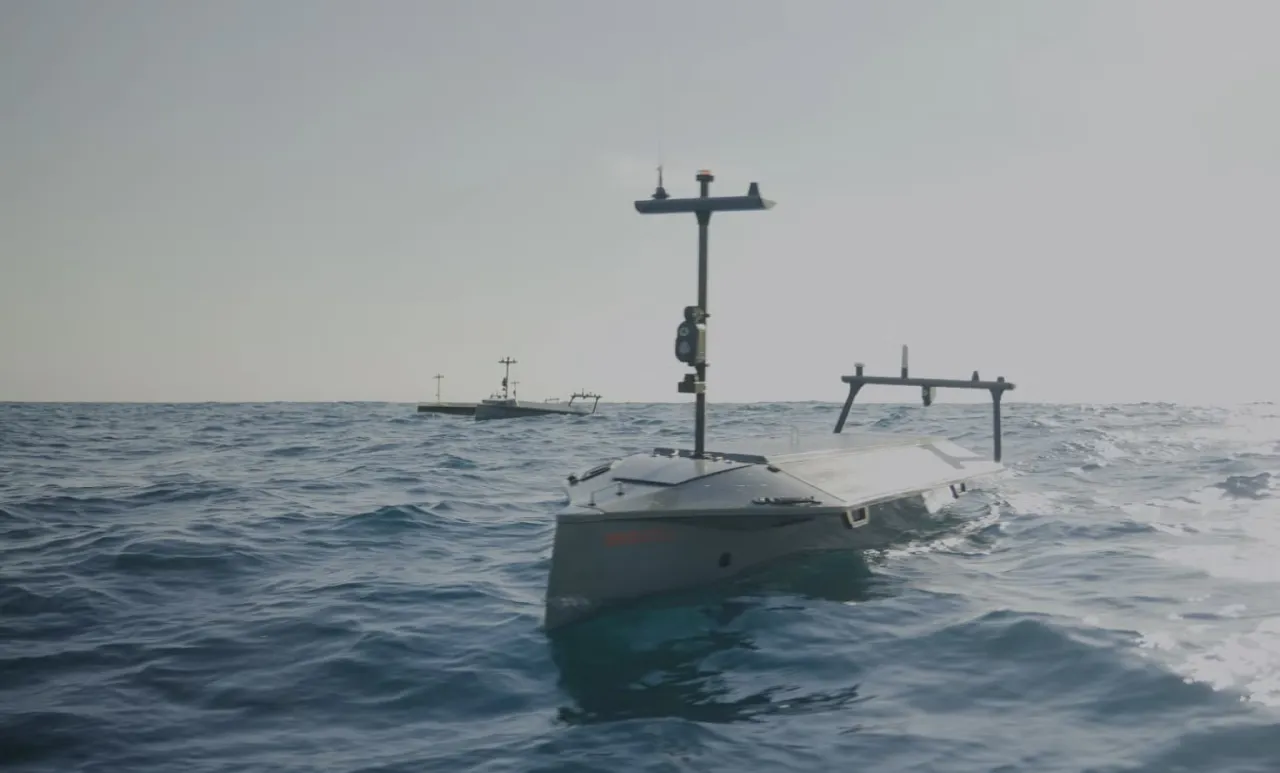

Lightfish is Drone A solar-powered drone designed for surveying, research, and patrol missions, it can remain at sea without human intervention for up to six months or travel up to 8000 nautical miles. The drone is equipped with high-tech equipment, including a collision avoidance system, onboard artificial intelligence, GPS-free navigation, five high-resolution cameras, and communications systems including LTE, Iridium SBD, Iridium Certus, and Starlink.

In June 2024, Lightfish completed a 73-day, 2500-mile autonomous voyage from San Diego, California, to Hawaii, demonstrating the platform's high resiliency. On July 30, 2025, the company announced the completion of a fully autonomous voyage across the Pacific Ocean, covering more than 7500 miles. Lightfish reached Japan, completing a 150-day journey with demonstration stops in Hawaii and Okinawa.
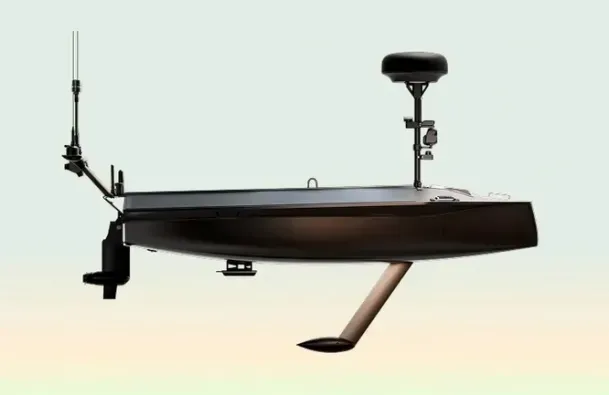

Seasats Lightfish unmanned surface vessel

"Lightfish tracked the Chinese vessel using radar at a range of approximately 10 nautical miles and visually at a distance of several hundred meters," Flanigan explained. "This occurred on the evening of June 15, and our team was immediately alerted by the duty crew that monitors vessel movements in the area where our unmanned vehicles are deployed."


The Chinese destroyer spotted the Lightfish and took evasive action.

"We don't know what his intentions were, but we saw the vessel change course and generally observe the Lightfish drone,"
— Flanigan noted.
Following the incident, the company discussed the situation with the US military, but Flanigan declined to provide any details.

The company published two videos showing a Chinese warship captured by Lightfish cameras. In the video, the destroyer appears to be moving very slowly, if at all.

These videos are reminiscent of dozens of videos released by the Ukrainian military showing their drones attacking Russian warships, although in this case, Lightfish had neither the capability nor the intention to do so.

To date, naval drones have already demonstrated their destructive potential in the Black Sea and the Gulf of Aden. The Ukrainian Magura family of unmanned boats has performed a wide range of tasks, from reconnaissance missions and minelaying to kamikaze-style strikes against ships.

Yemen's Houthis were at the forefront of using unmanned underwater vehicles in combat even before the Russian-Ukrainian conflict. In January 2017, after a Houthi drone loaded with explosives attacked a Saudi frigate, a new era at sea began.

In the West, the modern version of this concept is said to have originated in Iran, where various crude attack drones were developed in the early 2000s before being handed over to the Houthis, who became the first to successfully use them in the Red Sea in 2017. Since then, they have repeatedly and effectively used them to attack shipping during various events.

Fast forward to today: on July 12, the US military used unmanned underwater vehicles (UUVs) as offensive strike weapons in combat for the first time. The strikes, carried out by Saronic's Corsair UUVs, occurred amid escalating attacks between the United States and Iran in the Strait of Hormuz. One of the targets of the UUV attacks was an Iranian Ghadir-class diesel-electric midget submarine. The effectiveness of the UUVs, frankly, was significantly inferior to their impact.

The US Navy recently demonstrated the danger unmanned underwater vehicles pose to potential adversary warships when one of its Global Autonomous Reconnaissance Craft (GARC) unmanned underwater vehicles participated in its first live-fire exercise.

A kamikaze unmanned underwater vehicle was deployed during RIMPAC 2026 and attacked the former aircraft carrier USS Peleliu in one of the most high-profile SINKEX exercises, which involved sinking a target.
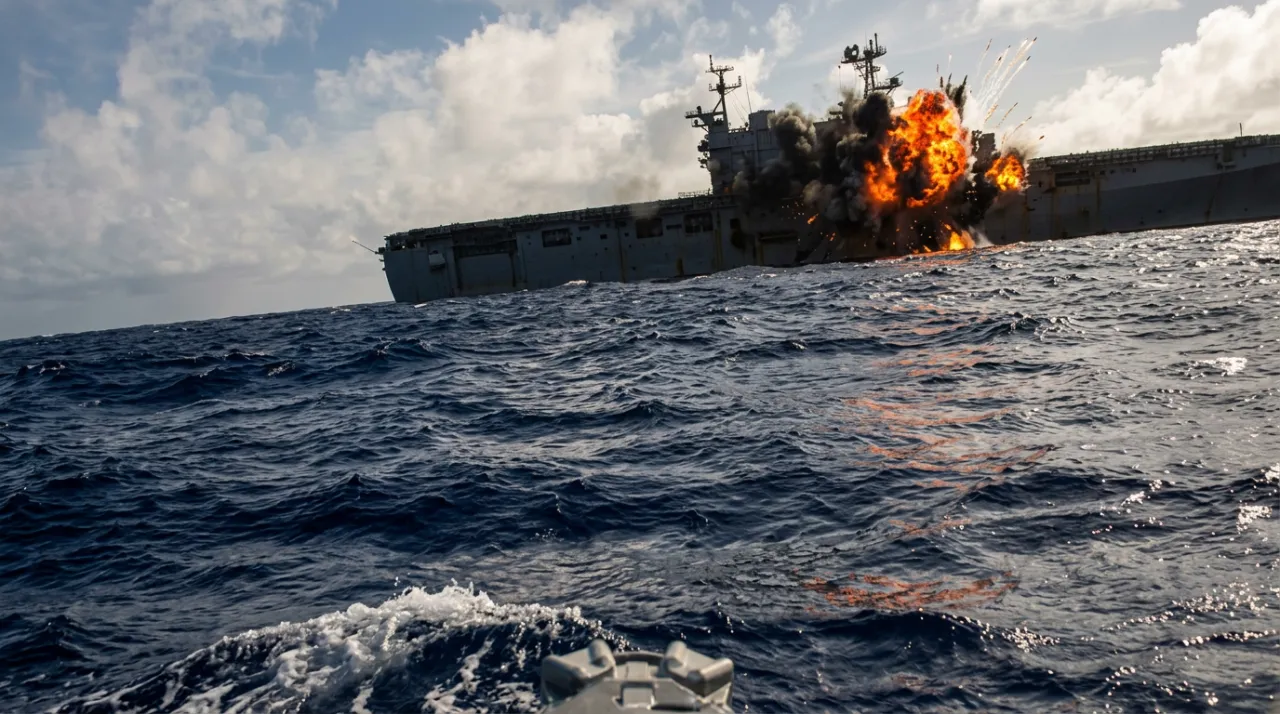

The widely publicized first strike of an unmanned boat on an Iranian port and its use during the SINKEX exercises at the US Naval Base in Hawaii clearly demonstrate that the US Navy is now actively implementing this new form of kinetic attack on a surface target. While the Americans are playing catch-up, they are nonetheless making progress in this area.
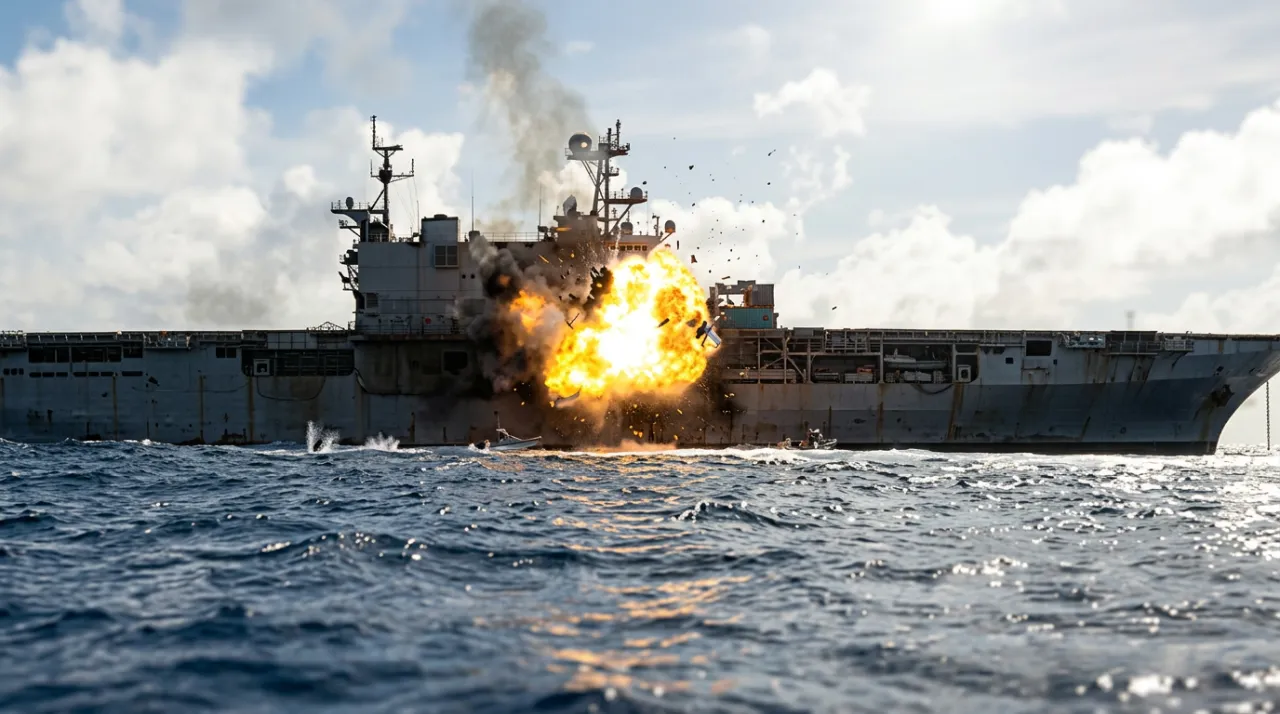

Footage of the USV attack on the amphibious assault dock ship USS Peleliu (LHA 5)

"The Ukrainians have clearly demonstrated the threat small unmanned underwater vehicles pose to surface ships," Flanigan said. "Thanks to the Lightfish's range of over 8000 nautical miles, we demonstrate that the entire ocean is within the reach of small unmanned underwater vehicles and that they can strike targets beyond coastal targets."

The June 15 incident was one of several encounters between Seasats, small unmanned underwater vehicles, and Chinese naval vessels. According to Flanigan, in May, while transiting the Taiwan Strait, the Lightfish encountered a Chinese Type 056 corvette.

"This isn't the first time our vessel has collided with a Chinese warship," he noted in the company's press release. "But the location and timing make this encounter noteworthy. It's common knowledge that the PLA Navy advances its ships into the sovereign waters of its neighbors, but the opportunity to obtain and publish geolocated photographic evidence is unique."
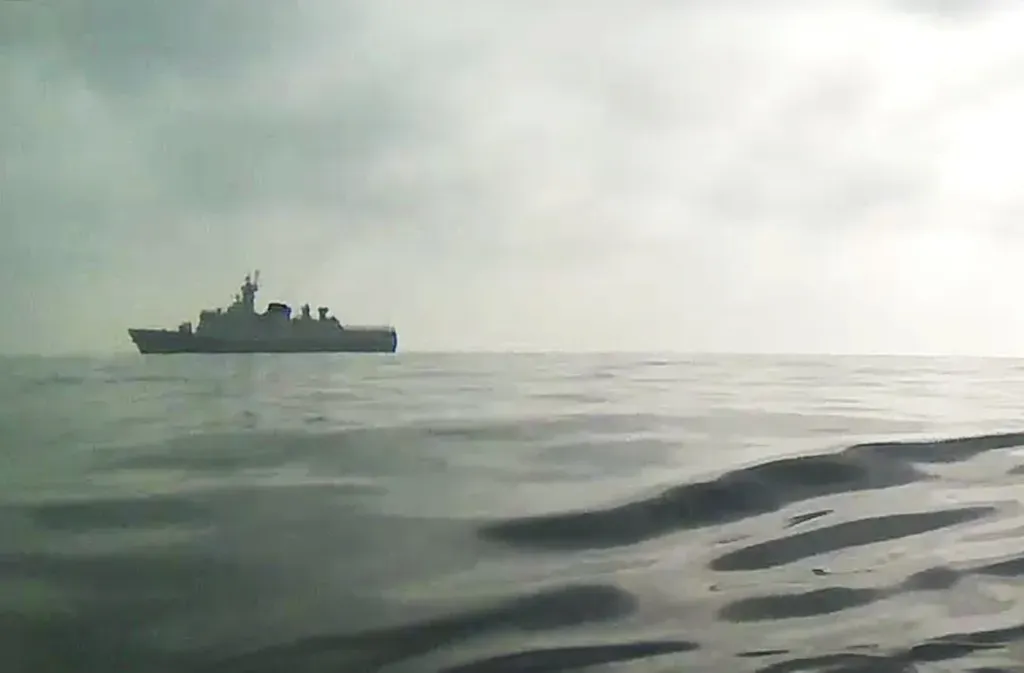

A Chinese Type 056 corvette captured by Seasats Lightfish during a recent autonomous flight across the Taiwan Strait in May this year.

It should be noted here that the American claim that PLA Navy ships are present in the "sovereign" waters of their neighbors is simply overkill. If a corvette was in someone else's waters, then so was an American UUV!

In none of these incidents did China fire on the drone. Nevertheless, these dangerous encounters at sea raise questions about how warships should respond to such incidents, especially given what has happened in the Black and Red Seas, and most recently, in the Strait of Hormuz.

This question is better asked to the end user in the military sector,
"Flanigan responded to the question of what the rules of engagement should be at such meetings.

I believe it will depend on the context and region. As for commercial mariners, American drones will likely be treated with caution, as with other maritime threats, and the level of caution will depend on how clearly and predictably they (American drones) demonstrate their behavior.

This is important given the frequency with which Lightfish is detected.

"We encounter commercial vessels almost every day," Flanigan said. "It happens so often that sailors don't notice, or if they do, they're curious."

He noted that this is especially relevant for fishing vessels.

"In general, we follow two rules when it comes to other courts,"
"Flanigan said.

The first rule is that "all robotic systems must obey human-operated vessels." This means that unmanned surface/underwater vehicles must always keep a distance from human-operated vessels, and maritime safety regulations must be aimed at giving way and ensuring the safety of navigation for human-operated vessels."
"Flanigan suggested.

The second rule is that "unmanned underwater vehicles must, whenever possible, comply with COLREG, the International Regulations for Preventing Collisions at Sea, and the general rules of navigation," he added.

However, these aren't ships with crews or people on board who can communicate in any way. AIS identification proves nothing. And there's no way to know for sure whether a suddenly appearing drone belongs to friend or foe. Flying a flag on board and painting the service's name on the drone's hull is in no way a definitive signal.

So the question of what risks seafarers might be exposed to as the potential threat posed by unmanned aerial vehicles evolves rapidly and is firmly in the hands of non-state actors is currently on many minds.

It is also worth noting that the destruction of an unmanned vessel is obviously a much lower escalation threshold than the destruction of a manned vessel.

We have repeatedly observed on video how ship crews fire at drones, but not at manned platforms, during periods of tension, but not during full-scale war. Despite international norms, the destruction of an unmanned boat that has approached too close to a warship could become routine, given these factors, the overall threat landscape in the region, and the status and proliferation of such technologies.

Again, in this case, it might be assumed that the slow, albeit stealthy, Lightfish posed no serious threat to the destroyer, but as unmanned vehicles become more common in all forms, especially in the arsenals of the military and potential attackers, this equation will become more complex.

The issue here isn't even about the legislation, which should generally be drafted to regulate the relationship between conventional ships and vessels and unmanned aerial vehicles, but rather the mechanisms for their implementation and liability for possible incidents at sea.

Yes, tomorrow there will be many eyes at sea, capable of seeing much that we would like to hide. Naturally, there will also be those who want to reduce the number of eyes watching them.

An unmanned aerial vehicle (UAV) at sea, either above or below the surface, is a genuine threat. And if the use of UAVs at sea isn't clearly regulated in the near future, it's entirely possible the world will face a new naval war, with everyone shooting down any UAVs heading toward or past a ship.

In fact, understanding the intentions of a UAV is very difficult, and sometimes it is easier to neutralize the potential threat posed by the UAV immediately than to figure out how dangerous the device is for a specific ship.

In general, the aquatic world is expecting new and very serious changes.
89 comments
Information
Dear reader, to leave comments on the publication, you must sign in.
  1. 0
    10 August 2026 05: 11
    Yes, tomorrow there will be a lot of eyes in the sea, capable of seeing much of what we would like to hide.

    The ocean is too vast to accommodate such devices. Their seaworthiness is questionable: could the Seasats Lightfish survive a storm?
    It is clear that at the same time there will be those who want to reduce the number of eyes watching them.

    It's not a one-sided game. If China starts sinking these little ones, the fate of China's little ones will be the same, and China has them.
    1. +4
      10 August 2026 05: 54
      There was no need to sink them, China and Iran recognized them as abandoned ships, they simply hooked them and took them away with them
      1. +4
        10 August 2026 07: 10
        A squadron of 500 semi-submersible, surface, and underwater unmanned combat vessels, armed with anti-ship missiles, UAVs, and mines... this is already in the process of being created...
      2. 0
        10 August 2026 07: 29
        Quote from iommy
        you don't have to drown them

        Let me repeat. Then the fate of Chinese BECs will be similar.
      3. +3
        10 August 2026 09: 33
        While this is more or less possible for known civilians, carrying away a combat device that could disintegrate at any moment due to an internal sensor or external signal is fraught with danger.
        Although, if the supply of qualified sapper personnel allows us to compensate for the losses with data from the study of captured...
      4. +3
        10 August 2026 12: 47
        Quote from iommy
        they simply picked it up on a hook and carried it away with them

        Dragging a BEK, potentially loaded with an unknown quantity of explosives with unknown criteria for issuing the detonation command—well, that's just too much. Discounted wreaths for the brave.
    2. +1
      11 August 2026 15: 42
      The moral of this article is this: a crowd can extinguish even a lion.
      1. 0
        11 August 2026 20: 28
        In such a situation, heroism becomes illiquid.
    3. 0
      11 August 2026 20: 27
      These will be maneuverable screens—areas of guaranteed situational awareness. The question of their seaworthiness is purely technical (they can be semi-submersible), and their vulnerability—there are many of them and they don't necessarily need to be strike-class. Such "plankton" will provide all targeting information with coordinates to carriers of various types and highly covert deployment. Organizing a driven hunt becomes the least difficult issue for an AI analyzing the entire operational picture.
  2. 0
    10 August 2026 05: 20
    It can remain at sea without human intervention for up to six months or travel up to 8000 nautical miles.

    What progress has come so far...it would be nice to turn these BEKs into self-propelled guided sea mines.
    You went out into the given area... dived to the bottom and waited for your victim. what
    Dangerous things for sea vessels.
  3. + 10
    10 August 2026 05: 29
    The unmanned aerial vehicle (UAV) poses a threat only to civilian vessels. If any military vessel cannot promptly detect and destroy such a slow-moving target, the question arises: is such a military vessel necessary?
    1. 0
      10 August 2026 05: 38
      Quote from iommy
      The unmanned aerial vehicle (UAV) poses a threat only to civilian vessels. If any military vessel cannot promptly detect and destroy such a slow-moving target, the question arises: is such a military vessel necessary?

      In this case, the role described is reconnaissance.
    2. +8
      10 August 2026 07: 09
      Is this about our Black Sea Fleet?
    3. -1
      10 August 2026 10: 17
      And how do you propose to identify them without constant, expensive aerial patrols? After all, the main problem is detection.
      If a low-slung unmanned aerial vehicle (UAV) on a slow-moving waterjet skims the surface, detecting it is difficult with either radar or sonar. Roughly speaking, the only options are constant visual monitoring, meaning either high-tech optical systems, which would be very expensive and time-consuming to retrofit to the entire fleet, or additional personnel with all the attendant human error.
      The fact that a tank cannot fly does not make it useless, just as the implementation of a universal solution is impossible with current means.
      Accordingly, we are no longer talking about “any vessel,” but about upgrading escort ships.
      The bare minimum: 360-degree lidars linked to the combat information and control system, or other optical monitoring systems. Radars and sonars are more complex: in constant combat mode, the local ecosystem is ruined, and in passive/environmental mode, their effectiveness is significantly reduced.
      In fact, nothing comes to mind other than a system of a unified network of autonomous buoys monitoring territorial waters with passive sensors and low-power signals, but this requires a hefty budget and a very long implementation period.
      NATO uses distributed acoustic sensing for this purpose, using signal distortion analysis of civilian fiber optic cables laid along the seabed, in conjunction with satellite surveillance and specialized seabed sensors.
      1. +2
        10 August 2026 10: 57
        I don't see any problem with equipping ships with OES. Every Aerospace Forces helicopter has an OES. Ships are already constantly on duty, with people staring at radar monitors. What's the problem? They're staring at a regular video feed. And if human error is to be eliminated, there are modern neural networks that can tirelessly monitor and report suspicious activity to the duty crew.
      2. +4
        10 August 2026 13: 21
        What's so expensive there? Launching ten Mavics with heat-seeking missiles from a ship? That costs pennies! The invisibility of naval drones is all just a fairy tale to justify the Black Sea Fleet leadership, which destroyed the OVR and couldn't come up with anything smarter than issuing a couple of light machine guns to a ship.
        1. -2
          10 August 2026 18: 21
          Alexander, what will a drone with a thermal imaging camera do? What if it has an electric motor, and underwater? What if it's water-cooled? What if it's in a thermally insulated casing? If I'm not mistaken, it won't see anything. If I'm wrong, please explain.
          1. +2
            10 August 2026 19: 20
            The thermal imager shows the components of the operating electric motor. The BEC leaves a clearly visible wake.
          2. 0
            10 August 2026 21: 10
            Just Google thermal imaging videos. You can see rocks against the ground, bushes against the grass, branches against the leaves. Boats are also clearly visible on thermal imaging.
            1. -1
              10 August 2026 22: 44
              What do land-based objects have to do with this? We're talking about sea-based ones!
              1. 0
                10 August 2026 23: 08
                If you read further, you'll also find information about marine objects. Especially for you, here are pictures of water and marine objects that are completely invisible to a thermal imager. A kayak and its wake are particularly invisible to a thermal imager.
                1. 0
                  11 August 2026 17: 32
                  My suggestions were based on the assumption that the water should have cooled the hull at least to its normal temperature. So, I was wrong.
                  1. +3
                    11 August 2026 17: 45
                    It doesn't work that way. Bodies made of different materials emit radiation differently at the same temperature.
                    1. +1
                      11 August 2026 17: 46
                      Thermal conductivity isn't my strong point. I could have figured it out myself. Thanks for the clarification.
        2. 0
          10 August 2026 21: 02
          Even at the very beginning of the BEK's appearance, there were reports that civilian vessels in the Black Sea could clearly see them, but did not know where to call about it.
          1. +2
            10 August 2026 21: 08
            Yes, it seems they reported it to the right places. It's just that the right places apparently think that if there's no ship, it's no problem, there's no need to waste diesel, and they're not reducing the number of management positions. Although, most likely, it's like in a small town there—I don't think so today. request
        3. 0
          11 August 2026 20: 32
          With the Black Sea Fleet, we need to start with the organization and staffing of the fleet, which is, in fact, not ready for anything. There is no strategy for developing the Navy as a potential (not as a program for constructing something expensive—that also doesn't exist, as it turns out). Admirals are admiralizing within the limits of their authority.
          1. +1
            11 August 2026 20: 39
            What authority do they even have? To host parades, pay salaries, and awards? They ignored reports of drones gathering in the middle of the sea—were they given the wrong brains? Similarly, the Aerospace Forces generals apparently couldn't do anything except surround the planes with tires and set up a bomb depot near the equipment parking areas.
            1. 0
              11 August 2026 20: 44
              Generals/admirals are also a question of strategy – everything needs to change. And let's start with the Military District – they're currently dense mammoths. Look at the Defense Ministry board – what intellectuals they are, preoccupied with their own private profits. The system isn't dumb at all. And forecasting the development of events should still be entrusted to specialists.
              1. +1
                11 August 2026 22: 07
                There's a constant debate here about finding excuses for the command. The other day, I wrote about the Aerospace Forces, saying they're not even trying to penetrate enemy air defenses; they simply haven't approached the LBS since April '22. Similarly, the admirals are huddled in a corner, waiting for the Sultan to finalize the grain deal. And as a local genius wrote, if only they could be given a hundred times more sixth- and seventh-generation aircraft, then wow! They'd destroy the enemy's fifty air defense systems scattered across the country! But I wrote that they should be used for assaults, let them learn how to operate without total superiority; anyone can defeat a Zulu army commanding a Death Star; we can do without generals altogether.
                1. 0
                  18 August 2026 19: 15
                  As someone not an outsider to the Navy, I have a draft of the necessary actions, but it (and even something similar) will be rejected by the bureaucrats of the high command as dangerous to their position. The entire officer corps needs to be qualitatively improved; this is a matter of policy and will take many years. In military development (and in public administration), strategy is everything. You have to start somewhere and constantly reevaluate your path, goals, and achievements. And what's happening now is like "panic in a brothel": war is not happening as taught by regulations, but urgently and according to the situation. And they think that tomorrow will be like today and they will again play according to the situation—they will. But with defeat.
                  1. 0
                    18 August 2026 21: 32
                    Quote: Andrey Loginov
                    The entire officer corps needs to be qualitatively improved; this is a matter of policy and will take many years.

                    The USSR radically improved its officer corps in two years. Our leaders dug in their heels to make sure, God forbid, they didn't accidentally fire some degenerate for incompetence! For anything—bribery or stealing rebar—but not for incompetence! What if competent people come in and there's a qualitative leap, and then what? Will it turn out that these thieving incompetents were actually installed by respected people?! No, they're more likely to betray the country, but they won't remove their own kindred spirits! fool
                    What if they put in place some Nadir Khan and he takes over, defeats everyone, and then kicks out the leadership?
                    1. 0
                      20 August 2026 00: 25
                      The USSR had its difficulties. Regarding our Frunze Naval School, which is 325 (!) years old (I was born in 1990), I can say that in the 70s (before me) and 80s (in my time) the competition was about 15 and 6-7 people per place, and the level was corresponding: no matter how hard the political department tried, the walls preserve the memory: the example was always set by... gentlemen midshipmen of the imperial fleet... a cultural program was mandatory (and we were not into it for show), electives: ballroom dancing, English, diving training, VNOK - when you take additional classes outside your specialized department, it greatly broadened your horizons. FP - even if you die on the simulators. Thank you - the systematic approach to everything has remained. Frunzaki - braggarts!!! Well, to some extent -- that's why all our command posts in the navy existed. Although now I'll say, perhaps, that behind the external side there is always a lot... centuries-old pedagogical wisdom - everything was exactly as it should be, as it was and always will be. Who would have told me then that 35 years later (after the merchant navy and 20 years in international business) I would be fascinated by: the French language, Silver Age poetry and AI (AI integration), this is after industrial supply logistics (SCM) and international transport. As for the current development of the navy - it is disappointing. Strategy has always been weak in Russia. And this is very disastrous.
            2. 0
              11 August 2026 20: 46
              They were not taught, and they lack the Cossack ingenuity to react quickly to the situation.
  4. +2
    10 August 2026 05: 52
    In general, the aquatic world is expecting new and very serious changes.
    Thanks to the author, this is a very relevant article. In a time when international maritime relations have faded into oblivion and the age of pirates has arrived, unmanned aerial vehicles (BAKs) are the most formidable weapon for shipping, and there's no defense against them. I left the seas just in time; the good times are over, the peacetime is gone. You can't say, "Guys, you're safe."
    1. +1
      10 August 2026 21: 44
      Don't exaggerate about the lack of protection. They'll amend maritime law, install remote-controlled combat modules with heavy machine guns, with the guns detached upon entering territorial waters. And if a submarine's transponder doesn't respond, they'll fire on it with all available calibers.
      1. 0
        10 August 2026 23: 34
        Quote: Sergey Alexandrovich
        They will amend maritime law and install remote-controlled combat modules with large-caliber machine guns, with the guns being removed when entering territorial waters.

        This needs to be added to the Law of the Sea, and that will take a decade. And anyway, it's a joke.
        1. +1
          10 August 2026 23: 56
          We'll see. The Somali pirates could have been dealt with in a couple of weeks, but they're reportedly rising again.
          1. +1
            11 August 2026 00: 08
            Quote: Sergey Alexandrovich
            The Somali pirates could have been dealt with in a couple of weeks, but they are rising again, they write.

            Nigeria has pirates worse than Somalia.
        2. +1
          11 August 2026 20: 38
          You're wrong to think the BEK (or whatever it will be) will remain the same as it is now, essentially based on a jetski. It could be a screen of long-range detection systems—the ship wouldn't even know it was being targeted. And an anti-ship missile (?) could be launched at specific coordinates, and, for example, one of the 2/3 would fire a MIRVed swarm of mini-UAVs that would destroy the countermeasures, while the remaining two missiles would complete (according to AI analysis) a diving attack under the keel. And that's it. This is already technically possible. They won't even have time to announce BG1.
  5. +9
    10 August 2026 05: 53
    It is very difficult to understand the intentions of a UAV, and sometimes it is easier to neutralize the potential threat posed by the UAV immediately than to figure out how dangerous the device is for a particular ship
    Given the current policy of permissiveness, any UAV or UAV operating outside of one's own territorial waters should be considered terrorist by default. Security in maritime and airspace must always take precedence over any political maneuvering.
  6. + 13
    10 August 2026 05: 59
    The most frightening thing about the widespread use of UAVs of all types and kinds is the extreme difficulty of their national identification. While a collision between two warships used to leave no doubt as to who was fighting whom, and consequently, the consequences of such aggression, now, so to speak, anonymous attacks are possible. Of course, everyone usually knows whose work it is, but there's nothing to prove. Yeah, they're just scraps of some kind of hardware assembled from Chinese-made parts, so what? They're sold en masse. Should we declare war over that?

    Thus, it becomes possible for an opponent to inflict significant damage without any liability. Something that was simply impossible 20 years ago with manned weapons. An attack by Western bombers, missiles, and ships on the Soviet Union would have led to a world war without any alternatives. Now, everything has changed. The West is now actively and brazenly taking advantage of this.

    And yet, one circumstance is being ignored. This one-sided game is only possible thanks to the elfinism and Tolstoyanism of the current Russian authorities. Because exactly the same thing could be applied to Western communications and infrastructure. Swarms of unidentifiable drones and unmanned aerial vehicles are capable of bringing Western economies to ruin. And they'll have no one to hold accountable for it. The only question is when this will happen. So, it's clear that Annushka has not only bought the oil, but also spilled it. The countdown has begun...
    1. 0
      10 August 2026 07: 33
      Quote: paul3390
      This makes their national identification extremely difficult.

      The US flag is clearly visible in the photo. This means there's no problem identifying this vessel. Another issue is that it's impossible to communicate with it using either the MCC flags or the Morse code signal light.
      1. +2
        10 August 2026 10: 23
        Quote: Puncher
        The US flag is clearly visible in the photo.

        They hung the US flag only for advertising, but when they start using it to destroy ships, there won’t be any flags (although you can raise the enemy’s flag).
        1. -2
          10 August 2026 10: 46
          Quote: carpenter
          and when they start using them to destroy ships, there won't be any flags

          This is a reconnaissance BEK.
          1. +1
            10 August 2026 12: 00
            Quote: Puncher
            and when they start using them to destroy ships, there won't be any flags

            This is a reconnaissance BEK.

            Today it’s a reconnaissance aircraft, and tomorrow and beyond, it’s a combat BEK.
            1. 0
              10 August 2026 21: 07
              There are no problems with identification. Require the use of transponders. And equip the military with an identification friend or foe system.
              If there is no transponder, and it has entered territorial waters, then it will be sunk mercilessly.
              1. +1
                10 August 2026 23: 31
                Quote: Sergey Alexandrovich
                There are no problems with identification. Require the use of transponders.

                Civilian vessels have been equipped with AIS (Automatic Identification System) identifiers for about 20 years. AIS is an automatic identification system used in shipping to exchange navigational data between vessels and shore-based services. It is mandatory for vessels subject to the SOLAS Convention and must meet strict technical and operational requirements, including a display for manual data entry. Vessels equipped with this equipment can be tracked using satellite monitoring systems.
                1. 0
                  10 August 2026 23: 40
                  Actually, I had no doubt about your expertise on this matter. I'm constantly confused by paul3390 (Pavel), who asks such questions.
                  He either prevented the introduction of shotguns into service as a defense against drones, or the issue of identifying BEKs became insoluble for him.
                  During the time of Comrade Stalin, whom he loved so much, he would have been shot three years ago for disinformation and deliberate misleading.
                  1. +2
                    11 August 2026 00: 06
                    Quote: Sergey Alexandrovich
                    Actually, I had no doubts about your competence on this issue.

                    Well, I'm an expert on all things radio-technical. I'm a first-class shipboard radio operator and the head of the GMDSS shipboard radio station, or rather, I was until they removed radio operators from ships.
      2. +2
        10 August 2026 10: 33
        This is like the Russians blowing up Nord Stream because they found felt boots and a balalaika at the site of the explosion. False flag operations have a history that goes back not just centuries, but thousands of years.
        Everyone has an up-to-date database of silhouettes and external technical characteristics of their own and the enemy.
        So, if a cruiser is visually identified, its affiliation can be determined with a high degree of certainty, regardless of the flag hoisted on it. But how can one determine the affiliation of a lifeboat?
        So, really, as Pavel said: the only option is that any foreign back/anp are considered hostile by default.
        Accordingly, anyone who wants to keep their own - either an escort or a mandatory transponder with a secure signature (it seems that AIS is currently in the process of being converted to VDES)
    2. +4
      10 August 2026 10: 20
      Quote: paul3390
      Swarms of unidentifiable UAVs and unmanned aerial vehicles are capable of bringing Western economies to ruin.

      And who started the war at sea, who started seizing tankers with Russian oil, declaring it a “shadow fleet”?
      All this has led to the collapse of international maritime law, creating a climate of permissiveness and impunity. Naval warfare has only just begun, and it is seeking new forms and new means of attack. Unrecognized unmanned vessels, with no nationality, are the most effective weapon against the merchant fleet.
    3. +1
      10 August 2026 13: 24
      If it's hard to find out, why isn't anything arriving through the enemy's troughs? Let them prove whose boats sank the corvettes on the slipway in Turkey.
  7. +1
    10 August 2026 06: 19
    Sometimes it will be easier to neutralize a potential threat posed by a UAV immediately than to figure out how dangerous the device is for a specific ship.
  8. 0
    10 August 2026 06: 28
    I've already expressed the opinion that all drones should be destroyed, whether in the air, on the water, or underwater. In principle, the manned reconnaissance aircraft near Crimea, the missile-guiding drone, and the UAV should also be destroyed. Why the Chinese ship didn't destroy the drone is unclear. The American flag on it doesn't guarantee it isn't being used as a provocation by terrorists or smugglers. They could have destroyed it or boarded it, and let the US prove it was a peaceful scientific device.
    1. +2
      10 August 2026 13: 43
      The Chinese aren't at war with anyone yet, they're not waging their own military operation, so it's unclear what would happen if they started gutting American drones. Xi and Trump are still working on some kind of deal, so we shouldn't expect any sudden moves.
      1. 0
        11 August 2026 12: 49
        Thankfully, there's no drone war in the Pacific Ocean yet, unlike in the Black Sea and the Mediterranean. But no one is immune to it, given the tensions between countries. When encountering a lone drone in the ocean, there are a thousand questions about where it's coming from, where it's going, whether it's carrying ammunition, and so on. It doesn't matter whose country it is, or whose warship it's encountering. And no one has told it what mission the drone is performing. In that case, the only option is to destroy the drone. A Chinese ship lets the drone pass, and it goes into the Yellow Sea to provoke, so what happens then? Or will Ukraine launch its combat drone from any vessel to Vladivostok or Kamchatka?
  9. +2
    10 August 2026 08: 37
    In the current reality, it is time to move to the practice of equipping merchant ships with armed guards who will track and destroy all approaching unmanned objects of unknown/hostile affiliation.
    1. +2
      10 August 2026 11: 22
      Quote: Marlin
      In the current reality, it is time to move to the practice of equipping merchant ships with armed guards who will track and destroy all approaching unmanned objects of unknown/hostile affiliation.

      This is what all sorts of PMCs do, but it's too expensive, and you can't go into port with them.
  10. 0
    10 August 2026 09: 19
    Here we need to understand that as soon as the BEK approaches a military vessel, there is a high probability that it will be sunk or taken into tow.
    The very idea of ​​creating a platform at sea that monitors all ships is interesting, but only until military action begins. When warships immediately sink unmanned aerial vehicles without determining whether they are friendly or hostile.
    1. +2
      10 August 2026 10: 25
      Quote: dragon772
      Here we need to understand that as soon as the BEK approaches a military vessel, there is a high probability that it will be sunk or taken into tow.

      So these BEKs were created not to sink military ships, but civilian ones, which are defenseless, slow-moving, and less maneuverable.
      1. -1
        10 August 2026 13: 44
        In case of war, ships are gathered into caravans, this has been practiced for thousands of years
        1. -1
          10 August 2026 16: 28
          Quote from alexoff
          In case of war, ships are gathered into caravans, this has been practiced for thousands of years

          Well, how do you imagine creating such caravans?
          1. 0
            10 August 2026 16: 43
            So, the ships just sail together, at a relatively short distance. What's the problem? Have the laws of physics changed or what?
            1. +1
              10 August 2026 16: 57
              Quote from alexoff
              Have the laws of physics changed or what?

              The laws of physics don't change, but the laws of war do. But here you're proposing convoys of ships of varying nationalities, ship owners of varying nationalities, and various charterers, not to mention insurers. And there are simply few Russian ships under the Russian flag, and no one will touch them anyway.
              1. 0
                10 August 2026 18: 07
                So let them gather them, let them figure out what and how. Well, since there's no one to rescue them from the boats in the ocean near China.
      2. 0
        11 August 2026 13: 21
        Like fire ships.
        But civilian ships can be in a convoy, for example.
  11. +1
    10 August 2026 09: 21
    Quote: Puncher
    Quote: paul3390
    This makes their national identification extremely difficult.

    The US flag is clearly visible in the photo. This means there's no problem identifying this vessel. Another issue is that it's impossible to communicate with it using either the MCC flags or the Morse code signal light.

    You have trouble with logic and analysis.
    It is written about the development of events in the future, where it will be almost impossible to determine affiliation.
    1. +1
      10 August 2026 10: 50
      Quote: Eugene_4
      developments in the future, where determining affiliation will be almost impossible.

      This is precisely why pirates create their drones. We can guess the pirates' nationality, but we can't prove it. However, one pirate country using drones has already claimed its affiliation.
  12. -1
    10 August 2026 09: 33
    History repeats itself. Anti-mine artillery is reluctantly and creakingly returning to ships, but this time with projectiles with programmable detonation. Another variant will also be introduced: small vertical-launch missiles. All this "innovation" will be supplemented by BEKs based on the intelligent wingman principle. In this case, the BEK threat will be reduced to an acceptable level.
    1. +1
      10 August 2026 11: 08
      Quote: alberigo
      All this "innovation" will be complemented by BEKAMs based on the smart wingman principle. In this case, the BEK threat will be reduced to an acceptable level.

      Well, that's for military ships, not for civilian "merchants." Who needs a frigate or corvette when the seas are filled with "merchants," defenseless and slow-moving, "I don't want to sink them."
      There's the Strait of Hormuz, where hundreds of tankers are constantly jostling, carrying tens of millions of dollars' worth of cargo. And what's this? Will the threat be reduced to an "acceptable level"?
      You can't assign a "warrior" to every "merchant".
      1. +3
        10 August 2026 12: 26
        All my suggestions could be implemented perfectly on merchant ships. A modern supertanker could easily accommodate several dozen anti-mine artillery pieces, as could small anti-drone missiles. Smart wingmen would be more difficult, but if you think about it, a solution could be found. Of course, these measures would increase the cost of a merchant ship, but not significantly. So, a situation could arise where attacking a warship is easier. It's easier because a warship's displacement is limited. Adequately protecting it from all threats is problematic, whereas protecting a merchant ship from unmanned combat aircraft is relatively inexpensive. In this situation, I can imagine that British experience would be in demand—these are "trade protector" cruisers. Of course, these won't be cruisers, but they will be ships with a large number of anti-mine artillery pieces, limited air defense, and definitely smart wingmen. It might be necessary to add a radar detection system to protect against submersible and semi-submersible unmanned combat aircraft. Sonar systems are certainly needed, but not the kind that can be used to chase submarines. The ship could be designed with a displacement of 3000-4000 tons, and it would be inexpensive, making it mass-produced. Project 22160 could be reincarnated if it's done wisely and not entrusted to our admirals. Why not trust the admirals? Because they'll stuff it with everything they can, make the project perfect, and then mass production would be a crutch. In other words, history repeats itself; we need to be familiar with it, draw conclusions, and adapt to new threats, taking its lessons into account.
        1. 0
          10 August 2026 15: 22
          This "merchant" will not be able to enter any port in the world, and having an armed tanker that cannot be used for its intended purpose is a very expensive thing, and also not very maneuverable and dangerous to return fire.
          1. 0
            12 August 2026 01: 37
            If merchant ships are systematically sunk, all restrictions on weapons on board will have to be lifted. This isn't just about our "shadow" fleet; everyone will be hit with the new threat.
        2. +1
          10 August 2026 16: 10
          Quote: alberigo
          Anti-mine artillery will fit on a modern supertanker with ease, in quantities of several dozen pieces, as will small anti-drone missiles. With a smart wingman, it will be more difficult, but if you think about it, you can find a solution.

          It’s hard for me to argue with you; you are a military man, and I am a civilian sailor, a ship’s radio operator.
          I understand your desire, but it's not for civilian courts. Firstly, to manage these assets, you need competent private military companies. Secondly, they can leave a Russian port with these assets, but they won't be able to use them in another country's port. And then there are third and fourth considerations.
          1. +3
            10 August 2026 19: 44
            We're not arguing, we're reflecting. In fact, in the comments, between us, we wrote a relevant article for the Military News Agency. Regarding PMCs and weapons on board, and how to enter port with this wealth, countries will resolve such issues legally in the face of attacks on logistics. And merchant ships have already had cannons. I refer you to the scene from the film "Young Russia," when customs officer Afanasy Krykov conducts a standard interrogation of the captain of a foreign ship, asking the standard question: "Do you have more cannons than necessary to protect yourself from pirates?" Whatever one may say, history repeats itself, only at a new technological level.
            1. 0
              10 August 2026 23: 24
              Quote: alberigo
              And merchant ships already had cannons. I refer you to an episode from the film "Young Russia."

              Films are for shore-based audiences. Shipowners and insurers are wary of carrying weapons on board vessels. This is due to a number of legal, logistical, and security issues. Even if flag states allow weapons on board, it's quite difficult to enter port with them. Furthermore, many experts claim that most companies providing such services have dubious reputations.
        3. +2
          10 August 2026 16: 37
          Quote: alberigo
          In other words, history repeats itself; we need to know it well, draw conclusions, and adapt to new threats, taking its lessons into account.

          History cannot repeat itself: there were ships under sail, that’s one story, they went under steam, that’s another story, the third submarine appeared, the fourth WWII ships.
          And now everything has been turned upside down. Now, over 70% of the world's fleet sails under a "flag of convenience," and Russia is no exception; the percentage is roughly the same. I've sailed on many Russian-owned vessels, but the flags were different, and I wasn't allowed to sail under the Russian flag, as I'm a foreigner. So, now you understand what kind of vessel (for example, a tanker) you're proposing to install the AK-630 system on.
          1. 0
            10 August 2026 19: 34
            God forbid we use AK-630s to fight BEKs. They're no good. There was an article about it here on VO. You might want to check it out. If we're going to use artillery, it'll be something like an air defense derivative with a programmable detonation shell. Besides, the enemy has upgraded to 30mm caliber, which is even easier.
            1. 0
              10 August 2026 21: 13
              Well, if the AK-630 isn't good for fighting BEKs, then what is it good for at all?
              About a year or two ago, there were projects to equip boats with AK-306 installations specifically for combating BEKs.
              Why do you need remote detonation? 76mm or 30mm cannons should ensure a direct hit. The BEK is a very easy target for automatic cannons.
              1. 0
                18 August 2026 19: 22
                The BEK attack must be repelled precisely - with something like an ATGM with laser and/or radar illumination. And a set of measures for preliminary detection and destruction. Or / and better yet / helicopter-type UAVs compact enough to work on preliminary targeting - ATGM / anti-submarine torpedo carriers (depending on the situation).
            2. 0
              10 August 2026 22: 58
              Quote: alberigo
              If we install artillery, then something similar to air defense derivation with a projectile with a programmable detonation.

              No, you can't put weapons on civilian ships. Read the convention, it's all there.
  13. 0
    10 August 2026 13: 13
    "An unmanned aerial vehicle (UAV) at sea, whether on the water or beneath the surface, is truly a threat. And if the use of UAVs at sea isn't clearly regulated in the near future, it's entirely possible the world will face a new naval war, with everyone shooting down any UAVs heading toward or past a ship."

    And are the world's most aerial UAVs strictly regulated?
  14. -1
    10 August 2026 13: 43
    I don't understand why they aren't building diving warships, like diving corvettes and cruisers. These aren't submarines, and they can't shoot down planes, but there's no defense against a swarm of drones, so I don't understand why they're still building surface ships. am
    1. 0
      11 August 2026 22: 55
      I don't understand why they don't build diving warships, like a diving corvette, cruiser

      I imagined a diving "Peter the Great"... sorry;)
  15. +1
    10 August 2026 16: 14
    Quote: Penza takes revenge
    I don't understand why they're still building surface ships.
    Still by inertia of thinking
  16. 0
    10 August 2026 18: 37
    Question: Is it possible to make a torpedo carrier for a backup? One? How much displacement should it have? What if the torpedo or its container is submerged? And a camera on the backup that extends upward, like a periscope, but shallow enough to see beyond the horizon.
    Could we program the torpedo to first dive to a depth of 30 meters and then strike from below, not at the side but vertically? Like a Javelin against tanks, but in reverse?
    1. 0
      10 August 2026 21: 17
      Torpedo boats are nothing secret. Install automated systems and remote control, increase their endurance, and off they go, into battle. They'll just be significantly larger than other unmanned combat vessels.
    2. 0
      18 August 2026 19: 28
      Naval warfare is becoming increasingly interesting and... hopeless. The swarm philosophy will likely trump all modern concepts, especially if these "field structures," their organization and potential, are controlled by AI. The ocean (not to mention internal theaters of military operations) will be saturated with all-seeing/all-hearing swarms (replenished as they decline), which will easily provide the targeting of anything and in any volume. Especially since computing power is growing exponentially every year. Understanding the situation is paramount. And destruction (unacceptable damage) is simply a question of how many missiles/torpedoes/drones are fired.