Why did the Germans slow down the MG5?
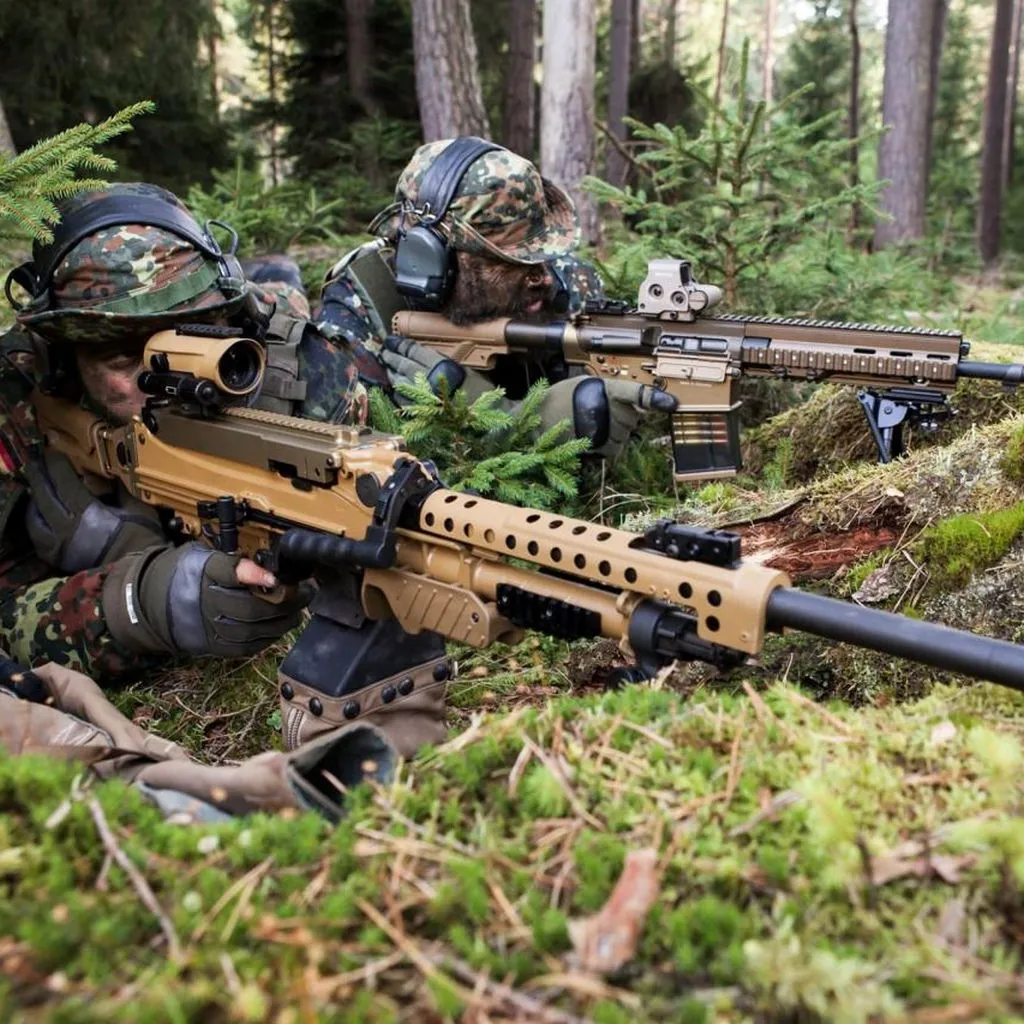
Usually new weapon promises the same thing: faster, more powerful, bigger. The unified machine gun MG5 went exactly the opposite. The one he replaced in the troops, MG3, a direct descendant of the legendary military "saw" MG42— fired 1200–1500 rounds per minute, the burst merging into a continuous crackling sound, earning this breed the nickname "the saw." The Bundeswehr's new machine gun inherited the same role as the infantry's general-purpose machine gun, but deliberately slowed the rate to 600–800. For eight decades, the German infantry had built combat around the idea of a barrage, and then suddenly abandoned it. Let's examine why engineers went backwards in rate of fire and what they got in return.
The Saw and its successor: the MG42-MG3 line
MG42 The 1942 model had one goal: to provide the infantry with an extremely simple, technologically advanced, and rapid-fire support weapon. It featured a stamped receiver, a short barrel recoil, a roller lock, and a rate of fire of up to 1,500 rounds per minute. The idea was to provide a high-pressure fire: a short burst would cover an entire sector. This explains the distinctive sound—the human ear can no longer distinguish individual shots.
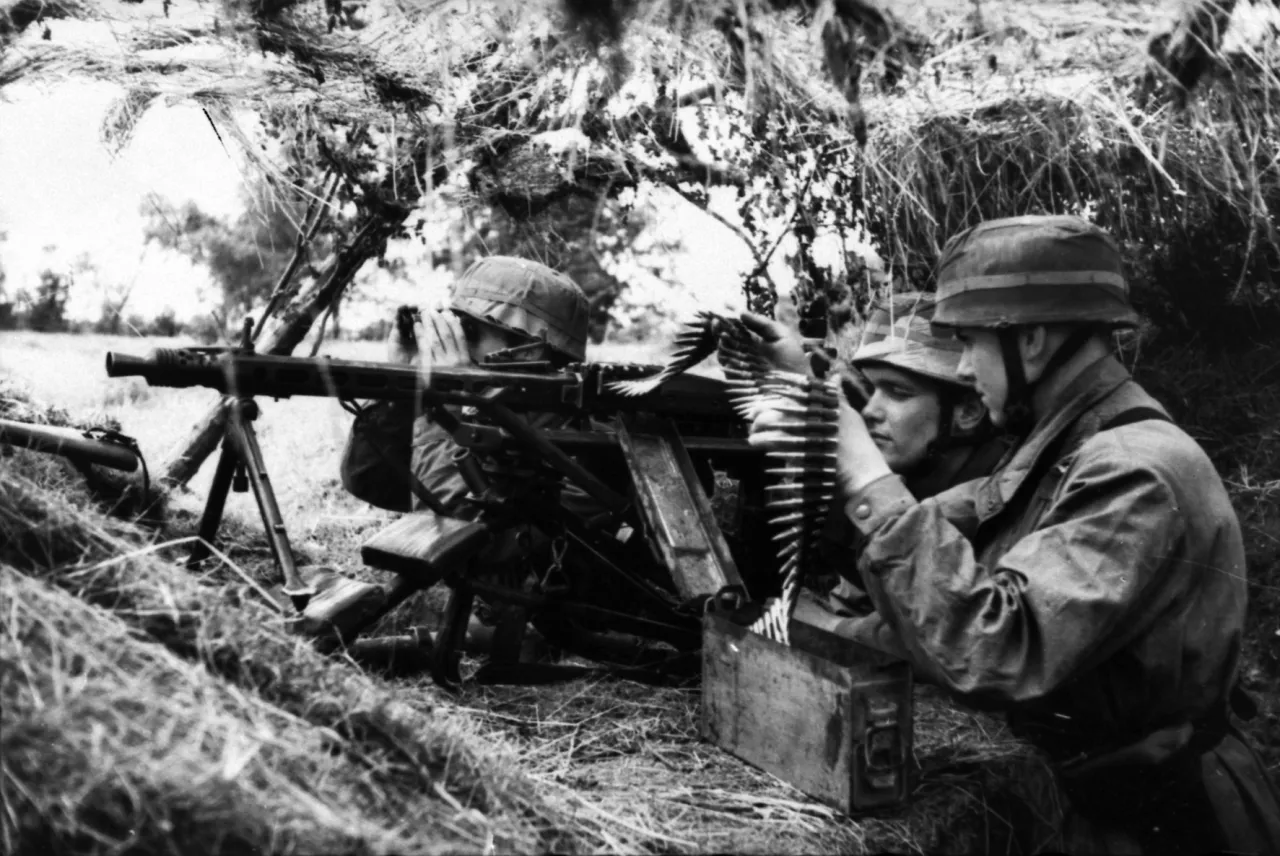
MG42
After the war, this design was redesigned to accept the 7,62×51mm NATO cartridge. Thus, the MG1 family grew out of the MG42 in the late 1950s and early 1960s, and by the end of the 1960s, it became the standard general-purpose machine gun of the Bundeswehr. MG3Whether mounted on a bipod, a tripod, on armored vehicles, or twinned—the MG3 set the standard for German fire support for nearly half a century. Its mechanics were inherited almost unchanged from the MG42: the same short barrel recoil, the same roller lock.
By the turn of the century, the limits of this design had become clear. Extreme firing rates meant massive belt consumption and rapid barrel heating. Accurately firing at a single target with a weapon that fires over twenty rounds per second became a lottery. More importantly, the MG3 was originally designed without optics rails—only later versions received them, with a STANAG 2324 rail on the receiver cover. The demand had shifted more fundamentally: the army needed a machine gun integrated with optics and target acquisition, not just a barrel on a bipod. Laying down bursts of fire became more important than blanketing a sector with lead.
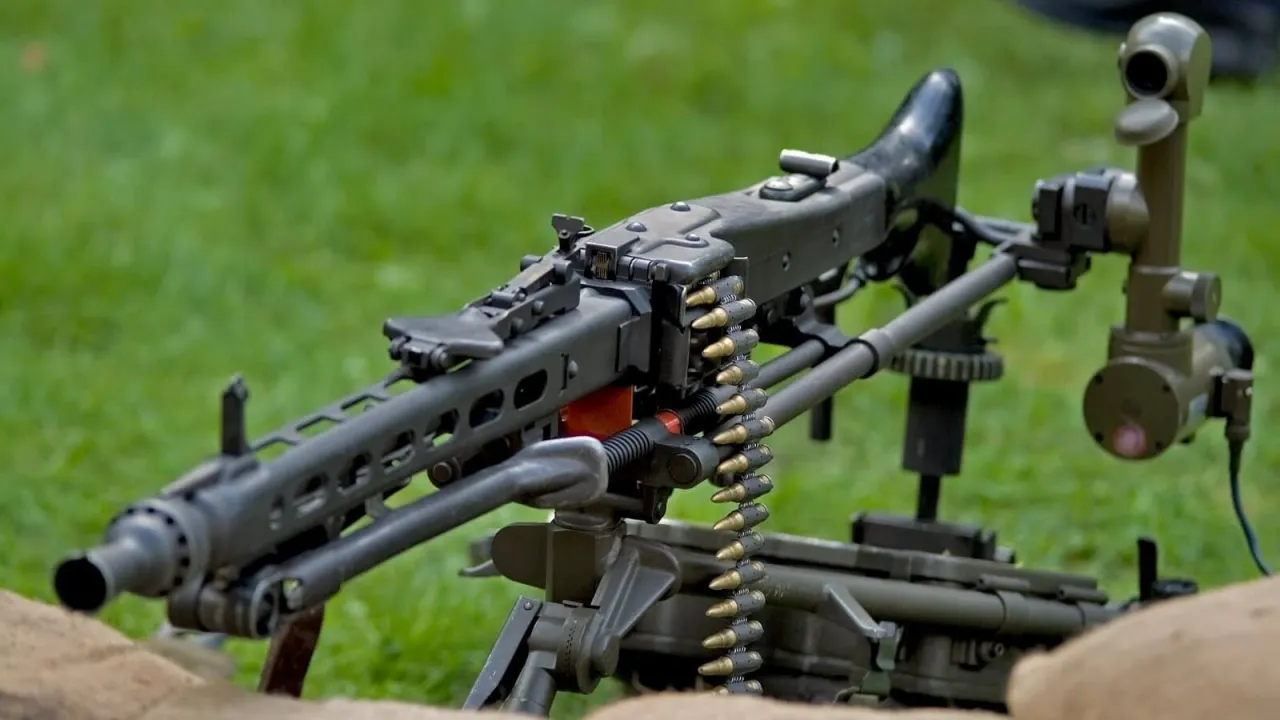
7,62mm MG3 machine gun mounted on a tripod
The HK121 becomes the MG5: gas operated, rotating bolt and three tempos
Work on a new general-purpose machine gun HK121 started in the mid-2000s, shortly after Heckler & koch brought the light machine gun into production MG4 5,56 mm. And the new machine gun's mechanics weren't taken from the MG3, but from this light relative—from a different design family. The designers were tackling a dual challenge: replacing the MG3 and incorporating the weapon into the "future soldier" (IdZ) program—a system in which the shooter is integrated into a single network with optics, communications, and target acquisition. In 2013, the Bundeswehr selected the HK121 as the winner and assigned it the designation MG5.
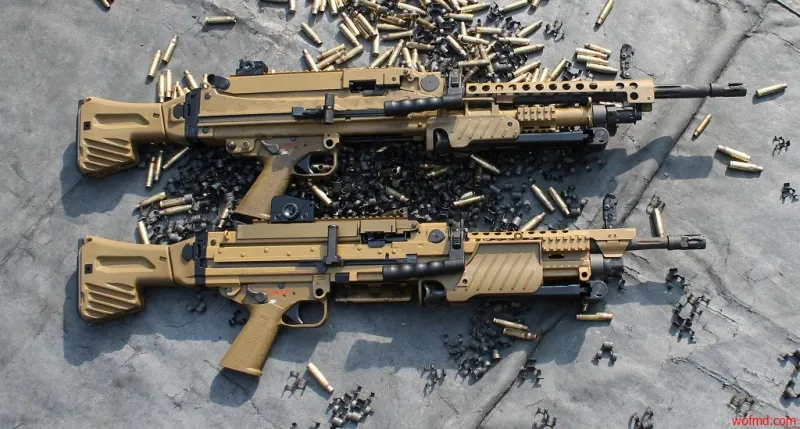
Heckler & Koch HK121 machine guns, also known as MG5
It's designed like this. Powder gases are diverted from the barrel and push a long-stroke piston, while the rotating bolt locks the chamber with two lugs—a gas-operated system that's reliable and durable. Fire is conducted from an open bolt: before each burst, the moving parts are in the rear position, the cartridge hasn't yet chambered, and the barrel is ventilated between bursts. At the moment of firing, the bolt is, of course, closed and locked—otherwise, the shot wouldn't have fired. This small detail, on paper, prevents the cartridge from spontaneously igniting in the hot chamber—a scourge of any machine gun that fires long and hard.
The rate is controlled by the gas regulator—a ring with slots for the base of the cartridge case. The shooter inserts the base of the cartridge into the slot and turns the regulator to one of three positions, changing the volume of gases entering the gas chamber. The three-position regulator provides three fixed settings: 600, 700, and 800 rounds per minute:
- 600 - main mode, controlled aimed fire in short bursts from a bipod or a machine gun;
- 700 - intermediate;
- 800 - dense suppressive fire when maximum sector saturation is important.
The design is purely mechanical, but it gives the shooter a great deal of control. There's a caveat: near the upper firing rates, above 700 rounds per minute, the recoil and weapon vibration increase, and stability noticeably decreases. A high rate isn't "always better"—it's a tool tailored to a specific moment in combat.
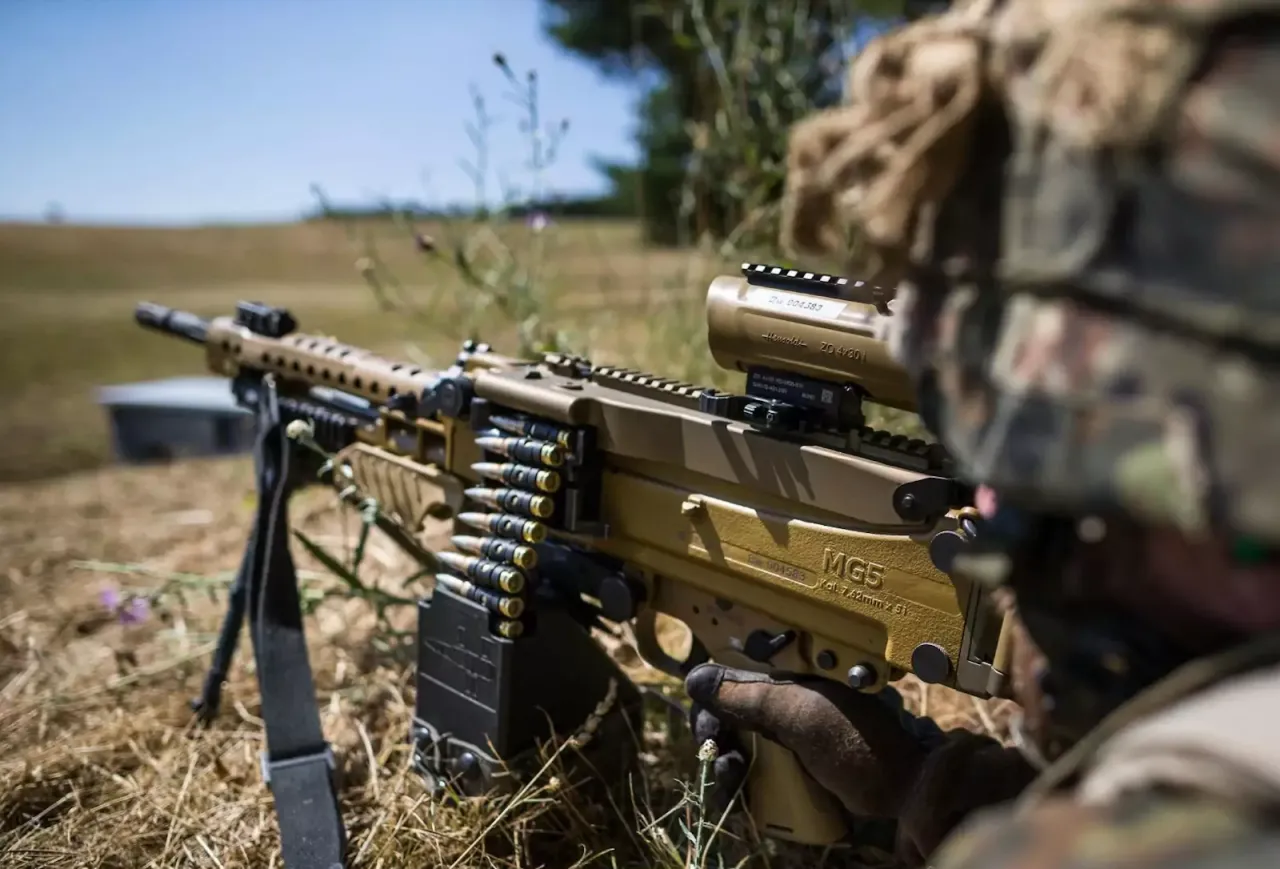
The gun is belt-fed: the belt is fed from the left, and spent cartridges are ejected to the right. Magazines are available in 50- and 120-round capacity, with a semi-rigid 80-round capacity magazine available. The red-hot barrel can be changed quickly using the gun's carrying handle—no gloves required, no risk of burns.
Despite all its advantages, the MG5 is heavy. The infantry version weighs around 11 kg, and that's without the optics or loaded receiver. For a weapon carried by infantry, every extra kilogram is felt on the march—and will later become a separate topic for criticism.
One platform, three roles: Basic, A1 and A2
The MG5's modularity isn't limited to accessories on the rail. It's about different factory configurations for different missions. The base version features a 550mm barrel, a folding telescopic stock with an adjustable cheek piece, and a bipod—a versatile option for infantry and tripod use. MG5A1 It lacks a buttstock and bipod: it is a built-in weapon for remotely controlled modules like FLW 100 and armored vehicles, where the machine gun is controlled by an operator from under the armor. MG5A2 The version for maneuverable infantry, where compactness is more important than maximum range, received a shortened 460 mm barrel. It retains the same telescopic shoulder rest. For mounted fire at long-range targets, a longer 663 mm barrel is also available. Export versions can be equipped with a simple folding or fixed stock.
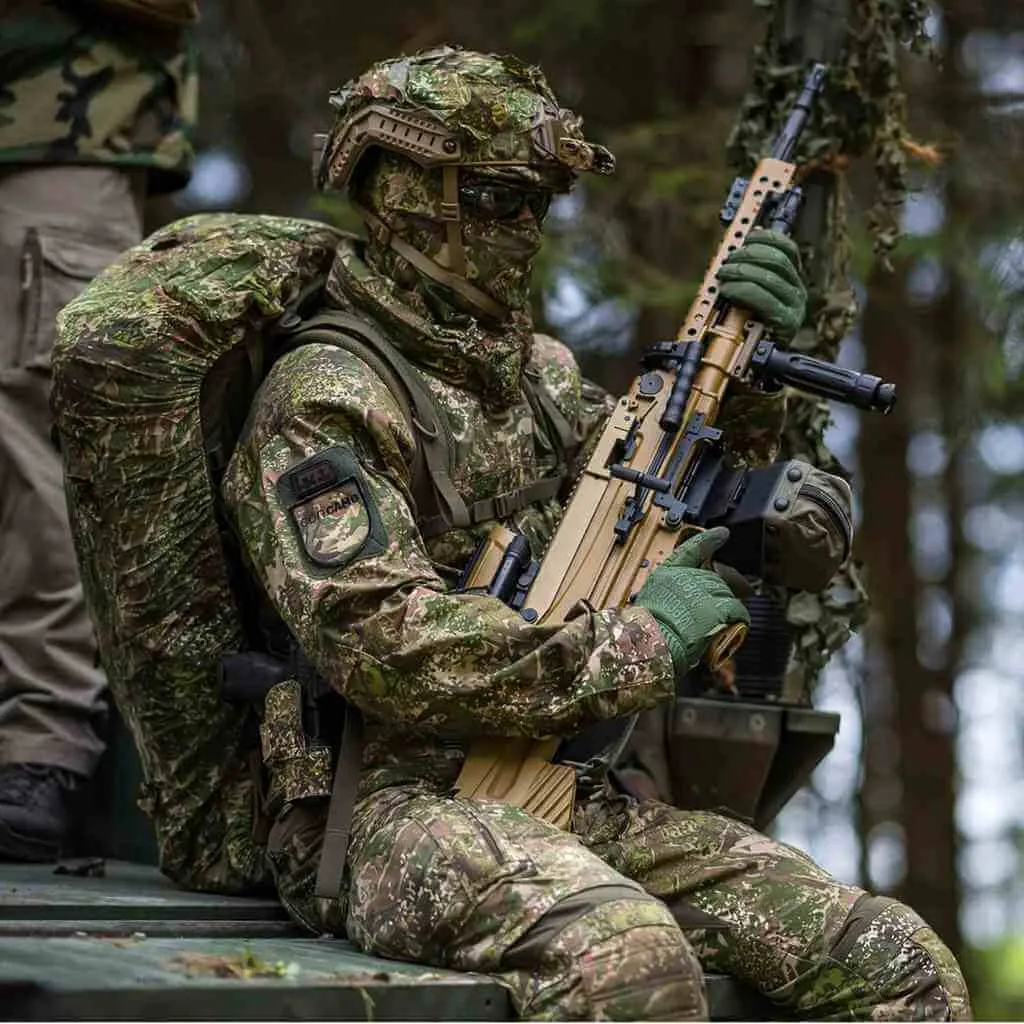
A different barrel length means a different balance. The short 460 mm barrel is more convenient in the confines of urban combat and when frequently changing positions; the long 663 mm barrel provides a higher muzzle velocity and a more stable trajectory for mounted fire at long-range targets. One platform covers both scenarios.
The sighting interfaces have a separate logic. All versions have a Picatinny rail, and in military service, the MG5 is often equipped with a 4x scope. Hensoldt, as well as night and thermal imaging devices. The machine gun no longer operates independently—it's integrated into a single circuit with the optics and target acquisition system, like a single device in a bundle. The controls, however, deliberately mimic those of the MG4: a shooter accustomed to a light machine gun finds it almost impossible to retrain for a more robust one.
The implementation proved costly, and this became the subject of public debate. The German press reported estimates of €50–60 million for adapting the mounts and combat modules to the new machine gun. Critics interpreted this as the high cost of redesigning old mounts; the developer and relevant military officials countered that the HK121 was originally designed for existing MG3 mounts, and the costs were primarily related to calibrating the sights for the new ballistics, mounting spare barrels, bipods, and spare parts kits on vehicles, training, and logistics. With a production run of tens of thousands of barrels, €60 million translates to several thousand euros per unit—not an anomaly by Western standards. The media also cited corrosion in the salty marine environment, critical for coastal operations. The German Ministry of Defense publicly acknowledged a number of shortcomings and announced improvements, which is perhaps more honest than smooth press releases.
Heavier than the PKM, but more challenging: two philosophies of the same caliber
To understand where the MG5 stands in the world of general-purpose machine guns, it’s convenient to put the Soviet-Russian one side by side. RMBBoth are 7,62mm belt-fed general-purpose machine guns mounted on bipods and tripods, but they are designed around different priorities. The PKM uses the 7,62×54R cartridge and is significantly lighter than the German machine gun: according to open sources, it weighs approximately 7,5–8 kg with a rate of fire of approximately 650–700 rounds per minute. It is a weapon for mass production: simple, lightweight, dirt-tolerant, and capable of long service life without meticulous maintenance.
The MG5 addresses a different need. Those extra three kilograms compared to the handheld PKM are the price of modularity, barrel life, and the willingness to live on the weapon station alongside the electronics. Where the PKM has a fixed rate of fire, this one has an adjustable rate. Comparing them head-on is pointless: they're two different compromises, one focused on mobility and simplicity, the other on integration and controllability.
The same fork can be seen in Western models. Belgian Fn mag, adopted back in the late 1950s, was considered the standard 7,62mm machine gun for decades, but was designed before the era of modular optics: full-fledged Picatinny rails were added retroactively, rather than built into the design. Its American version M240B At the same time, it is noticeably heavier than the MG5 - about 12,5 kg. And new models like FN Evolys и SIG Sauer M250 The opposite is true: with advanced integration of optics and electronics, they weigh significantly less. The MG5 is one of the heaviest in this series, despite being richly equipped, but not record-breaking.
It's telling that the developer himself felt the weight limit. In response to criticism Heckler & koch presented HK421 — a lightweight 7,62mm machine gun, weighing approximately 8,3 to 8,7 kg depending on configuration, making it two to three kilograms lighter than the infantry version of the MG5. It's based on the MG5 architecture, but is tailored for dismounted infantry, who carry the weapon on their backs rather than transporting it on a vehicle.
So the MG5 doesn't settle the debate about what's more important—lightweight or intelligent—in a machine gun. It intensifies it. And the fact that the lighter HK421 is competing alongside it speaks volumes: even the developer doesn't believe the heavy, modular approach is the only correct one. Whether weight or electronics will prevail will be decided in future contracts, not in this one.
Information