A Half-Century Battery: Why the Atom Can Heat Probes, But Resists Getting Cheaper
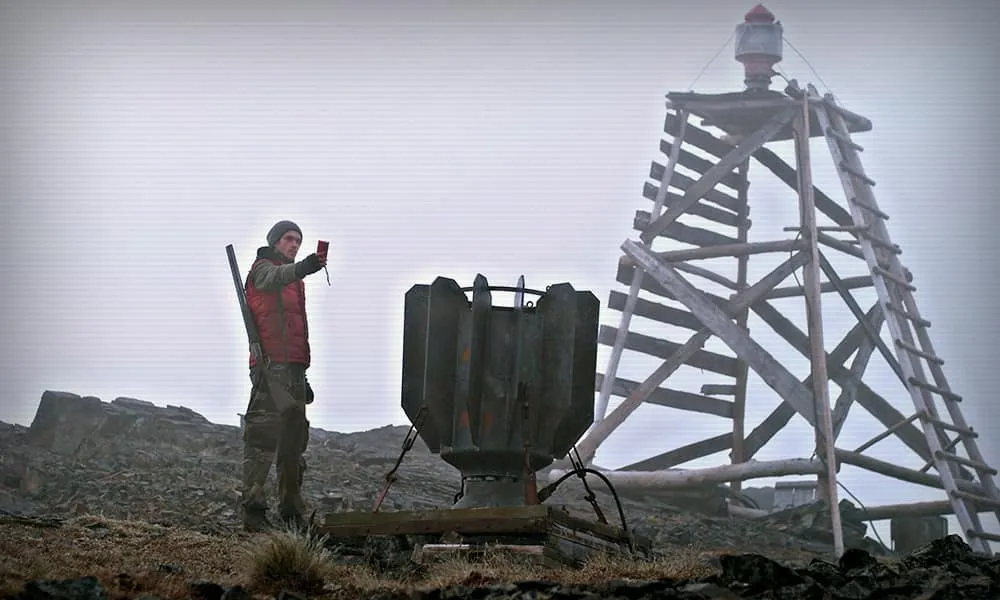
A radioisotope thermoelectric generator (RTG), which was used as an autonomous power source for remote lighthouses and weather stations in the USSR. This object is a still from the Russian drama film "How I Ended This Summer" (2010), which is set at a polar station.
Somewhere on the Arctic coast, a couple hundred kilometers from the nearest human habitation, a navigational beacon stood for decades. It had no wires attached: its light and radio signal came from a barrel-sized source that required no fuel, no maintenance, and no human presence. It simply heated itself internally, converting the heat into electricity, and was expected to last for about thirty years. The problem surfaced later. When the network of such beacons began to be dismantled, it was discovered that some of the sources had long been abandoned, and in others, their security had been breached. The source contained strontium-90.
Here's a radioisotope power source in a nutshell: extreme reliability and an equally inconvenient internal structure. It doesn't break down because there's nothing to break—no pumps, no moving parts, no recharging. But for the same reason, it can't be "turned off." The isotope continues to heat and radiate even when the source is no longer needed. That's why it's so difficult to get rid of.
How to make current from decay
Radioactive decay is heat. The isotope nucleus disintegrates, the scattered particles are slowed down by the substance, and the substance heats up. This heat is then converted into electricity in two ways, and they work very differently.
First - RTG, a radioisotope thermoelectric generator. The isotope's heat is removed by thermocouples: a voltage is generated at the junction of two different conductors due to a temperature difference (the Seebeck effect, known since the 19th century—the physics behind it is well-developed). This design has low efficiency, a few percent, but absolute reliability. It will generate heat for as long as the isotope lasts.
The second method is younger and thinner in design - betavoltaicsHere, beta-decay electrons fly into the semiconductor and knock out charge carriers, like photons of light in a solar cell. Essentially, it's an "atomic photocell," but with nuclear decay instead of the sun. The power output is tiny, from fractions of a microwatt to a few milliwatts, but such a cell can deliver it for decades.
Hence the simple rule that will have repercussions later: an isotope is selected based on the task, not on the principle of "where there's more energy." The important factors are the type of radiation (which determines the protection), the half-life (which determines the service life), and the specific heat release. There's no "one-size-fits-all" isotope; each has its own niche.
Earth and Space: Half a Century in Operation
Those Arctic beacons are made of strontium-90. The isotope is cheap, abundant in reactor waste, and produces significant heat. But strontium emits harsh beta radiation, requiring extensive shielding, and has a half-life of 28,8 years. It was ideal for an autonomous beacon: set it and forget it for a quarter of a century. This "set it and forget it" approach backfired. The USSR produced about a thousand RTGs, the lion's share for navigation along the Northern Sea Route. After the country's collapse, this unified inventory was lost in places: some sources stood abandoned, while damaged protective shells were found on others. A separate state program, stretching out over years, had to collect and remove them. The engineering was spot on. It wasn't the physics that let us down. The problem was that a source must be monitored for its entire lifespan, not just while it's providing useful information.
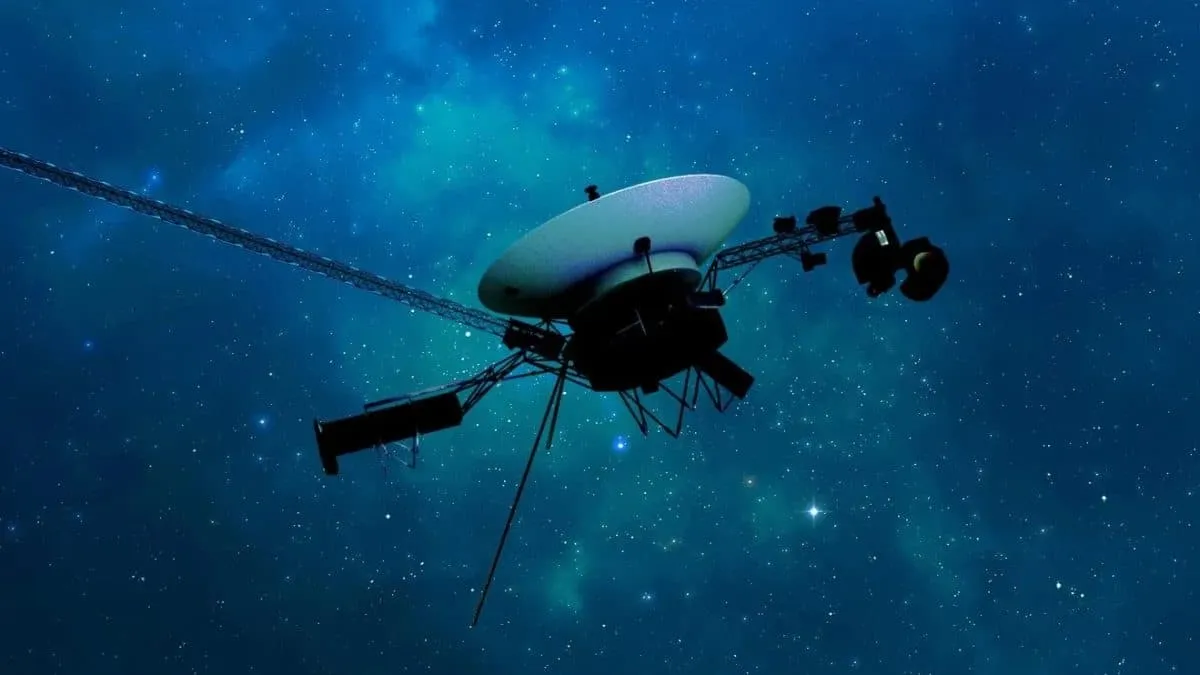
In space, they chose both a different isotope and a different logic. Devices Voyager-1 и Voyager-2Launched in 1977, the two spacecraft each carried three plutonium-238 RTGs. Almost half a century has passed—both probes have left the heliosphere and are still communicating. But their power is inexorably dwindling: the RTGs are losing several watts a year, and to keep them going longer, engineers are shutting down their onboard instruments one by one. This is the isotope in its purest form—a source that cannot be refueled, only slowly depleted.
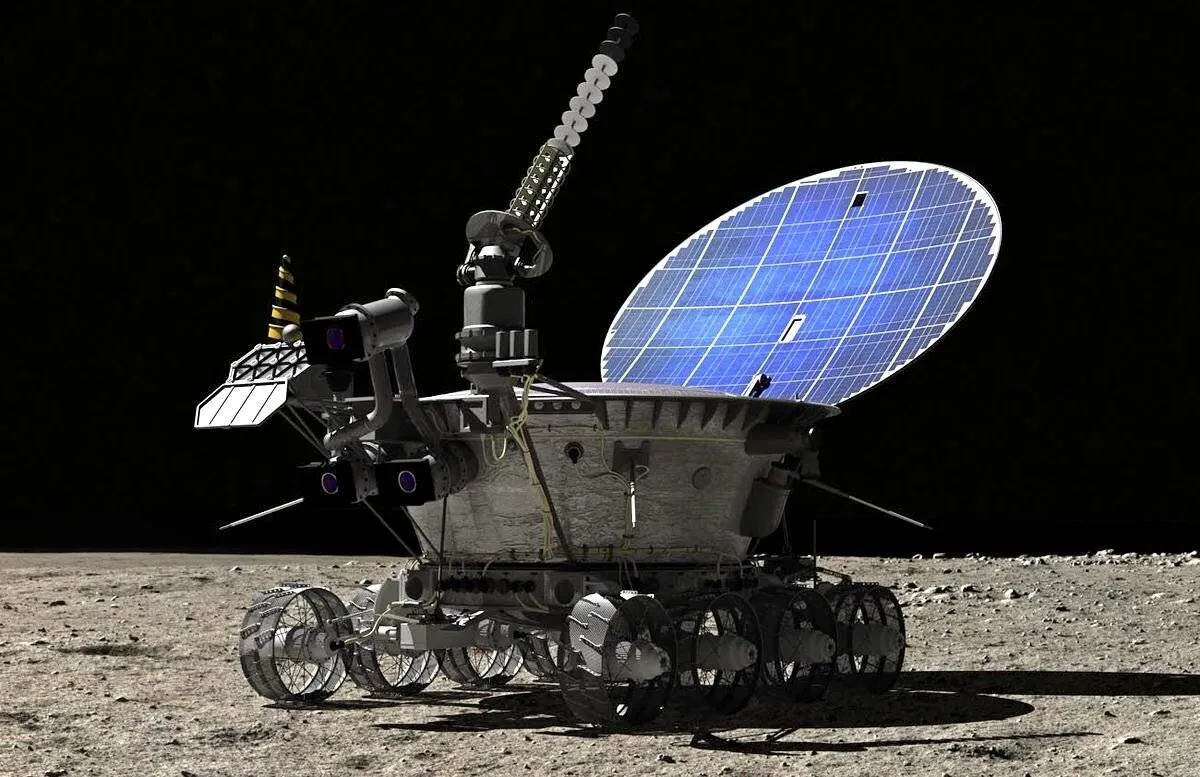
It's worth separating two often-confused things. The Soviet Lunokhods also carried the isotope polonium-210, but they used it to heat the instrument compartment on lunar nights rather than generate electricity. Polonium-210 produces tremendous heat, but only lasts about 138 days: it's not suitable as a power source for years, but it's perfect as a heating pad for a few months on an expedition.
Plutonium-238: Ideal for space and almost impossible to obtain
The reason plutonium-238 is so popular in space is clear from its physics. It's an alpha emitter: heavy but short-range particles are decelerated within the source material itself, requiring minimal external shielding. Heat generation is high, and the half-life is 87,7 years. For an interplanetary mission lasting decades, this combination is nearly ideal: the power output is long-lasting, and the source itself doesn't require thick shields that would add weight to the spacecraft. Let's be clear: "ideal" here refers to physics, not availability, and we'll return to production later.
Nuclear physicist Igor Ostretsov says exactly this, calling plutonium-238 "the ideal isotope" for space in an interview and citing the long-lived American probes. From an engineering perspective, there's no argument here—it's the industry's logic.
The debate begins where physics collides with production. Plutonium-238 isn't mined; it's produced in reactors from neptunium-237, and then isolated using complex radiochemistry. Just how delicate this is can be seen from the American storiesAfter the closure of the Savannah River reactors, the United States was effectively without its own plutonium-238 for over two decades, relying on imported supplies. It was only in 2010 that the Department of Energy presented Congress with a plan to resume production. Three national laboratories (Oak Ridge, Idaho, and Los Alamos) had to restart the production chain, and according to the program's plans, it should reach a modest 1.5 kilograms of plutonium dioxide per year by 2026—enough for the upcoming Dragonfly mission to Titan. Paradoxically, the isotope, recognized as the best for deep space, remains in short supply not because it's inferior, but because it's difficult and expensive to produce.
Nickel-based nuclear batteries: an old idea, a new wave
The story is similar with micropower sources, and it runs into the same wall—isotope production. We're talking about nickel-63 betavoltaics. The isotope is convenient because it emits very soft beta radiation: as they like to say, a sheet of paper or thin foil can shield you from it. Its half-life is approximately 101 years, meaning the cell can deliver stable power for decades without replacement.
The niche for such batteries is narrow—microwatts, where battery life and autonomy are more important than power. Promising areas include pacemakers, autonomous sensors, and non-volatile memory that can't be left without power. However, for now, these are mostly research and prototypes, not mass-produced batteries. MEPhI has reported work on nuclear microbatteries, and in 2024, a Chinese company announced a nickel-63 beta-voltaic power source. These are the ones behind these the news And the tempting image of a "wireless world" emerges, where every small electronic device is powered by its own decay. But between a microwatt and a light bulb lie several orders of magnitude of power, and betavoltaics doesn't cover them. This is power for a sensor, not a refrigerator.
The main limitation is again the isotope, not physics. Nickel-63 doesn't exist in nature; it's produced in a reactor from nickel-62, which makes up about 3,6% of ordinary nickel. Therefore, the raw material is first enriched in centrifuges, then irradiated, and finally separated. According to Ostretsov himself, a gram of this nickel costs millions of rubles. This figure should be taken as his personal estimate, but it accurately conveys the order of magnitude of the labor involved.
Ostretsov proposes a solution: producing nickel-63 not in a reactor, but in an accelerator, by irradiating copper with a particle beam with an energy above a certain threshold (hence the "threshold reaction"). According to him, this would reduce the cost of the isotope significantly and allow for chemical separation to replace conventional separation. The idea is attractive, but it has not yet received widespread acceptance: the method has been criticized in a number of expert publications, and industrial implementation has yet to materialize. So, for now, this is just one person's idea, not something the industry is already planning for. He pinpointed the bottleneck: the entire economics of nuclear batteries hinges on the cost of producing and separating the isotope.
We learned how to convert decay into electricity half a century ago, and nothing fundamentally new has been required since then. All that remains is to learn how to produce the necessary isotope cheaply—and that's still a challenge.
Information