Something interesting in China again
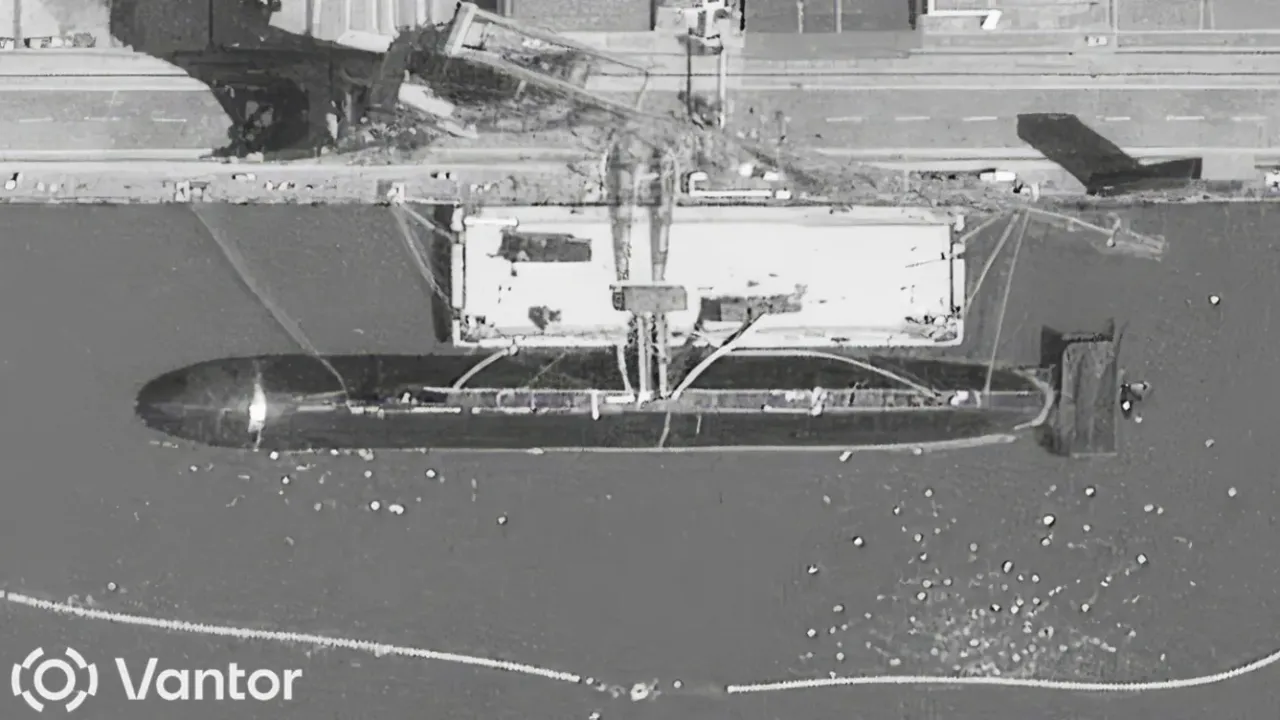
So, once again, our neighbors have come up with and built something interesting that's starting to excite people around the world. A new large Chinese submarine with a unique feature has been captured on satellite images, and off it goes...
A mysterious nuclear-powered attack submarine could be China's answer to the advent of fast interceptor boats.
Something like that. The Americans gave it away. Where did they get the information that the submarine was nuclear-powered, or what kind of high-speed boats would be hunting the nuclear submarine? There's no explanation, but it's not really needed. Indeed, anyone willing will understand that the best use for a nuclear submarine is to hang around close to the coastline, where it can be intercepted by high-speed boats.
But in the general flow of nonsense, it is possible to find sound thoughts from not entirely “gifted” experts, and then the picture really does turn out to be interesting.
China has developed a new type of submarine that apparently lacks a traditional sail. Eight years ago, the same shipyard launched a smaller submarine—a technology demonstrator.
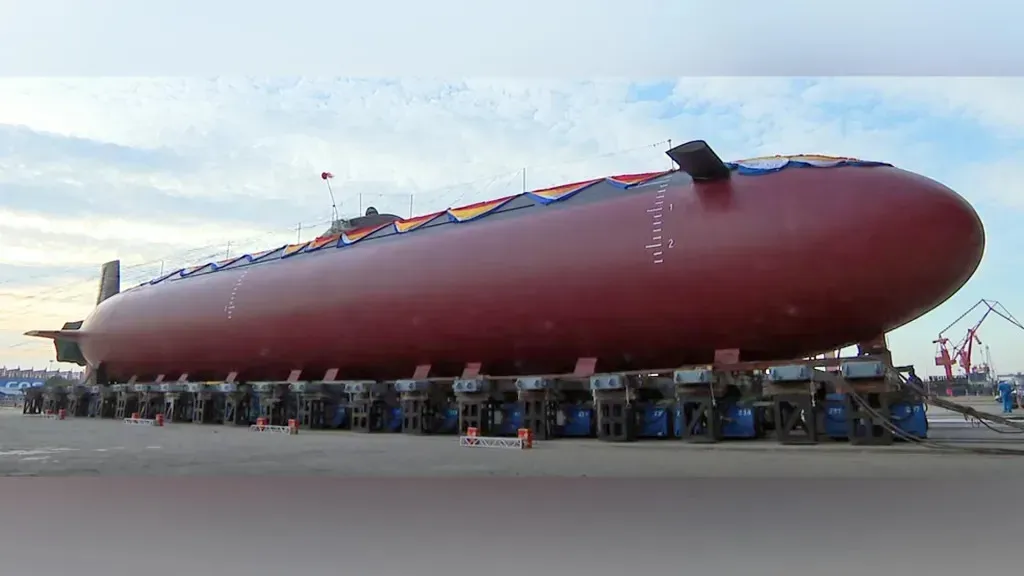
A photo of the stealth submarine launched at the JN shipyard in 2018.
And it is precisely this fact that allows us to conclude that the new boat is not an impromptu idea, but a well-thought-out and implemented development strategy.
Beijing has released no official information about the submarine. Chinese authorities rarely announce the launch of a first-of-its-class submarine, especially when it comes to classified naval projects. Due to this secrecy, outside analysts have to rely on satellite imagery and defense department assessments to understand the submarine's missions and capabilities.
Even with limited information, the message is clear: China continues to accelerate its submarine development. fleet, experimenting with increasingly unusual submarine designs.
What special thing did the neighbors prepare, and why was everyone so interested? It's simple: a technology demonstrator, or prototype, is simply a testing ground. The appearance of a full-size boat suggests that since 2018, China has put the prototype through such a series of tests that the collected data allowed it to build a full-size boat.
And just recently, a leading Chinese shipbuilding conglomerate unveiled the concept of an unmanned underwater vehicle (UUV) with a similar hull shape.
The new submarine's main feature is the absence of what they call a "sail," and what we call a "conning tower." That is, the deck guard that encloses all the retractable devices, of which there are many: periscopes, antennas, snorkels, and so on.
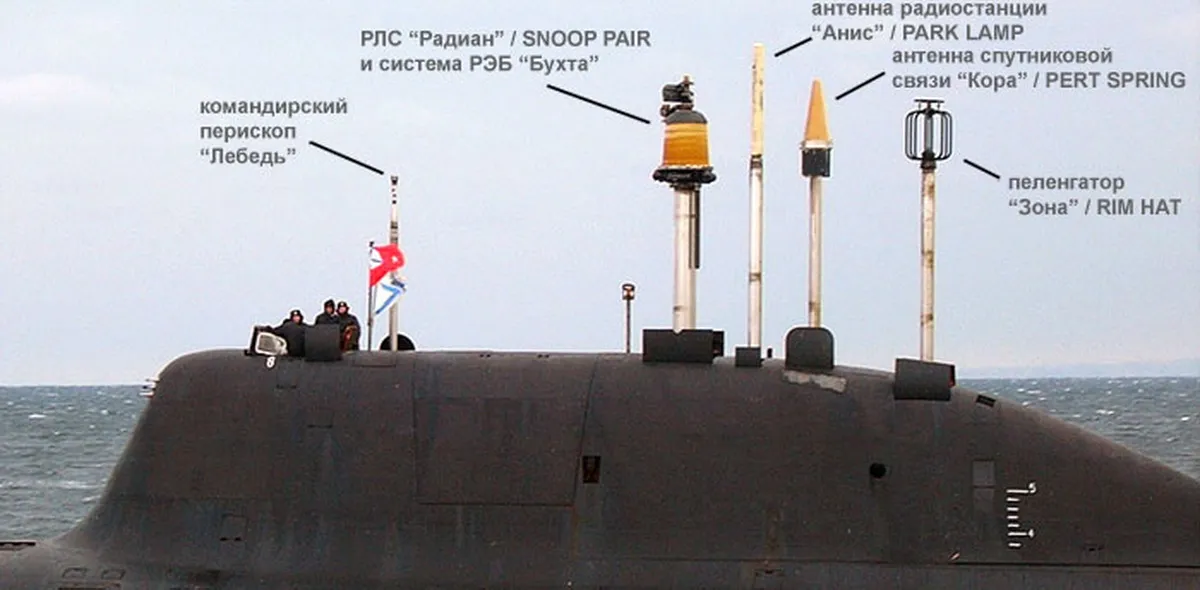
Such submarine designs may be advantageous in terms of speed, maneuverability, and reduced acoustic signature, but they also have serious drawbacks. If you think about it, the sail/conning tower, in addition to supporting the retractable devices, plays another very important role: stabilizing vertical stability during movement.
TWZ obtained images of the submarine in question from the JN (Jiangnan) shipyard in Shanghai, taken on June 1 by Vantor (formerly Maxar Technologies). The submarine, whose name and/or designation are currently unknown, first appeared there in late May, according to Naval News, the publication that first reported the incident.
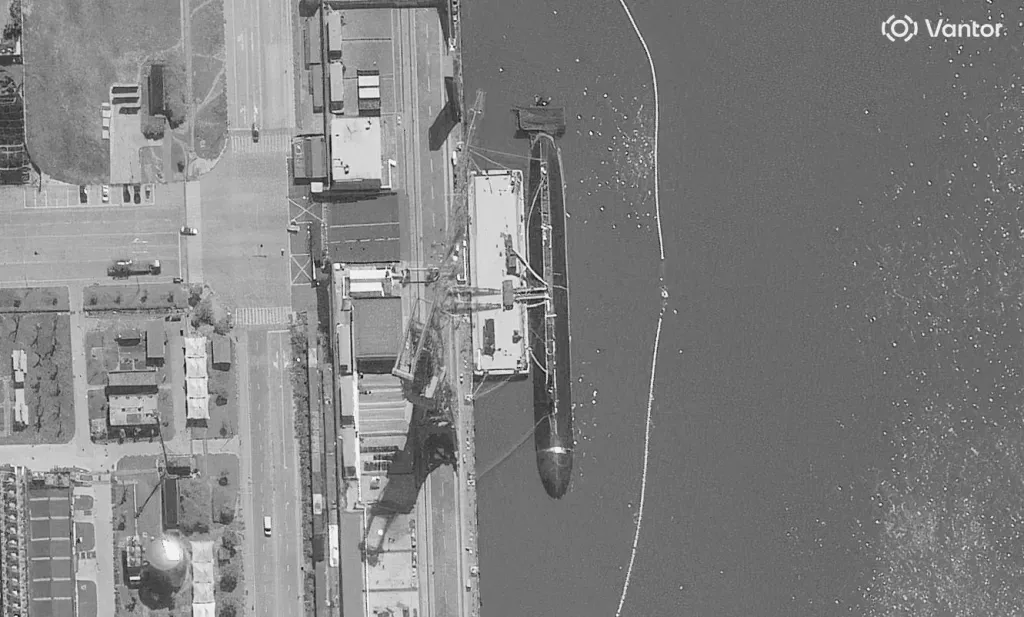
A new submarine is launched at the JN shipyard in Shanghai on June 1, 2026.
Judging by the photo, the submarine lacks a traditional sail. Or, it's unclear exactly how the retractable devices are designed, if they are present at all. As noted, JN Shipyard built another "sailless" submarine in the past.
According to renowned analyst H.I. Sutton of Naval News, who analyzed the images, the new boat is approximately 120 meters long and 10 to 11 meters wide.
This is larger than conventional diesel-electric submarines (for comparison, the Varshavyanka is 73 meters long) and even comparable to most nuclear-powered attack submarines. By comparison, the Chinese Type 093 nuclear attack submarine, one of the most modern submarines in service with the PLA Navy, is approximately 110 meters long and 10 meters wide. The length and width of the US Navy's Virginia-class submarines are 114,8 meters and 10,36 meters, respectively.
So, its size truly prompts reflection on the submarine's true purpose. After all, it's second only to the Borei- and Ohio-class strategic missile carriers, which are both 170 meters long.
We also see that the submarine at JN Shipyard has an X-shaped rudder configuration. This design offers advantages over a cruciform stern with horizontal and vertical rudders in terms of maneuverability, efficiency, and safety.
The X-shaped stern is a distinctive feature of China's new-generation attack submarine, commonly, but still unofficially, referred to as the Type 095. Naval News also reported the recent launch of another Type 095 submarine with a conventional sail at the Bohai Shipyard in Huludao, hundreds of kilometers north of Shanghai. This appears to have caused some confusion online, with some mistaking the boat at the Bohai Shipyard for a non-sailing submarine.
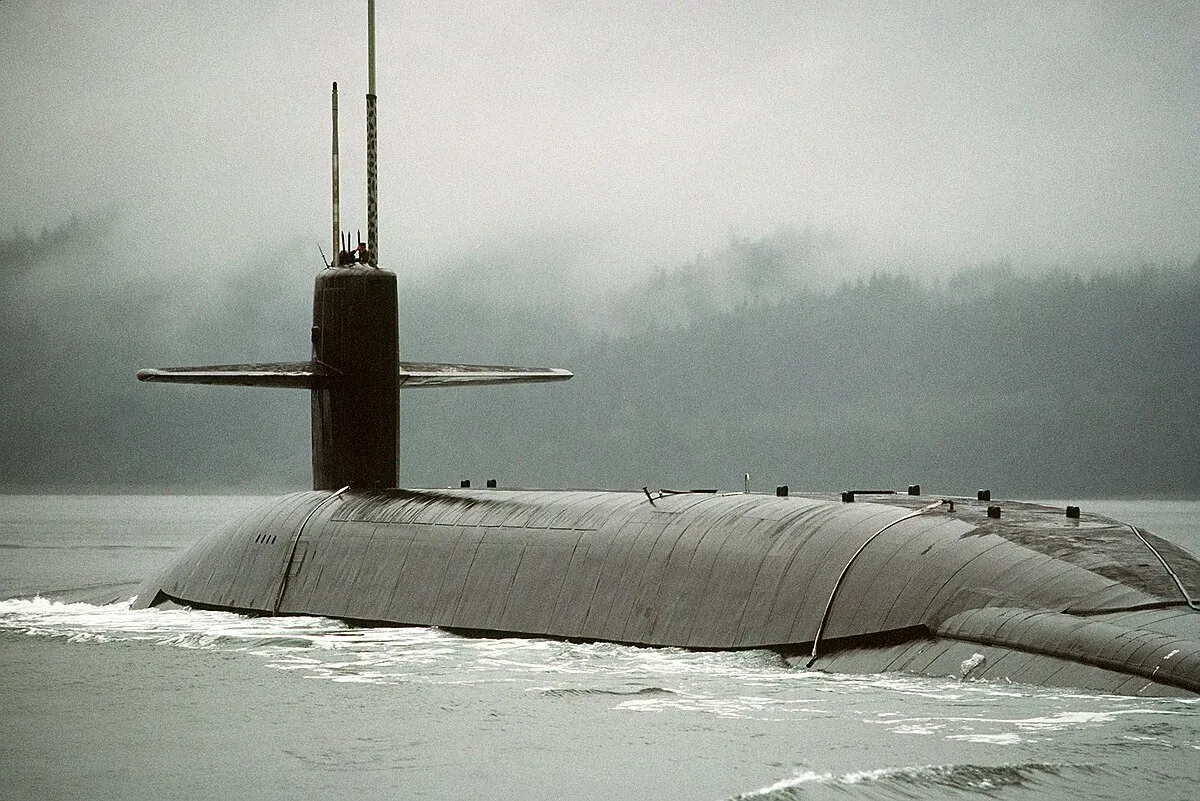
The absence of a traditional sail remains the most notable feature of the new submarine built at JN Shipyard. The absence of a large structure protruding from the upper hull significantly improves the streamlining of the entire structure.
The absence of a conning tower optimizes the submarine's speed and maneuverability while submerged. It can also make the submarine quieter and, therefore, less detectable even when moving at high speed. This can be particularly useful when pursuing targets, even those located far away.
But, of course, a question arises: traditionally, naval submarines used sails to mount periscopes and other sensor masts, as well as retractable communications antennas and snorkels for air circulation without surfacing. This space could be used for other purposes, including launching countermeasures and storing various items.
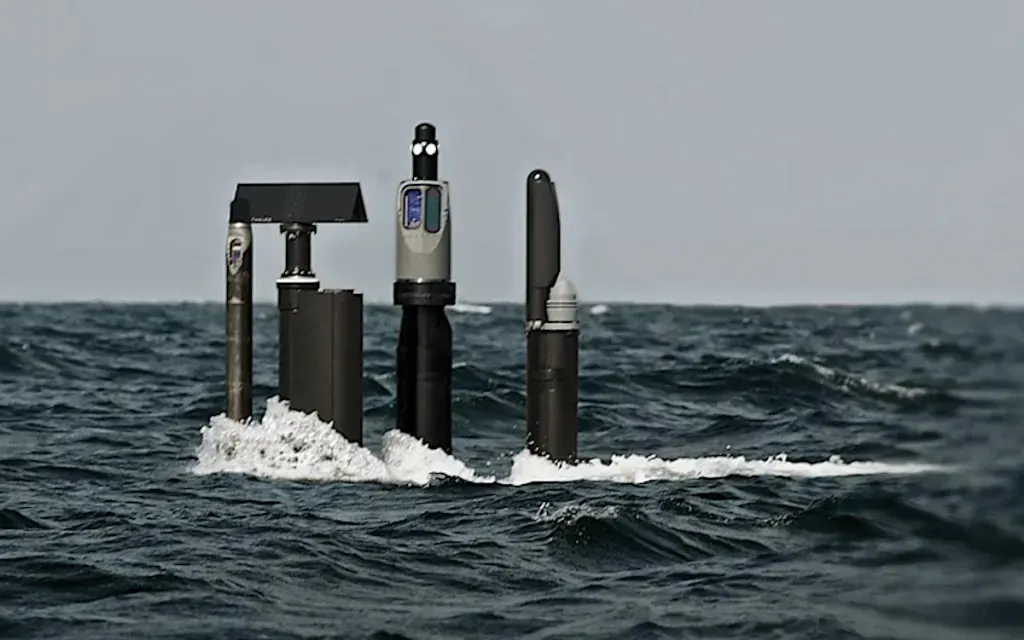
A typical example of a set of masts rising above the deck of a modern submarine
In addition to underwater propulsion, the sail plays a key role in general navigation and situational awareness when moving on the surface. If sufficiently strong, it can even penetrate ice during operations in and around polar regions.
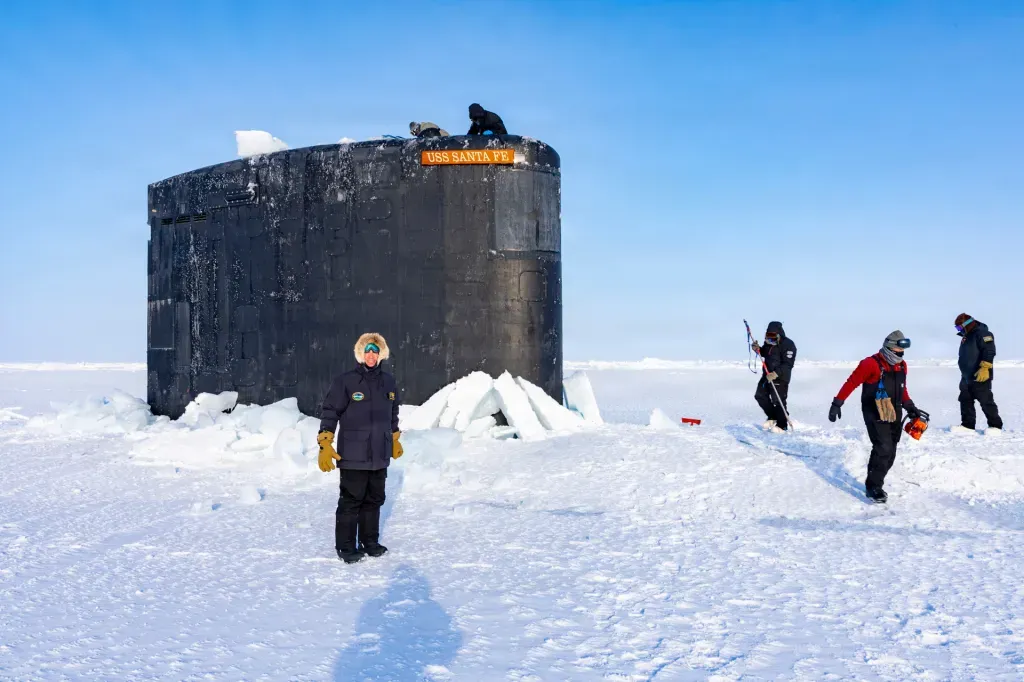
The sail of the US Navy's Los Angeles-class attack submarine USS Santa Fe breaks through ice during exercises in the Arctic Circle in March 2026.
What could the absence of a sail indicate?
First of all, there's no critical need to stabilize the submarine's vertical position. Secondly, there's no need to use periscopes. Both of these parameters could indicate that this is an unmanned underwater vehicle. An antenna for receiving control signals could extend from the vehicle's hull; for example, it could be lifted by a helium or hydrogen tank.
While some experts believe that "The lack of a sail may indicate that the focus is on operations on the seabed, away from the surface, where mast deployment and other aspects are not as important."
There's a lot to debate here: a deep-sea vehicle still needs communication system components, including antennas. Clearly, a 120-meter monster isn't suitable for shallow-water operations, but for deep-sea operations, given that the lack of a sail can significantly increase speed due to improved hydrodynamics, it's just the thing.
As mentioned, in 2018, JN Shipyard unveiled a smaller, sailless submarine. According to H.I. Sutton, this model was approximately 45 meters long and 4 to 4,5 meters wide. The small submarine also had a non-X-shaped rudder and a conventional propeller.
The exact reasons for this submarine's construction and its use over the years remain unknown; China is adept at keeping quiet on this matter. But it's clear that it has been in constant development, and over the years, it could have served as a test bed and platform for demonstrating technologies that would enable the development of the concept, as well as possibly other capabilities.
Of particular interest, but also unclear, is whether it was designed for a crew or for autonomous operation, or whether a crew could be added at any time. The same could be said of the new submarine. One can only speculate, but it's tempting to assume that the submarine is truly a hybrid in terms of habitability, meaning it's capable of autonomous combat missions without a crew, but if necessary, a crew could take over and pilot the submarine.
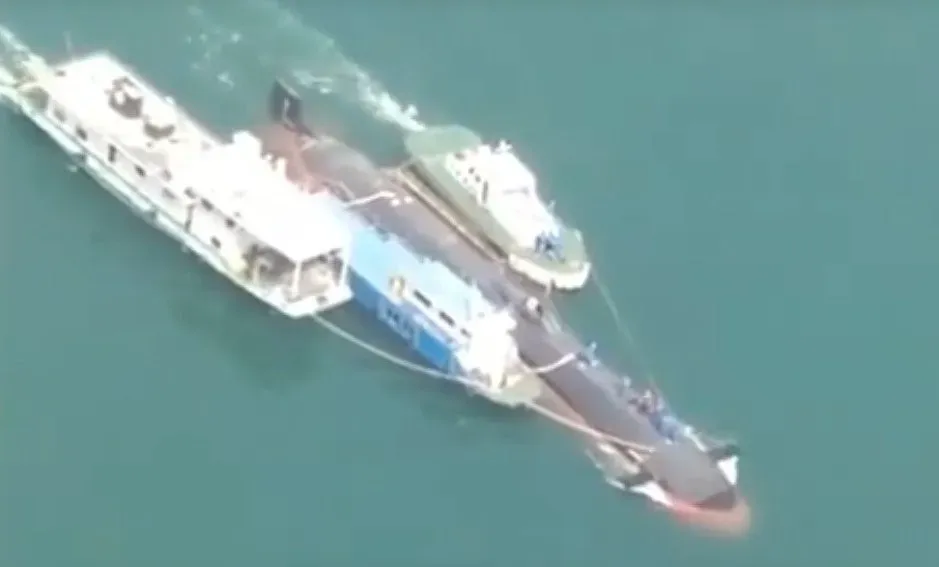
An aerial view of the first stealth submarine to be launched from JN Shipyard.
At the 2024 Zhuhai Airshow, the state-owned China State Shipbuilding Corporation (CSSC) unveiled a model of an unprecedentedly large diesel-electric unmanned underwater vehicle. Its overall design was very similar, at least in outline, to the original submarine from the JN Shipyard. The JN Shipyard is one of many subsidiaries of the CSSC.
The CSSC then stated that the submarine-UAV The vessel can be refitted to perform a wide range of missions, including attacking enemy vessels, laying mines, supporting special operations forces, and serving as a carrier for smaller unmanned underwater vehicles (UUVs). You can read more about all of this here.
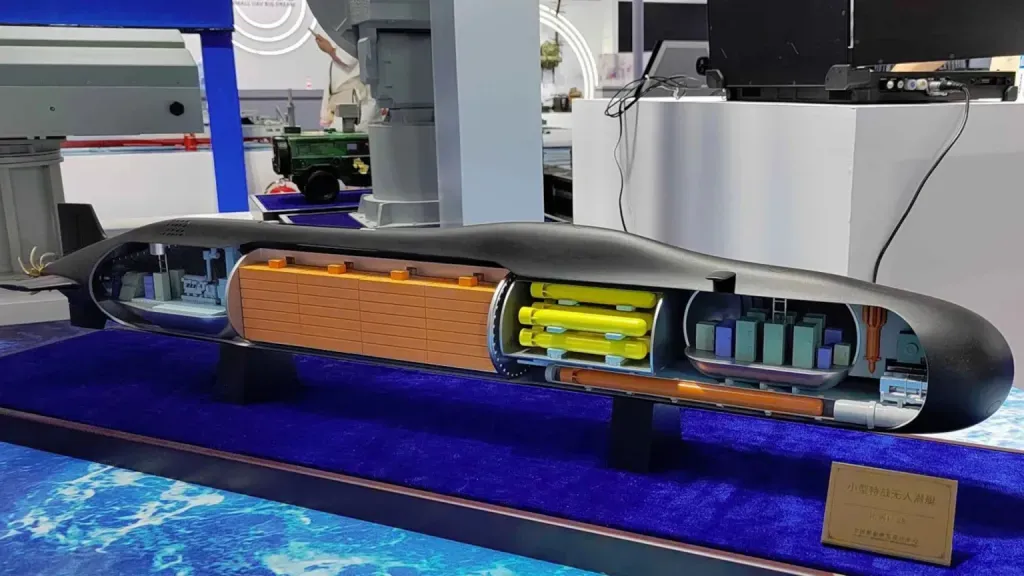
A model of a stealth maritime unmanned aerial vehicle developed by CSSC was unveiled at the 2024 Zhuhai Air Show.
Other shipyards and navies around the world have explored stealth submarine designs in the past, but these projects have typically remained on paper or as limited experiments.
For example, the US Navy previously tested a scaled-down demonstrator model of the Large Scale Vehicle Range (LSVR) submarine with a new sail design. The US Navy's Acoustic Research Detachment (ARD) conducted these tests on a lake in Bayview, Idaho.

In 2022, a model of a low-profile ballistic missile submarine was presented in Russia. rockets under the name "Arcturus"
Overall, the idea continues to be considered by government agencies across various countries. Some are moving forward, others are retreating, but overall, this is a normal process.
The PLA Navy's submarine fleet continues to grow in capabilities and potential, with an increasing number of modern submarine types. In the past, American officials have openly stated that the quality of China's new submarines is approaching that of their American counterparts. This is confirmed by the recent arrival of another new submarine in Bohai.
In addition to developing new nuclear power plants, China is also known to be working on a hybrid nuclear/conventional propulsion system, dubbed the Type 041 or Zhou. The first known Type 041 was discovered after it caused a stir when it sank at a shipyard in 2024.
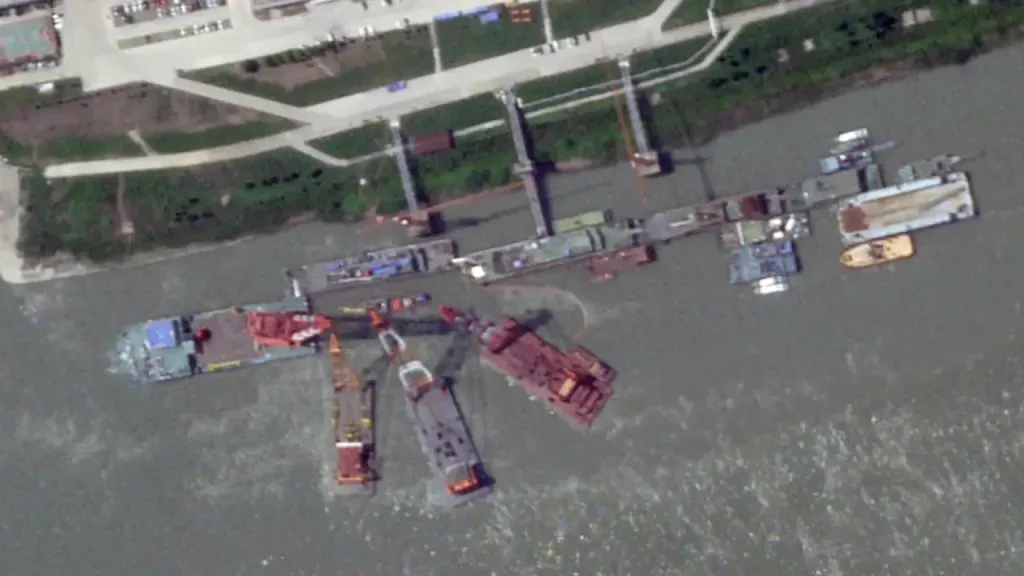
Crane barges surround the first known Type 041 submarine after it sank at China's Wuchang shipyard in 2024.
The increased use of nuclear propulsion will allow Chinese submarines to expand their presence in the Pacific Ocean and beyond, and is undoubtedly part of the PLA Navy's broader vision for building up its naval power in the future. And this frankly infuriates the United States, which has so far struggled to mount a decent technical confrontation.
"The People's Liberation Army Navy is making a significant strategic shift from diesel-electric to all-nuclear powered vessels, a fundamental departure from historical shipbuilding principles," U.S. Navy Rear Adm. Mike Brooks, head of the Office of Naval Intelligence, said in prepared remarks to the U.S.-China Economic and Security Review Commission in March.
This is… epochal!
Brooks is just a handsome guy, "violation of historically established principles of construction" This means that only the United States has the right to build nuclear submarines, while the rest of the world has to do whatever it takes. But diesel-electric submarines are preferable.
Brooks also emphasized that the hybrid Type 041 could offer "greater endurance, performing regional patrol and presence missions more cost-effectively than full-size SSNs (conventional attack submarines) and SSGNs (missile-armed submarines)."
It's logical that this is precisely why more than one research institute and design bureau is working in China. China places significant demands on its naval presence overall, particularly in relation to asserting its territorial claims to maritime areas in the South China Sea and elsewhere. The People's Liberation Army Navy (PLAN) continues to expand the size and composition of its combat fleet at a pace far outpacing that of other navies worldwide. This also applies to the US Navy, where disparities are becoming increasingly concerning.
The Americans are particularly displeased with the increasing role of nuclear reactors in China's submarine fleet. However, it's worth noting that this is somewhat overkill: the new submarine's propulsion system has yet to be determined, meaning that no official announcement has been made regarding what will power the submarine's propeller shaft, although analysts believe a standard nuclear reactor is the most likely option, given the vessel's size.
Another option involves the "nuclear-air" propulsion technology being developed in China. This concept combines a low-power nuclear reactor with an air-independent propulsion system—a sort of "two in one." Such systems provide greater autonomy without the complexities associated with full-size nuclear submarines.
China has already launched one submarine based on this concept. However, experts believe the new design will likely utilize a conventional nuclear propulsion system.
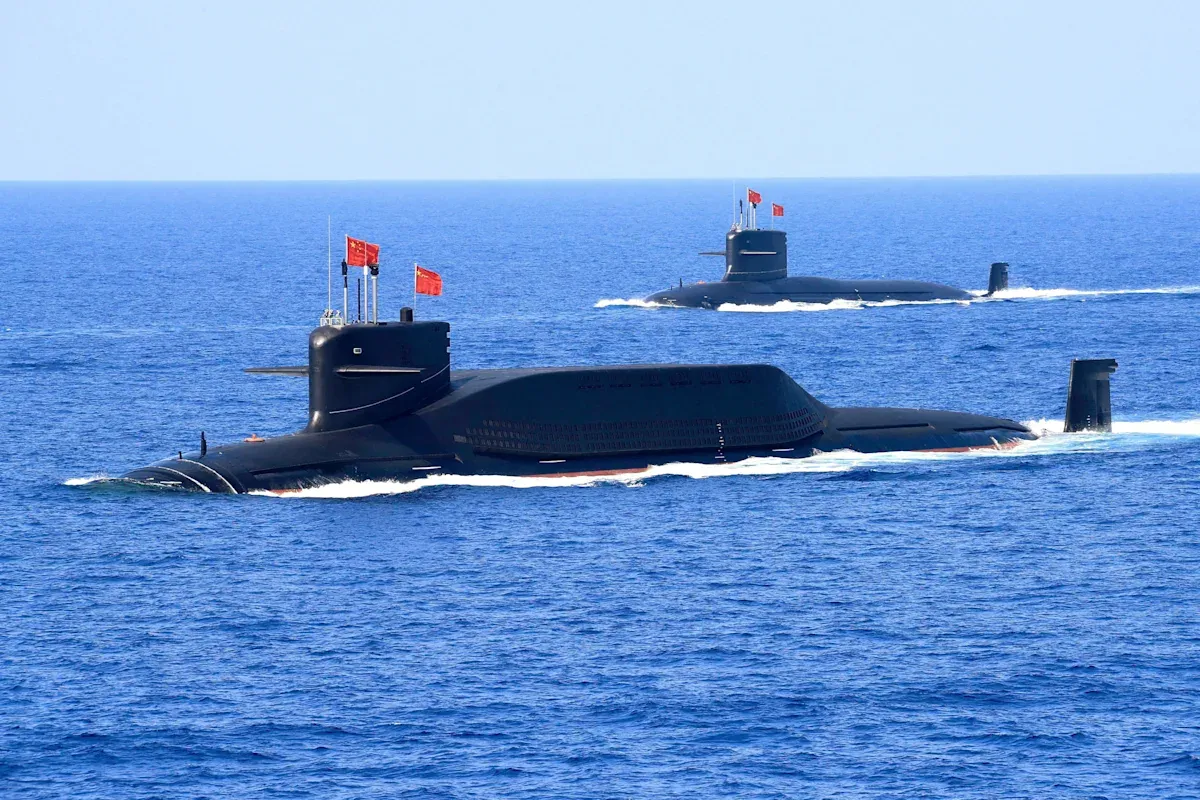
After all, if Russia could build a submarine Drone nuclear-powered – why can’t China, which is rapidly developing nuclear energy for peaceful purposes, do this?
The armament situation is also unclear today. At almost 120 meters long, the submarine appears too narrow to accommodate ballistic missiles. China's newest submarine-launched JL-3 ballistic missiles require significantly more spacious launchers. However, there are many deployment options, and the final say rests with Chinese shipbuilders.
Little is known about the new submarine, built at JN Shipyard, but it could be a prototype for low-profile submarines without traditional sails that could potentially be used as high-speed underwater interceptors by the PLA Navy and become part of China's future submarine fleet.
We've witnessed China surprise the world on numerous occasions, so another one only confirms that China is a highly complex and interesting player on the global stage, especially when it comes to weapons and military equipment.
Information