Steel Flock: How China is building a robot army and what it's actually testing
10 721 49
Steel Flock: How China is building a robot army and what it's actually testing


In April 2025, the first in stories A half-marathon of humanoid robots. Twenty-one participants started, and only six made it to the finish. The rest fell, overheated, and lost their balance on the turns: a short video of a humanoid toppling over went viral on social media faster than the official press release announcing the winner. Five months later, the four-legged Unitree robots were parading down Chang'an Avenue, past the stands where Xi Jinping stood. Between these two images lies the entirety of modern Chinese combat robotics: a large industrial base, a high-profile public display, and a vague distinction between showmanship and combat effectiveness.


Goliaths and Teletanks: A Brief History of the Combat Robot


The first mass-produced combat robots appeared in the USSR in the 1930s. Ostekhbyuro assembled the TT-26 teletanks and TU-26 control vehicles based on the light T-26. These vehicles were radio-controlled and armed with a machine gun and flamethrower. Their use in the Winter War of 1939–1940 proved limited: communications were disrupted, and the control vehicle crew tank I lost sight of my charge in the first ravine. But the principle was clear: car in front, person behind.


A teletank is in the foreground, with a command tank in the background. The teletank is easily identified by the distinctive "ears" of the whip antennas on its turret.

The Germans took a different approach during World War II. The Goliath self-propelled mine was a tiny tracked vehicle with an electric motor or a two-stroke gasoline engine, 60–75 kg of explosives, and wire control. More than seven thousand were produced between 1942 and 1945; the wire was easily damaged by small arms fire, but the design itself survived as an idea into modern mine-clearing robots.
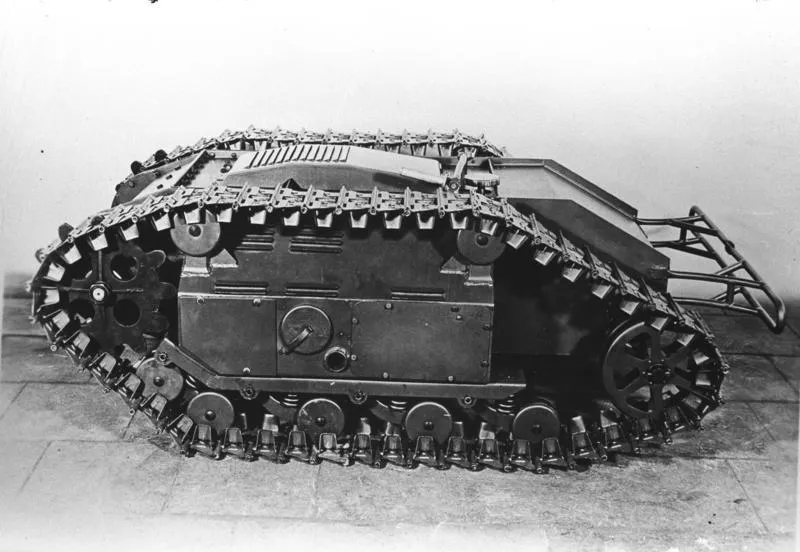

Goliath self-propelled mine

After the war, the field faded into obscurity for a long time. The current surge in activity was spurred by two American programs in the 2000s. The DARPA Grand Challenge series of self-driving car races from 2004 to 2007 brought autonomous navigation algorithms to practical use. And the BigDog, a quadruped with an internal combustion engine, unveiled by Boston Dynamics in 2005, became the technological ancestor of all current quadruped platforms, including those produced by Unitree today. China's "robot army" has emerged from two waves: American research programs and its own industrial base of the 2010s.
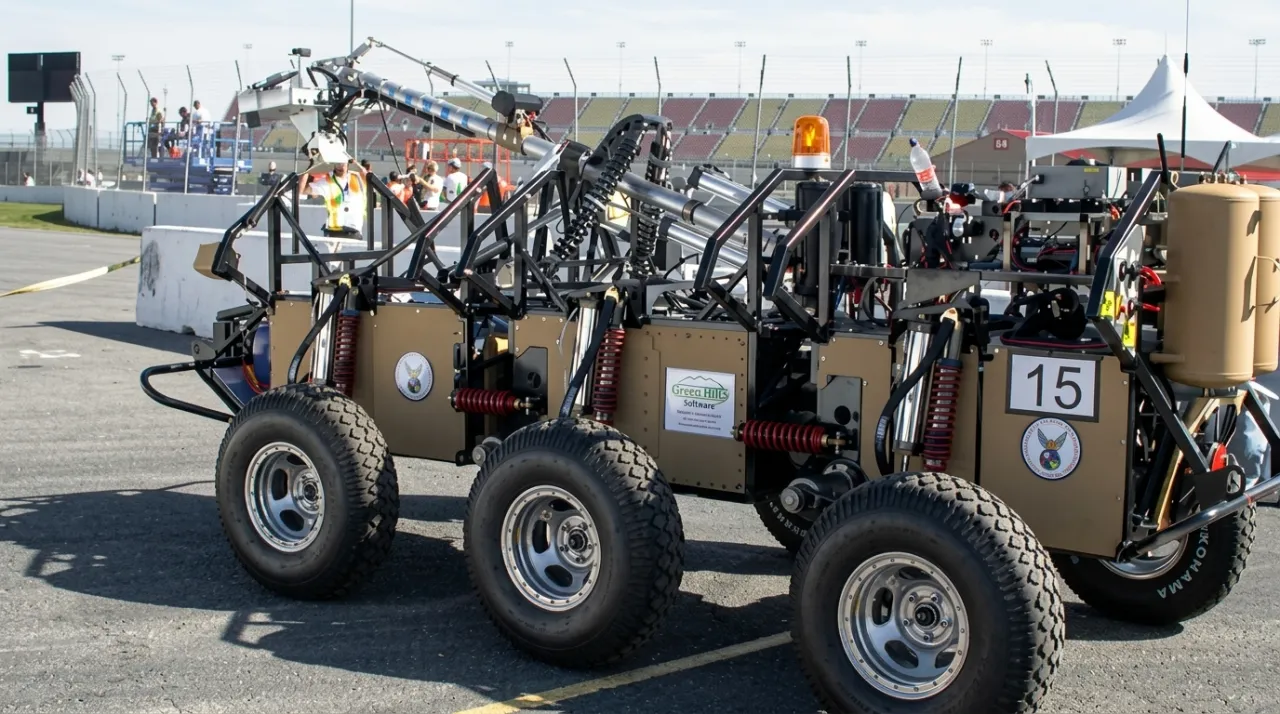

The autonomous transport robot was a participant in the DARPA Grand Challenge.

From Imports to Production: How China Built an Industrial Base


Ten years ago, approximately three-quarters of China's demand for industrial robots was met by imports from Japan, Germany, and Switzerland. By 2024, the situation had reversed: according to the Center for Strategic and International Studies (CSIS) (officially designated an "undesirable organization" in Russia), 57% of industrial robots installed in the country were made domestically. That same year, 295,000 new industrial machines were installed in China, more than the rest of the world combined. The density is 166 robots per 10,000 workers; for comparison, this figure is 1220 in South Korea and 818 in Singapore. Korea and Singapore remain ahead, but China's growth rate is different: industrial robot production in 2024 increased by 14% year-on-year, and by 28% in 2025.

Foreign expansion is following the domestic market. China's share of global industrial robot exports has grown, according to CSIS estimates, from 5,9% in 2020 to 16,7% in 2024. The gap in the humanoid robotics market is even more pronounced: according to the International Federation of Robotics, there are approximately 80 companies working on humanoid robotics in China, an order of magnitude more than in the US. Production capacity is also visible. In January 2026, China's first humanoid production line was launched in Foshan (Guangdong Province), with a projected capacity of 10,000 units per year. AgiBot's 65,000-square-meter factory is designed to produce over 5000 A2 robots annually; by the end of 2025, it had assembled approximately 2,000 (less than half of the stated capacity, which is normal for the first year). The base version of the Unitree quadruped robot sells for approximately $6000; by comparison, Elon Musk has at various times quoted a launch price for the Tesla Optimus between $20,000 and $30,000.

Upon closer inspection, this industry only appears seamless. There are plenty of gaps. High-precision joint gearboxes, both harmonic and cycloidal, are largely sourced from Japan: Harmonic Drive Systems and Nabtesco hold the majority of the global market, and Chinese manufacturers haven't yet learned to outshine them with their equivalents. NVIDIA supplies GPU-level hardware for neural network processing; EngineAI also uses AGX Orin modules in its humanoids. Lithography for producing in-house chips is limited by access to ASML equipment. As long as these components are supplied reliably, the industrial machine operates; a serious supply disruption will reveal the extent of localization.

An important nuance is the industry's direction. In the USSR and the USA in the 20th century, military robotics followed suit: first the Ministry of Defense program, then conversion (roughly speaking, first the tank, then the tractor). In modern China, it's the opposite: the mass industrial and consumer segments lead, and military applications derive ready-made products from them. The strength is obvious: low production costs and a well-established supply chain. Less obvious is the inverse relationship: the program relies on commercial demand, which can falter.

Wolves, humanoids, and the "mother": what the tests showed


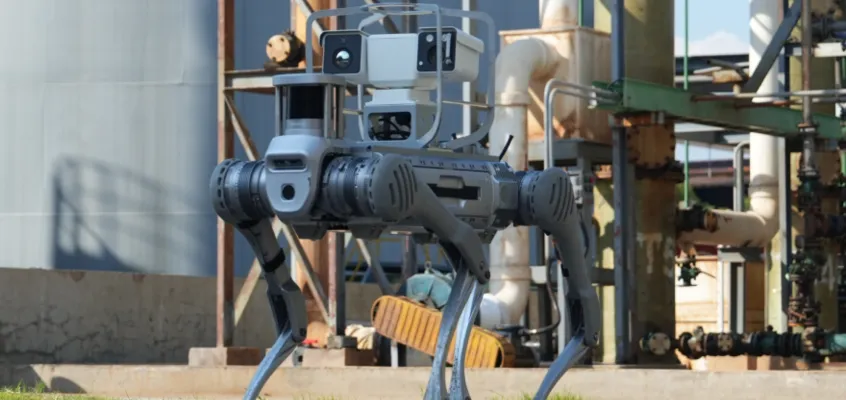
Four-legged robots. The most recognizable Chinese combat vehicle is the Unitree quadruped robot in its military modification. In Chinese terminology, it's called "wolf," or 战狼. According to the developer and exhibition data, the latest generation's specifications include: speed of up to 15 km/h, payload of up to 25 kg, ability to overcome obstacles up to 30 cm high even when fully loaded, and 12 degrees of freedom in the joints. On board: 4D LiDAR with a wide field of view, visible and infrared cameras, and a Huawei Ascend 310B processor for real-time data processing. Materials from the Foundation for Defense of Democracies describe the role specialization of the "pack": reconnaissance vehicles with additional sensors, attack vehicles with small arms weapons or a grenade launcher, ammunition transport. One operator controls the system via a tactical glove, voice commands, and a joystick on the rifle's fore-end.

The exact performance characteristics of the military versions have not been published in open sources: what is shown at parades and what is actually in service with the People's Liberation Army of China (PLA) may differ. Not a single combat use of the "Wolves" in a real conflict as of May 2026 has been documented in open sources. Energy is a separate issue: the Unitree's battery life remains a weak point of the platform, especially in freezing temperatures. Overheating during the Beijing Half Marathon is a testament to the same physics that will persist in the field.

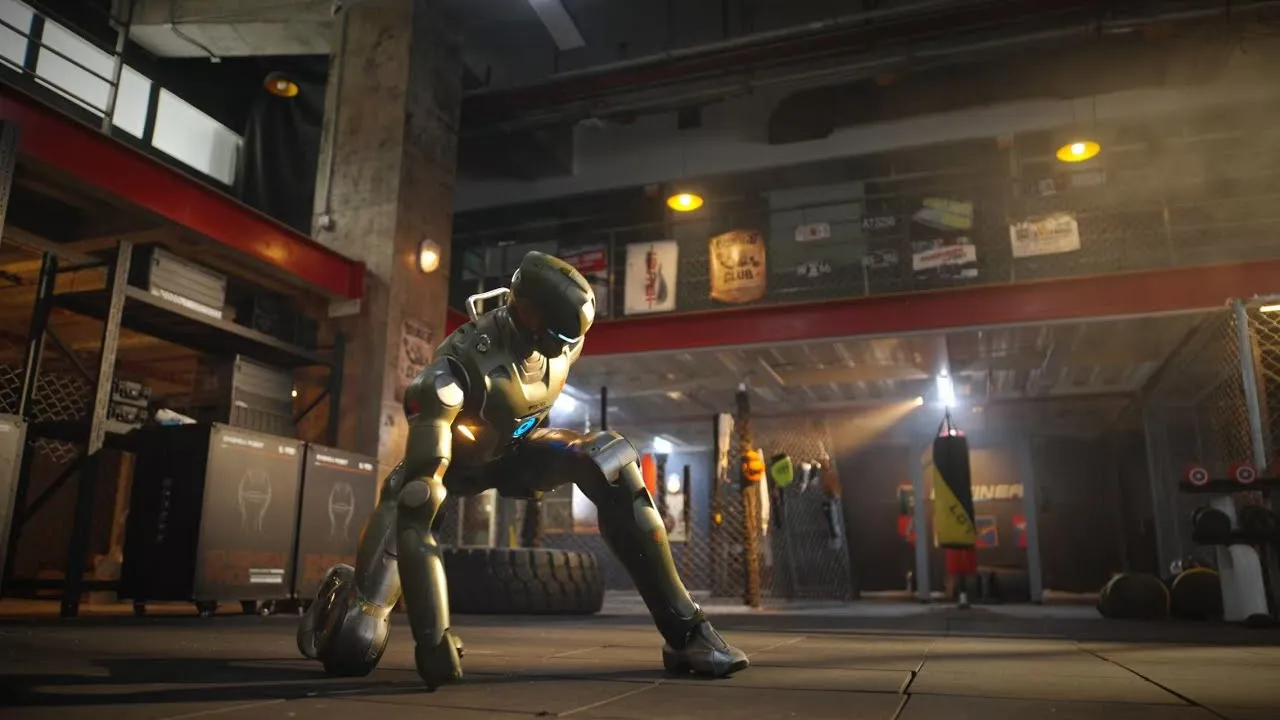
Humanoids. The EngineAI T800 platform, showcased at the World Robotics Conference in Beijing. According to the exhibit and the developer's press materials, it stands 1,75 meters tall, weighs 75 kg, and has 29 degrees of freedom throughout its body, including 7 in each hand. The body— aviation Aluminum, torque in high-torque joints up to 450 Nm. Sensors include 360-degree LiDAR and stereo cameras. Computing power includes an Intel N97 as the base module and NVIDIA AGX Orin for neural network tasks, with a claimed performance of 275 TOPS (trillion operations per second). In terms of computing power, this is comparable to L3 automotive driver assistance systems, meaning the hardware is sufficient for simultaneous processing of a video stream, a lidar point cloud, and thermal images in real time.

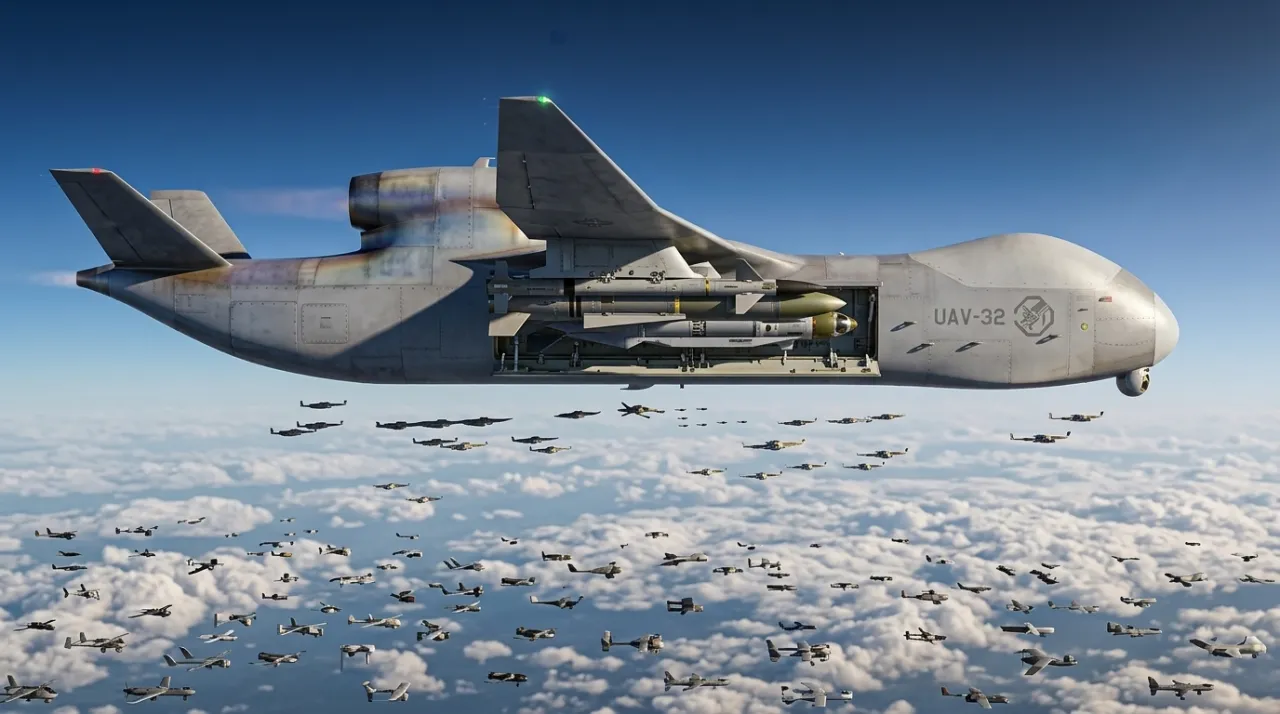
Aviation mother. In June 2025, the Jiu Tian SS-UAV unmanned aerial vehicle was unveiled. It has a 25-meter wingspan and two internal bays for 100–150 small UAVs: loitering munitions, strike drones or decoys. Conceptually, this is the Chinese answer to the American Skyborg and XQ-58 Valkyrie programs, a carrier of "faithful wingmen," or loyal wingman. The idea is closer to the Russian S-70 Okhotnik paired with the Su-57 than to a classic attack UAV like the MQ-9. And historically, it is a great-great-grandson of the Soviet "Zveno" project by engineer Vakhmistrov: in the 1930s, up to five fighters were attached to the TB-3 heavy bomber, and this combination managed to fight in the summer of 1941; strikes on the Carol I Bridge over the Danube at Cernavoda and the oil depot in Constanta are known. The aircraft mothership is almost a century old. Only the size of the attached aircraft and the amount of control it has varies. The layout is completed by unmanned L-30 boats with a speed of up to 65 km/h and Guangjian laser systems for combating small drones; It is no longer the “army of robots” itself, but the environment in which it must operate.

Unitree and the "Little Dragons": How the State Comes to the Company


A disclaimer regarding sources. Most of the public analysis on Chinese military robotics comes from American and Western centers: CSIS, FDD, Georgetown University's Center for Security and Emerging Technologies (CSET), and Morgan Stanley. Chinese public analysis does exist (materials from the Chinese Academy of Social Sciences, the Jiefangjun Bao, and publications from the National University of Defense Technology), but it is less accessible and emphasizes differently: less about the threat and more about doctrinal normalization. This doesn't invalidate Western assessments; it simply means that the picture in this text is painted from one side of the ocean.
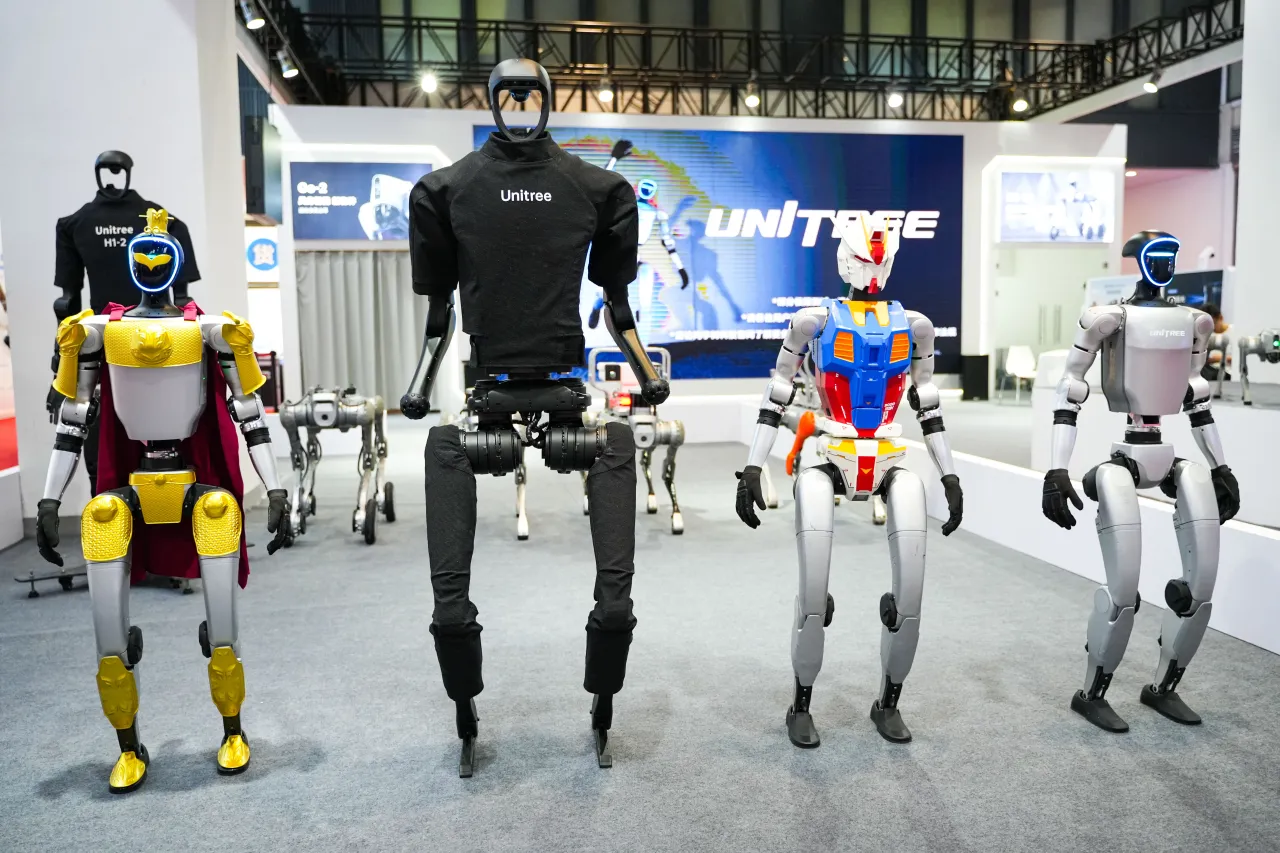

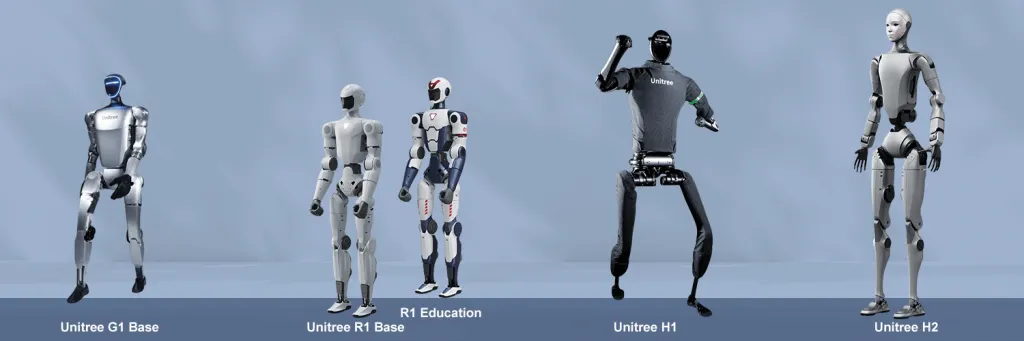
Unitree Robotics was founded in 2016 by engineer Wang Xingxing, who left DJI after just a few months to develop affordable quadruped robots. Initially, they were intended for labs, film studios, and shows. In October 2022, Unitree, along with Boston Dynamics, Agility Robotics, and three other companies, signed an open letter publicly committing not to arm their machines and to verifying buyer intentions. Two years later, in 2024, Unitree B1-series quadruped robots with assault rifles strapped to their backs were filmed on state television during the joint Chinese-Cambodia Golden Dragon 2024 military exercises. In August 2025, the company issued an official statement: Unitree is a civilian company; all military-grade modifications are made by third parties. This statement is difficult to independently verify: there is no public registry of "third parties," no audit of the assembly chain has been conducted, and specific integrators of the weapon systems are not named in public documents. In September of that year, these same vehicles paraded through Chang'an. And in February 2026, the US Department of Defense added Unitree to its list of Chinese military companies, citing government support and ties under the civil-military merger program. The furor surrounding this decision wasn't solely due to military considerations: by that time, Unitree quadcopters were widely sold worldwide, including to research labs in the US and EU.

A video of a robot carrying a rifle on its back is an effect. More interesting is the incentives behind a civilian company's move into the military sphere. China's Ministry of Industry and Information Technology has designated Unitree as a "small giant" under the Zhuan Jing Te Xin program, which provides preferential tax treatment, subsidized lending, and preferential access to government procurement. In January 2025, the Hangzhou administration designated Unitree as one of the "six little dragons": according to media reports, the city allocated approximately 16% of its industrial budget to these six. The Hangzhou High-Tech Zone itself, where Unitree is based, is, according to a War on the Rocks report, a designated center for civil-military fusion, and the local development bureau has an institutional mandate to coordinate "civilian participation projects in the military sphere."

The connection between Unitree and the military program is based on status, benefits, and access to government procurement, rather than a classic defense contract. According to a Georgetown University study, between January 2023 and December 2024, the PLA awarded 2857 contracts related to artificial intelligence; 1560 different organizations received at least one. Of the 338 that won two or more, approximately three-quarters were companies without state ownership. The commercial sector plays a significantly larger role in this program than it did in the Soviet or American models of the 20th century. This is its main distinction.

Intellectualization: Algorithms are more important than hardware


Within the PLA, the development of combat robotics fits into a doctrinal triad: mechanization, informatization, and intellectualization (智能化). Mechanization was officially declared complete by 2020. Informatization refers to the network-centricity of the 2000s–2010s, familiar to Western armies as well. Intelligentization has formally been a priority since 2019; it encompasses autonomous systems, neural networks, big data processing, and related AI. What this means in terms of specific KPIs (key performance indicators) is a separate question, and there is no answer in public documents.

In engineering terms, this primarily means working on local coordination of drones and ground robots without constant radio communication, i.e., resistance to electronic warfare. In February 2025, researchers from the PLA Army Engineering University and the National University of Defense Technology published a paper on self-organizing networks of attack drones capable of performing missions in jammed environments. The idea itself has long been discussed: a single drone is dumb, while a network of drones in a local network must be smart. This is the entire modern concept of swarm warfare in a nutshell. Beyond that, the testing grounds begin, and beyond that, the algorithms tend to get more interesting. During the Joint Sword-2024B exercises in October 2024, among other incidents, a group launch of attack drones with automatic target redistribution was revealed; there are no public analyses of how independently the algorithm operated and where the operator intervened. But this was one of the publicly shown instances in which the Chinese side demonstrated the swarm component, rather than individual platforms.

Here, too, is a rethinking of the so-called OODA loop, the "observe-orient-decision-act" cycle. The concept was formulated by American fighter pilot and military theorist John Boyd. In the 1950s, he flew the F-86 in Korea and tried to understand why American pilots won air battles against the MiG-15, which nominally had an advantage in climb rate, ceiling, and armament. The answer he arrived at in the 1970s was counterintuitive: it turned out to be a matter of decision-making speed, not aircraft performance. The winner is the one whose "see-understand-decide-act" cycle is shorter. Modern Chinese doctrine is based on a simple premise: a machine completes the OODA loop faster than a human. The logic is then obvious: some decisions are delegated to the algorithm. On paper. In practice, this comes down to the rules of engagement, which the PLA has not published publicly. China is participating in negotiations under the UN Convention on Inhumane Weapons, but its official position allows for the development of systems that meet some of the lethal autonomy criteria, leaving a wide margin of safety.

The declared milestone is 2027, the centenary of the PLA's founding; in Xi Jinping's speeches, this date is cited as the deadline for achieving combat readiness for a new type of army. What exactly is meant by "readiness" is vague, and Western analysts interpret it differently. By 2035, modernization is planned to be "basically completed," and by 2049, to achieve a "world-class army." These are political declarations, not confirmed combat readiness figures; to take them for a timetable is to confuse goal-setting with results.

Parallel programs and where the boundary lies


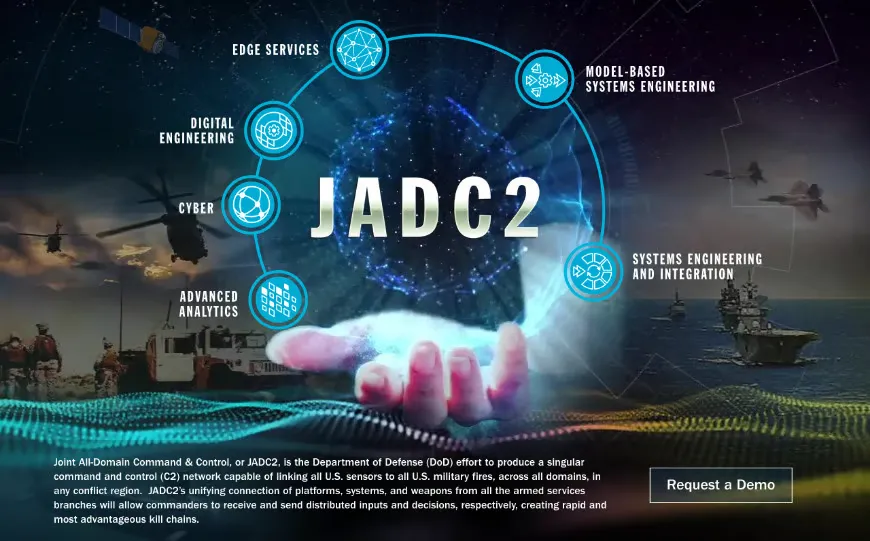
In the US, the emphasis is on the quality of individual platforms and network integration: Boston Dynamics with Atlas, Figure AI, Agility Robotics, Tesla with Optimus. In August 2023, the Pentagon announced the Replicator program: a plan to deploy "several thousand" autonomous systems across "all domains" (air, sea, land) with targeted funding of approximately $1 billion for the first two iterations. The JADC2 (Joint All-Domain Command and Control) program, a network-centric superstructure that integrates sensors, platforms, and decision-making systems from all branches of the military into a single system, is underway in parallel; the US Department of Defense has requested approximately $4 billion for its development between 2022 and 2024. According to Morgan Stanley estimates, Chinese companies have produced more than twice as many humanoids as American companies since 2022, and have filed three times as many patent applications with the word "humanoid," but the US still remains ahead in terms of consolidated defense orders for autonomous systems and networked control.

In China, the logic is different: Unitree, EngineAI, XPeng, AgiBot—mass production, low cost, a ready-made supply chain. Europe—advanced programs in the absence of a comparable industrial base.

Calling this a lag between one and the other is like measuring the same thing with different yardsticks. The strategies are simply different. The Americans have a polished unit and a network circuit on top of disparate platforms. The Chinese have mass, in which losses due to failures are compensated by quantity. With an important caveat: "mass compensates for failures" works for expendable systems like kamikaze attack drones or for saturation missions. Defense, where the statistics favor the attacker. For platforms that are destined to return (urban reconnaissance, walking vehicles, humanoids with complex motor skills), mass production of cheap vehicles is no substitute for reliability. The math is different there. Which of the two strategies will prove more resilient in real-world deployment is an open question; neither side has yet provided a definitive answer.

In short: the program already has an industrial base. The doctrinal framework is still being developed. There's no combat experience whatsoever. The distance between a humanoid falling at the Beijing Half Marathon and a four-legged robot marching in parade formation is still greater than it seems from the impressive videos, but judging by the pace of factory construction in Foshan and the density of PLA contracts with civilian suppliers, it's closing. Somewhere in the middle. There's nothing more precise to say today, and anyone who talks about it is making things up.
49 comments
Information
Dear reader, to leave comments on the publication, you must sign in.
  1. +3
    17 May 2026 04: 26
    I liked the Chinese boxing robots... set their level to master or beginner and box with them... a useful thing for training.
    The Chinese will go far ahead with this matter.
  2. +7
    17 May 2026 04: 53
    The first mass-produced combat robots appeared in the USSR in the 1930s. Ostekhbyuro assembled the TT-26 teletanks and TU-26 control vehicles, which were radio-controlled, based on the light T-26.

    This example is incorrect. The main difference between a robot and a human-controlled machine is the degree of autonomy. A robot is an automated machine that operates according to a predetermined program or is powered by artificial intelligence. It makes decisions and performs tasks independently, without direct operator intervention.
    That same year, 295,000 new industrial machines were installed in China, more than the rest of the world combined. The robot density was 166 robots per 10,000 workers.

    Google search: In China, this figure currently exceeds 320–550 units.
    Unitree's battery life on a single charge remains a weak point of the platform, especially in cold weather.

    The Unitree B2 series robots have a battery life of 4–6 hours.
    Taiwan is warm, and lithium iron phosphate (LiFePO4) batteries, for example, are more frost-resistant and can remain operational down to -30°C. Lithium titanate (LTO) batteries maintain excellent performance and capacity even in extreme cold, down to -40°C. Passive and active thermostatic systems for maintaining heat are also used in electric vehicles—advanced high-frequency internal heating systems are being developed to quickly prepare the battery for driving and charging.
    1. -1
      17 May 2026 05: 15
      Quote: smart fellow
      This example is incorrect. The main difference between a robot and a human-controlled mechanism is the degree of autonomy. A robot is an automatic machine that operates according to a predetermined program or based on artificial intelligence.

      The transition from joystick to autonomy is evolution. The goal of creating robots is one: to replace humans. The funny thing is, the greatest effort is being made in places where humans are in abundance.
      1. +8
        17 May 2026 06: 47
        No, they strive more where a person is not really a person, but a stupid expendable item. This is the army, where a person is simply a combat unit (expendable), the police (also caught a bullet and gone to the grave), heavy manufacturing - where they tighten the same bolts, losing physical and mental health (disability, early death), courier work, where a person gets stupid. People are needed where they think, and think not trivially, and do not calculate and run like dead meat into attacks. The future belongs to robots in calculating and replacing combat units. Yes, the average IQ of the population is precisely running around with a rifle and tightening screws. But natural selection will do its job when there are no salaries and nothing to eat due to replacement by robots. They will begin to develop, learn to manage processes, make decisions. Then maybe we will conquer other planets. In the style of the movie "Killerbot" When a robot guards the living
  3. +4
    17 May 2026 05: 10
    Global robotics is primarily aimed at industry, not the military. This is far more important, as whoever replaces a human at the machine first will gain an advantage. Meanwhile, the "meatbags" can beat each other up as much as they want out of boredom. (Joke.)
    It is wrong to consider robots separately from AI, because a robot is just a mechanism, and the most powerful processor is just a brain without intelligence.
    China currently leads the world in robotics, but the United States leads in AI development. China is desperately short of chips.
    1. +1
      17 May 2026 05: 55
      Today, China is the leader in robotics, but the United States is the leader in AI development.

      Several years ago, the US proposed expelling Chinese-born AI specialists from the country to prevent them from stealing American secrets. However, it turned out that approximately two-thirds of America's leading AI specialists are ethnically Chinese. If they were expelled, they would come to China, and China would become the leader in AI development.
      1. +2
        17 May 2026 07: 01
        Quote: smart fellow
        It turns out that about 2/3 of America's leading AI experts are ethnic Chinese.

        Where did you get this information? In what café or chantant are they discussing it?
        1. -1
          17 May 2026 08: 12
          I read the information on RIA Novosti—it's a reprint from American media, so it can be considered reliable. And it was discussed in the US Congress.
          1. +2
            17 May 2026 12: 04
            Quote: smart fellow
            I read the information on RIA Novosti—it's a reprint from American media, so it can be considered reliable. And it was discussed in the US Congress.

            Look at the list of founders of Anthropic (a leader in AI development). Seven developers left Open AI. Not a single Chinese.
            Or the founders of DeepMind, Demis Hassabis and Mustafa Suleiman?
            1. 0
              17 May 2026 13: 10
              Why? I didn't claim that the leading AI developers in the US are all Chinese. They make up 38%, and with the Chinese AI developers, China would rank first in the world.
              1. +2
                17 May 2026 13: 34
                Quote: smart fellow
                I didn't claim that the leading AI developers in the US are all Chinese.

                You indicated the proportion of Chinese in the ratio of two out of three.
                Considering the sheer number of Chinese, including those who've never lived in China, it's not surprising that they're present in many industries. But claims that they're driving such an important area as AI development, as you pointed out, are populist, something the US media has been guilty of late, to put it mildly. There are plenty of our compatriots there, too. Ilya Sutskever, for example.
                1. 0
                  17 May 2026 13: 49
                  You indicated the proportion of Chinese in the ratio of two out of three.

                  I read about this several years ago and therefore corrected it to 38% - the same percentage was also indicated then.
                  which the US media has been guilty of lately, to put it mildly

                  The issue of deporting Chinese AI specialists was discussed in the US Congress (several years ago, not recently), and the media had nothing to do with it. By the time of the discussion, several scientists of Chinese origin, including US citizens, had been dismissed from US universities for this reason.
                  There are enough of our compatriots there.

                  100% - 37% -38% = 25% - this is from other countries of the world.
                  Ilya Sutskever for example.

                  Ilya Sutskever, Canadian and Israeli scholar. To continue, our compatriots are killing Palestinian children.
                  1. +2
                    17 May 2026 14: 16
                    Quote: smart fellow
                    The issue of deporting Chinese AI specialists was discussed in the US Congress.

                    Only non-US citizens can be deported. This means the person in question may have been Chinese citizens working in the US in critical sectors.
                    Even Congress can't deport a US citizen. He's a citizen of the country, after all.
                    Quote: smart fellow
                    Ilya Sutskever is a Canadian and Israeli scientist.

                    Well, Jimmy Ba is a Canadian by citizenship. Although he is Chinese.
                    Quote: smart fellow
                    Our compatriots are killing Palestinian children.

                    Well, yes. Because, as citizens of their state, they follow its policies.
                    1. +1
                      17 May 2026 14: 35
                      That is, it is possible that the discussion was about Chinese citizens working in the United States in critical areas.

                      The discussion was specifically about Chinese AI specialists.
                      Even Congress cannot deport a US citizen.

                      But they can be fired from their jobs. Then they'll move to another country, most likely China, where cutting-edge projects are underway alongside the US.
                      1. +1
                        17 May 2026 18: 03
                        Quote: smart fellow
                        But they can fire you from work.

                        Judging by the news from the AI ​​front, there's a bloodbath going on behind the scenes. Perhaps the Pentagon could impose requirements for Chinese employees, but so far this hasn't happened because it's impossible to hide. The departure of Jimmy Ba and Tony Wu from XAi was discussed in the press, whether it was Musk who fired them or whether they did so themselves. But take Anthropic: Dario took a principled stance on using AI for military purposes, ignoring government funding. Anthropic is pulling ahead, and China isn't even close. Can American Chinese help their homeland? Doubtful. Leading developers earn a lot of money in the US; China can offer more money, but it can't offer comparable conditions.
                      2. +1
                        18 May 2026 02: 48
                        China is not even close in this race.

                        Nevertheless,
                        China accounts for up to 70% of all global AI applications and grants. The US share is approximately 12-14%.
                        China leads in the volume of scientific publications on AI (about 23,2% of the global total) and their citation rate.
                        In this case,
                        The US industry is facing a sharp decline in attracting foreign AI specialists. According to Stanford, the influx of tech talent into the US has fallen by 89% compared to 2017, and a significant portion of Chinese-born specialists, including developers of top models, are returning home. Meanwhile, approximately 50% of all global AI researchers are of Chinese descent.
                        Also,
                        Thanks to a huge domestic market and more lenient regulations, China is rapidly implementing AI in everyday life, business, and government.
                        China produces about 90% of the world's humanoid robots and is ahead of the United States in integrating AI into industry and the physical world.
                        Can American Chinese help their homeland? Doubtful.

                        American Chinese are making fundamental contributions to China's AI development, serving as a vital bridge for technology transfer, investment, and best practices.

                        Leading developers earn a lot in the US, China can offer more money, but cannot offer the same conditions.

                        Historically, China has produced the largest number of AI researchers (up to 47% of the global total), but a significant portion of them went to work in the United States. In recent years, thanks to government investment, China has significantly improved its ability to retain its talent domestically. This has also been aided by the anti-China hysteria that began during Trump's first term and continued under Biden.
                      3. -1
                        18 May 2026 03: 32
                        Why bother with all this talk when there are statistics? According to them, chatgpt is in highest demand, gemini is second, and claude is third. The Chinese are undoubtedly good at robotics, but they have problems with AI, otherwise they would be in the top three.
                      4. +2
                        18 May 2026 03: 56
                        In short, China has a domestic market of 1,4 billion people. The most widely used generative AI in China is Baidu Ernie Bot (Wenxiaoyan), followed by ChatGPT and Gemini China's generative AI.
                      5. -1
                        18 May 2026 05: 27
                        Quote: smart fellow
                        In short, China has a domestic market of 1,4 billion people. The most widely used generative AI in China is Baidu Ernie Bot (Wenxiaoyan), followed by ChatGPT and Gemini China's generative AI.

                        So, in China, what else can they use if everyone's on Baidu? It's like Gemini: everyone uses Google, and that's why Gemini has so many users. I'm not saying Ernie or Gemini are bad. Personally, I like Gemini, even though I'm not a very good user, because it's free and easy.
                        In any case, ChatGPT is the undisputed leader among users in general, and Claude is the leader among professionals.
                      6. +3
                        18 May 2026 05: 46
                        In any case, ChatGPT is the undisputed leader among users in general, and Claude is the leader among professionals.

                        In terms of production volume and sales, the Zhiguli is far more popular than the Rolls-Royce. Does this mean the Zhiguli is better than the Rolls-Royce?
                        What chance does Chinese generative AI have in Western countries if even Chinese hardware, such as cellular and network equipment from Chinese companies, is prohibited there?
        2. +1
          17 May 2026 08: 58
          My memory failed me regarding 2/3 of the leading American AI experts.
          Chinese nationals account for 38% of leading AI researchers working in the United States, compared to 37% of American specialists. The United States is critically dependent on Chinese AI talent, as a significant portion of breakthrough research is being developed by scientists educated in China.

          People of Chinese descent and ethnic Chinese play a dominant role in the leadership of the largest US IT and semiconductor corporations. Their positions are particularly strong in the microchip and artificial intelligence industries, with these executives managing companies worth several trillion dollars.
          Among the most influential top managers of Chinese origin, several key figures stand out:
          Major technology corporations and chip makers
          • Jensen Huang is the founder and CEO of Nvidia, a global leader in graphics processing units and AI hardware. Born in Taiwan, he later moved to the United States. Under his leadership, the company's market capitalization reached historic highs.
          • Lisa Su is the president and CEO of AMD, Nvidia's main competitor in the processor market. Born in Taiwan, she received her PhD from MIT. Fun fact: Lisa Su is Jensen Huang's second cousin.
          • Hock Tan is the CEO of Broadcom, one of the world's largest semiconductor companies. He was born in Malaysia to Chinese parents and educated at the Massachusetts Institute of Technology (MIT).
          • Lip-Bu Tan is an executive at Intel and a key figure in the drive to implement large-scale management reforms at the corporation. He comes from a Chinese family and grew up in Singapore.
          Founders of large-scale internet and software platforms
          • Eric Yuan is the founder and CEO of Zoom. Born in China, he was denied a U.S. visa nine times before moving to the United States in 1997. He subsequently created a video conferencing platform that has become a global standard.
          • Alexander Wang is the Chief AI Officer at Meta.
          • Jerry Yang is one of the legendary founders of Yahoo!, who today invests in technology startups through his venture fund.
          1. +2
            17 May 2026 12: 08
            The respected and talented Americans you listed have nothing to do with AI development. And most of them have no connection to China. The Lebanese Armenian, for example, has no connection to Armenia at all.
            1. +1
              17 May 2026 13: 28
              These Chinese Americans exemplify the dominant role (as Google AI puts it) of Chinese people in the US IT industry. And top AI developers aren't as well-known globally, so citing them as examples is pointless.

              When the USSR recalled specialists from China, including those working on the nuclear program, the Chinese government turned to their compatriots abroad, and hundreds of Chinese scientists and engineers, including those with US citizenship, came to China, enabling the PRC to develop nuclear weapons several years ahead of schedule. I can't speak for Armenians, but the Chinese are spiritually connected to their historical homeland, even if they've never been there.
              1. +2
                17 May 2026 14: 00
                Quote: smart fellow
                Top AI developers are not so well known in the world,

                Why is that? Seven developers from Ooen AI founded Anthropic and created the Claude code. Their names are known. Or rather, six; Dario's sister wasn't a developer. Unlike Altman, Dario can code himself and is a team leader, not just a manager. These are indispensable people on the team. I agree that Anthropic likely has Chinese developers, but they're clearly not the lead developers. Musk's XAi co-founders included four Chinese and one Russian.
                Quote: smart fellow
                China appealed to its compatriots abroad, and hundreds of Chinese scientists and engineers, including those with US citizenship, came to China.

                Because the US government forced them out of work due to spy mania.
                1. 0
                  17 May 2026 14: 24
                  Their names are known

                  There are tens of thousands of AI developers working in the United States, and the number of elite researchers (Top-Tier AI Researchers) is estimated at several thousand.
                  Because the US government forced them out of work due to spy mania.

                  The only known Chinese deported from the United States (exchanged for American prisoners of war) was the distinguished Chinese rocket scientist Qian Xuesen, who made a huge contribution to American military developments and later became the "father" of China's space and nuclear programs. Hundreds (or even thousands) of engineers, scientists—chemists, physicists, and others—came to China.
      2. +2
        17 May 2026 19: 44
        Quote: smart fellow
        But it turns out that about 2/3 of America's leading AI experts are ethnic Chinese.

        A small correction.
        "Chinese" are a huge number of "Taiwanese." Disproportionate to the populations of the two countries.
        1. +1
          18 May 2026 02: 57
          A small correction.
          "Chinese" - in huge numbers "Taiwanese".

          They remain ethnic Chinese. But there are also "Malaysians," "Hong Kongers," "Singaporeans," and so on.
          Only 12 UN member states, including Belize, the Vatican, Haiti, Guatemala, the Marshall Islands, Palau, Paraguay, Saint Vincent and the Grenadines, Saint Kitts and Nevis, Saint Lucia, Tuvalu, and Eswatini, do not legally recognize Taiwan (the Republic of China) as part of the PRC. The remaining countries, including Russia, the United States, and the EU, officially recognize the "one China" principle.
          1. +1
            18 May 2026 06: 22
            Quote: smart fellow
            They remain ethnic Chinese.

            Have you communicated with these groups?
            I do, a lot, and still do. Don't confuse Taiwanese with Chinese—with rare exceptions, mostly humanities students, they don't like China.
            Who recognizes what is for the UN. But going to work in mainland China—yes, 10 years ago, for good salaries at Western companies...
            But now you can't force it.
            1. +1
              18 May 2026 07: 12
              Don't confuse Taiwanese with Chinese - with rare exceptions, mainly humanities students, they don't like China.

              They love us, they don't. Now Ukrainians don't like Russians, but before, they were called brothers. Okay, Ukrainians are a different people, but what about Russians in Ukraine? What was it like in Kharkiv in 2014 and 2022? - This has absolutely nothing to do with the topic of discussion.
              Who recognizes what is for the UN.

              What does the UN have to do with this? Recognizing Taiwan as part of China is a prerequisite for relations with China. If you don't recognize it, it's goodbye.
              1. 0
                18 May 2026 18: 16
                Let me remind you (see the first comment) that the topic of discussion was
                Quote: smart fellow
                But it turns out that about 2/3 of America's leading AI experts are ethnic Chinese.

                And the consequences of this statement.
            2. +3
              19 May 2026 13: 23
              Mainland China and Taiwan are like North and South Korea, like East and West Germany: one people, one nation, forcibly divided for ideological reasons. Militarily and in international information, Taiwan is used to contain China—just as Ukraine is used to contain Russia. And when a Russian supports Taiwan's independence, it's sheer stupidity.
  4. +4
    17 May 2026 05: 40
    I won't live to see the rise of the machines, well, that's good!
  5. +1
    17 May 2026 06: 52
    He who directs his forces where, controls it.
    The Chinese worked, assembled, and now it's clear - they have the technology and army of the future and a guarantee of peaceful life for them for many, many years...
    1. +1
      17 May 2026 18: 15
      Quote: Ed Mack
      a guarantee of peaceful life for them for many, many years...

      Not at all. Even the Third Reich is an example for you - they had the technology and the army of the future - but where is that world for Germany?
      And now...
  6. +5
    17 May 2026 07: 20
    The most ineffective robot is an android. The human body is ill-suited to perform many tasks, especially after the loss of even one limb.
    1. +1
      17 May 2026 10: 52
      It depends on what tasks we are talking about
      In industry, it is good if robots are created to perform a task, and not to copy humans.
      But if a robot is supposed to replace a human in mundane tasks (for example, as a city courier), then it would be better to have an android. After all, the entire city infrastructure is adapted for humans (stairs, elevators, even the position of door handles).
      When it comes to robots replacing soldiers, we also see that androids are superior. After all, such robots can pick up weapons, ammunition, and other useful items from fallen soldiers during battle. Meanwhile, a specialized robot soldier (for example, a mobile turret with stationary machine guns) is potentially more dangerous, but is unable to replenish its ammunition or pick up another weapon without assistance.
      1. +1
        18 May 2026 09: 05
        What will you use if your robotic arms get blown off? And who told you that enemy ammunition will work in place of your own? Are you going to load a NATO-standard 155mm shell into a Soviet-style 152mm howitzer?
        1. +1
          18 May 2026 20: 28
          And a man, supposedly with his limbs shot off, still fights normally?!
          A robot, even an infantry android, is still expendable. So if the armies of two countries clash somewhere, and one has human infantry fighting for it, while the other has a mixed army of humans and robots, the overall human losses for the second country will be lower.
    2. 0
      17 May 2026 12: 52
      Quote: Yuras_Belarus
      The most ineffective robot is an android. The human body is ill-suited to perform many tasks, especially after the loss of even one limb.

      That's true, but all workplaces are adapted to human anatomy. That is, a person can only be replaced by someone similar to them.
      1. +1
        18 May 2026 09: 02
        It's easier to replace a job than a person.
  7. +1
    17 May 2026 07: 57
    The density is 166 robots per 10,000 workers; for comparison, in South Korea this figure is 1220, and in Singapore 818.

    What is the density of robots per 10,000 workers in Russia?
    1. +6
      17 May 2026 09: 01
      Judging by the salaries, we have "biorobots".
  8. +1
    17 May 2026 11: 35
    I think the future belongs to robots that can walk on two legs and then immediately stand on all fours. The Chinese have already demonstrated such models. It's convenient; depending on the situation, you choose what's most convenient and go. The transformation is quick. Such a versatile robot is more convenient than separate robot dogs or humanoid-like ones.
    Regarding overheating, the marathon winners have already broken human records. So in the future, you won't be able to escape a robo-cop; the average person won't have the breathing capacity or speed to outrun them.
    1. +4
      17 May 2026 12: 13
      Quote: Mekey Iptyshev
      In the future, you won't be able to escape from a robot policeman; the average person won't have the breathing capacity or speed to run away.

      A robot husband will replace a living one because he doesn't drink, doesn't hit, doesn't fish, doesn't hunt, doesn't cheat, doesn't throw socks around, carries her in his arms, always agrees with everything, loves her mother... A ton of advantages...
  9. -1
    17 May 2026 13: 58
    The first mass-produced combat robots appeared in the 1930s in the USSR.
    It all started much earlier, Popov merely voiced what everyone had already suspected for some time and perhaps had already been using, and by 1898 drones were already being developed in many countries, and officially the first was Tesla's drone (back) Nikola Tesla in 1898, and after Pilchikov was ignored in 1898, he was one of the first to start thinking about cryptographic protection of signals to make drone control more difficult/impossible to intercept, and here is a paragraph from the text of his letter from 1899
    Nowadays, any machine controlled by radio: whether on the ground, in the air or in space, has its own “protectors” that protect it from artificial or natural interference. Without this, reliable radio control is impossible.

    There is an opinion that it was because of this invention that he was killed, making it look like a suicide and having the plans stolen in 1905. In 1916, the Germans were already using Beks in full force in the First World War with a range of up to 150 km.
  10. -1
    17 May 2026 15: 21
    The Chinese need to test their military robots in the NWO.
    1. 0
      17 May 2026 18: 25
      Quote: Leonid Dymov
      The Chinese need to test their military robots in the NWO.

      The Chinese are happy with the decline in the number of Russian citizens...
  11. 0
    18 May 2026 11: 03
    AI is good, of course, but the bad thing is that it's starting to learn on its own. The day is not far off when we'll start regretting ever having written it.
  12. 0
    18 May 2026 22: 44
    Judging by their focus on swarm or pack tactics, there will be communication between these wolves, and not just fiber optics. Even if they are super-autonomous, they will need to somehow identify each other. This means each of these machines will have a kind of radio beacon.
    An asymmetric response to such weapons could be a submunition descending on a parachute and striking any radio wave source across a wide range with a shaped-charge core. The main goal is to create a compact and inexpensive device that can detect sources no more than 50-100 meters away. Something like a directional antenna rotating in the air, or an array of antennas scanning the approaching ground.