The Russian Navy under Nicholas II. On the way to Tsushima.
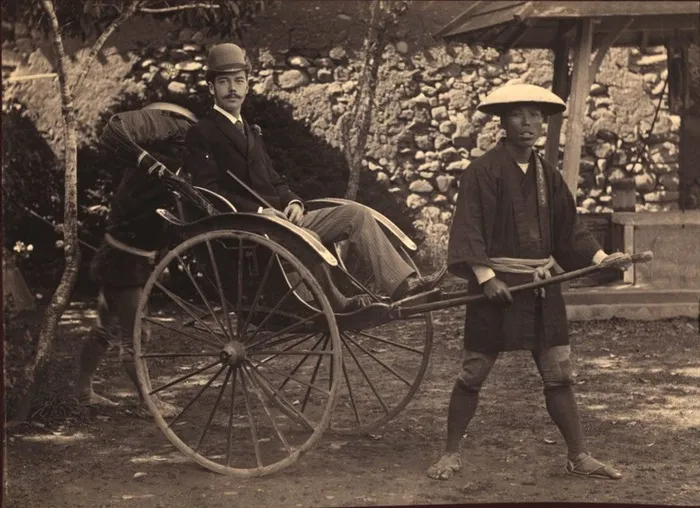
Tsarevich Nikolai Alexandrovich in Japan
Of previous article We also remember the strategic mistakes of Alexander III, who abandoned the traditional alliance with Germany and neglected the education and upbringing of his eldest son, Tsarevich Nicholas. He also approved of his marriage to the hysterical Princess Alice of Hesse-Darmstadt, who also carried the gene for hemophilia, a then-incurable disease, and therefore could not bear a healthy heir.
Another problem was the vast number of incompetent members of the imperial family, many of whom aspired to the highest positions. A case in point is Grand Duke Sergei Alexandrovich, who became one of the main culprits in the Khodynka Field tragedy and even earned the nickname "Prince Khodynka."
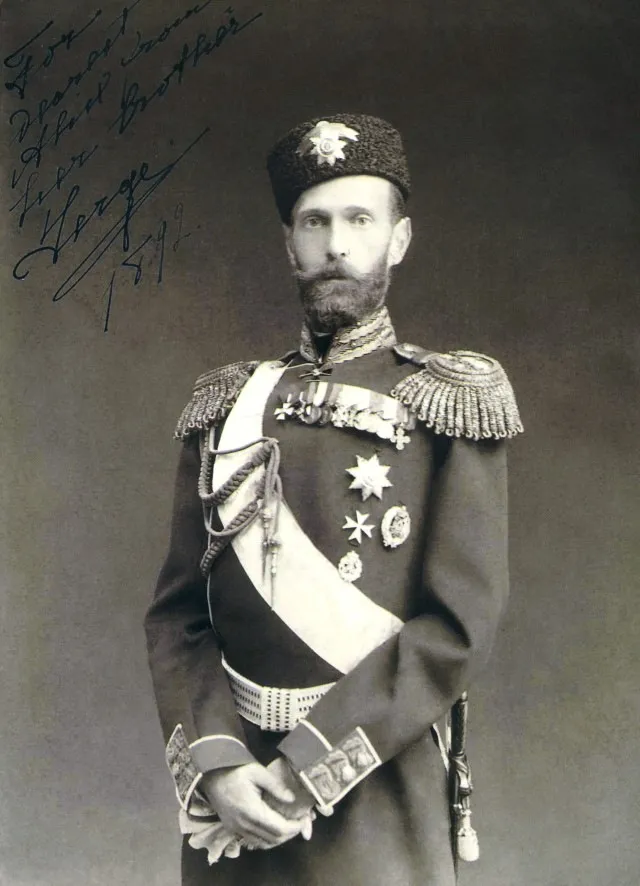
Grand Duke Sergei Alexandrovich
Muscovites called the murder of this scandalous sodomite "holy" and said that at the moment of the explosion the Grand Duke "thought it out" for the only time in his life.
Another Grand Duke, Sergei Mikhailovich, oversaw the Russian artilleryHe also received Nicholas II's mistress, the ballerina Matilda Kshesinskaya, who turned out to be a shareholder in the Putilov factory. As a result, all contracts for artillery production went to this factory, which simply couldn't handle the volume of work, and Russia entered World War I with a shortage of field artillery. Meanwhile, the Perm (Motovilikha) factory received no orders at all from 1905 to 1914 and nearly went bankrupt, as did the St. Petersburg Ordnance Factory.
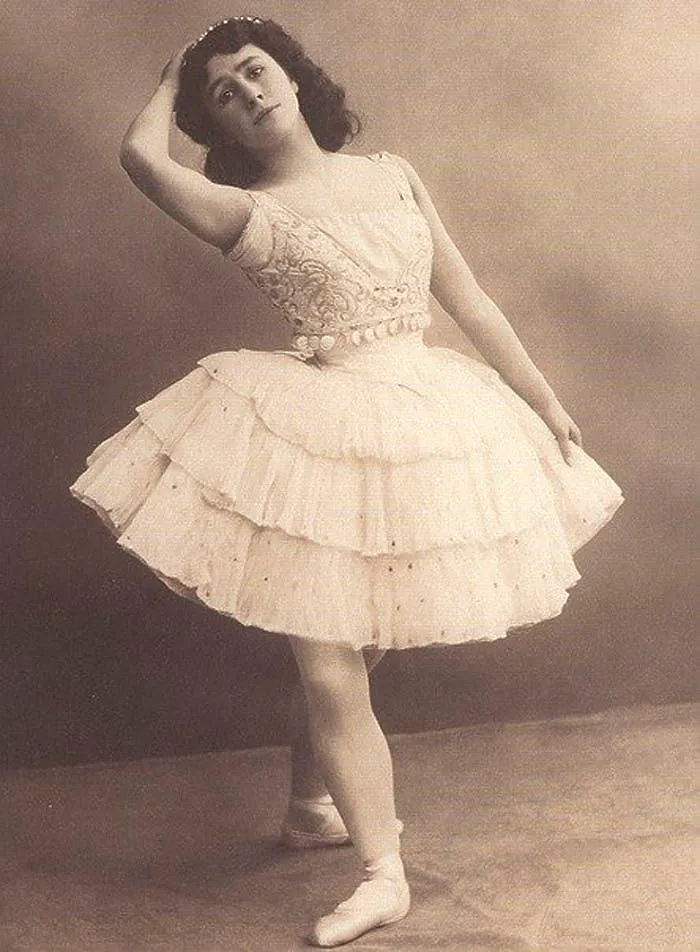
Short-legged and rather plump, Matilda Kshesinskaya liked to call herself the "mistress of the House of Romanov"
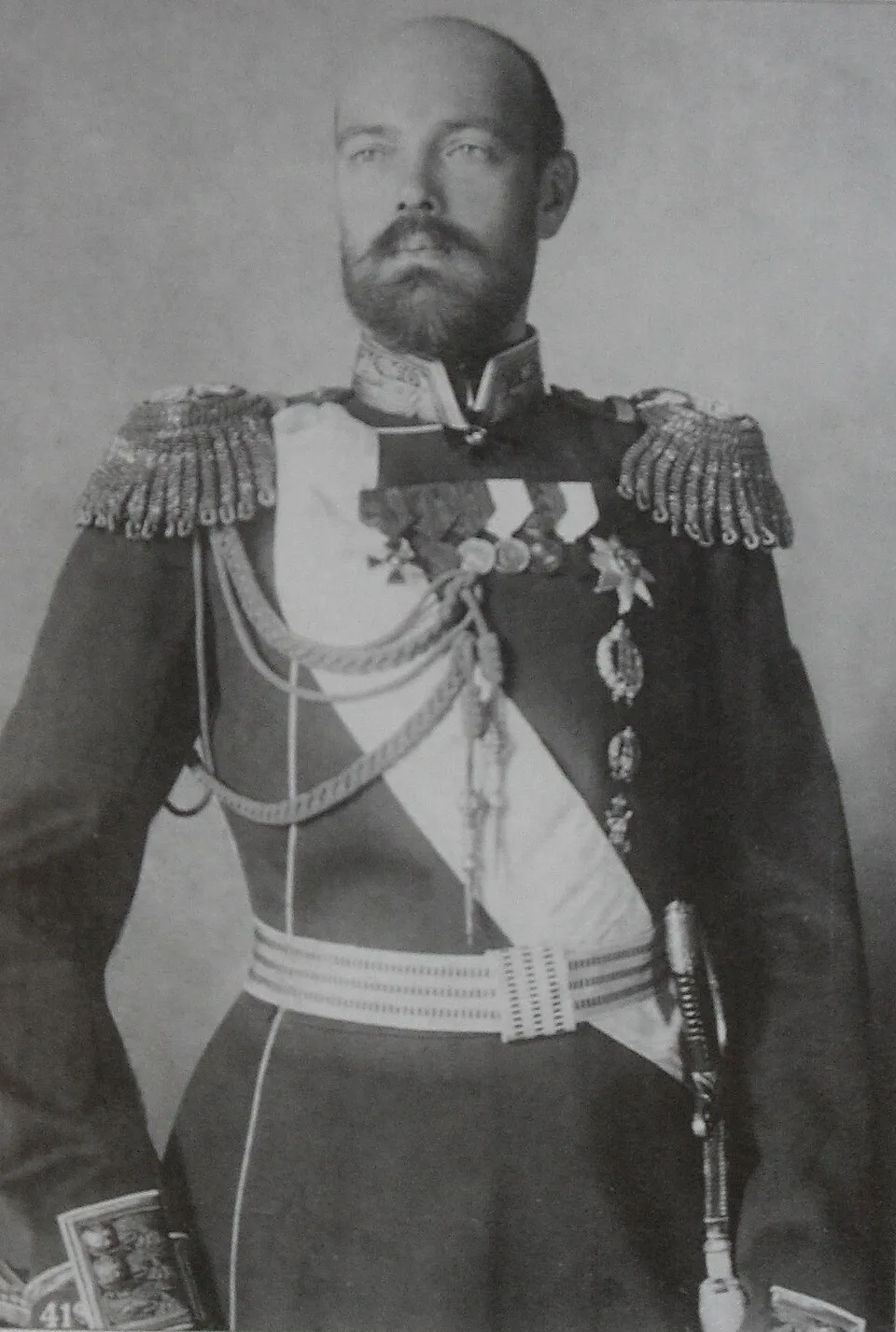
Grand Duke Sergei Mikhailovich
"Seven poods of august meat"
And the main boss fleet Grand Duke Alexei Alexandrovich, nicknamed "Bulldog" by his family, was appointed General-Admiral and "Highest Chief" of the Russian Navy by Alexander III, and the Naval Department. His nickname, best known by the director of the Baltic Shipyard and retired Captain 1st Rank Mikhail Kazi, was "Seven Poods of the Most August Meat." Contemporaries also called him "Prince of Tsushima" and said that the "Seven Poods" "stole more than the Japanese sank."
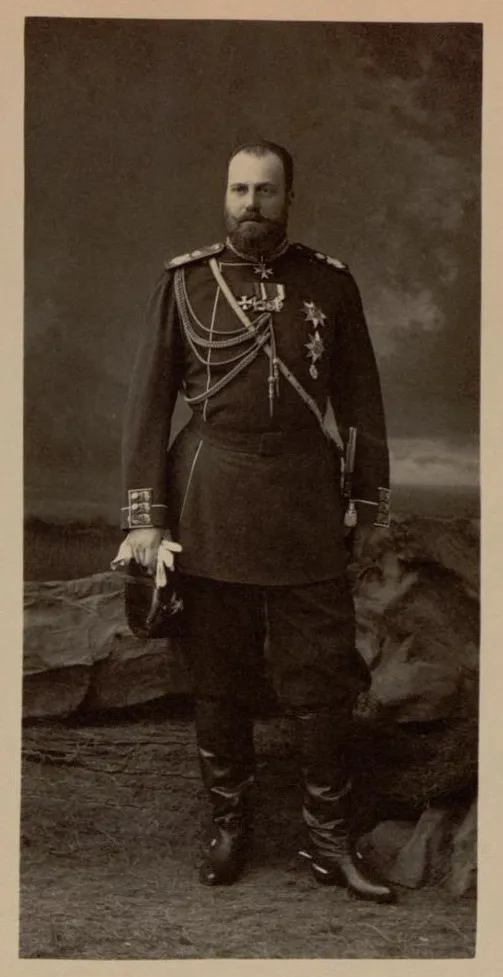
Grand Duke Alexei Alexandrovich. Photo from 1891.
Alexei Romanov spent most of his time abroad, and Grand Duke Alexander Mikhailovich stated:
The mere thought of spending a year away from Paris would have made him resign.
He also wrote:
It's hard to imagine a more limited knowledge of naval affairs than that of this admiral of a powerful nation. The mere mention of modern reforms in the navy brought a pained grimace to his face.
He was openly ironic:
In my brother's (cousin's) life there were always nimble ladies and clumsy ships.
Kolchak claimed that under Alexei Alexandrovich, “the ships built were not those that the fleet needed, but those for which there was enough money.”
The eminent shipbuilder Alexei Krylov wrote that this Grand Duke literally destroyed the defense capability of the Naval Department over the course of 23 years, and Russia never developed a unified fleet: it became the owner of a "collection of different ships."
Given the "outstanding" amorousness of this Grand Duke and his well-known penchant for embezzlement to support his numerous mistresses, there was indeed a catastrophic shortage of funds for the construction of warships, despite a budget that had increased fivefold. It even reached the point where, in an effort to save money, there were instances of armor plates being secured with wooden bushings instead of metal rivets, and on one destroyer, tallow candles were even used for this purpose.
Meanwhile, between 1896 and the outbreak of war, Japan's naval tonnage increased almost three and a half times. At the outbreak of hostilities, the Russian fleet in the Far East had 75 "active combat units" with a total displacement of 192,276 tons, while the Japanese could field approximately 100 "active units" with a total displacement of 260,931 tons. This was despite the fact that the Japanese ships were more modern and had superior gunnery than the Russian ones. Many Japanese sailors had combat experience gained during the recent Sino-Japanese War. It is also worth noting that Japan had well-equipped ports and docks, which facilitated both supply and ship repairs. Partial modernization of the Japanese battleships was carried out even during the repairs to which they were sent after the capture of Port Arthur; in particular, the ammunition load of the main and medium caliber guns was changed and increased, and the fuses were replaced with less sensitive ones.
Finance Minister Sergei Witte also harshly criticized Alexei Alexandrovich. And Valentin Pikul, alluding to the Grand Duke's remarkable embezzlement, called him "the chief pirate of the House of Romanov"—nothing more, nothing less.
One of Alexei Alexandrovich's mistresses was the daughter of a classic Russian writer, the maid of honor Alexandra Zhukovskaya, who even gave birth to his son in 1871. Another well-known passion of Alexei Alexandrovich was the sister of the famous "White General," Zinaida Dmitrievna Skobeleva, the second (morganatic) wife of the Duke of Lichtenberg, Yevgeny Romanovsky, a cousin of "Sempudov." State Secretary Alexander Polovtsov recalled:
Alexei Alexandrovich's only thought is how to slip away from the State Council meeting without breaking the rules and return to Zina's bed. Boredom is etched into his features.
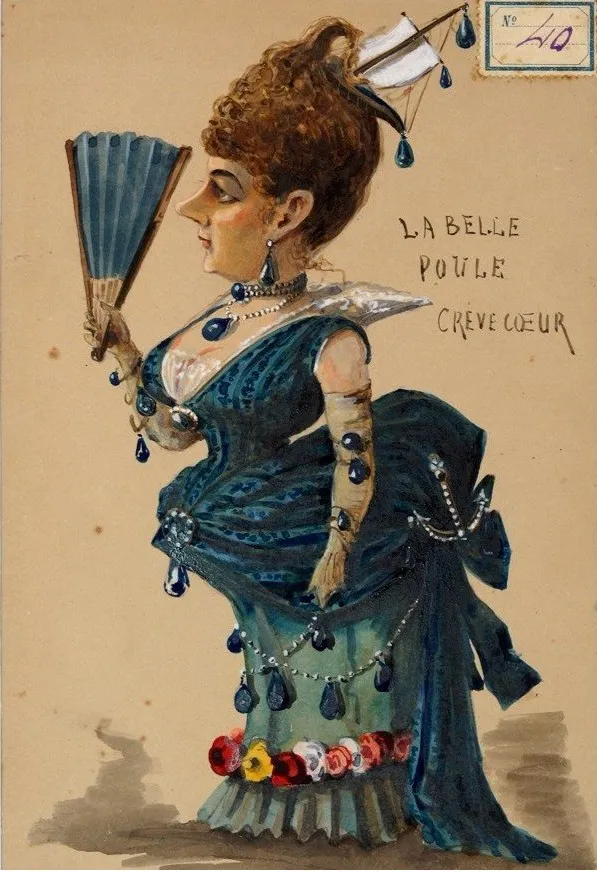
A bejeweled Duchess Zinaida of Leuchtenberg, Countess de Beauharnais, in a caricature by Ivan Vsevolozhsky. Caption: "A beautiful hen breaks the heart."
But the fleet suffered particularly badly from Alexei Alexandrovich's last passion, the French ballerina Elisée Balletta of the Mariinsky Theatre, one of whose necklaces was nicknamed "the Pacific Fleet" even at the imperial court. It was also claimed that the ruby-encrusted red cross Alexei gave her was made with Red Cross funds allocated to aid wounded soldiers.
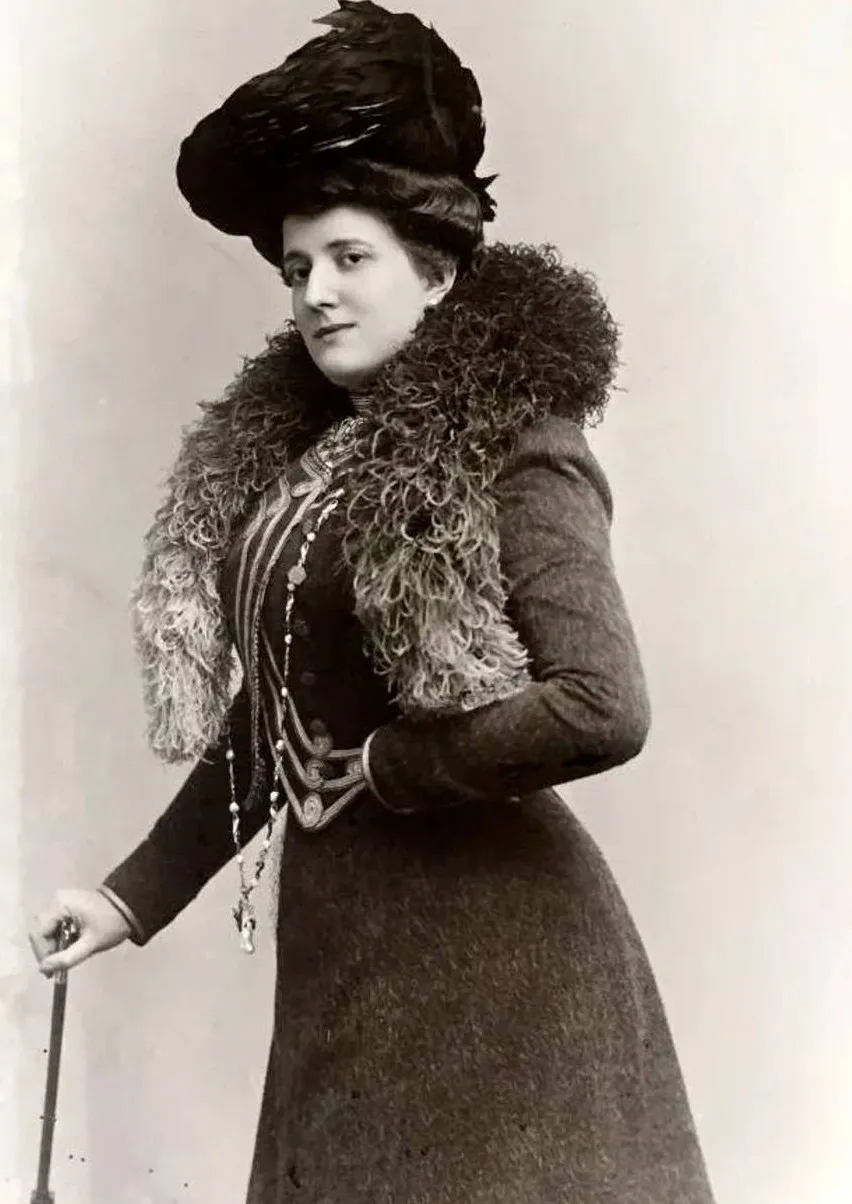
Elisée Balletta
Things reached the point where, shortly before the fall of Port Arthur, the Grand Duke and Eliza were booed at the theater. Taking advantage of this scandal, officials from the naval department placed a report on Nicholas II's desk detailing a 2 million ruble arrears. In total, this high-society swindler had stolen 30 million rubles. A few weeks after the theater incident, a crowd nearly destroyed the Semipudov Palace; the police barely managed to save the building. Realizing that St. Petersburg was becoming unsafe, Alexei Alexandrovich resigned. Nicholas II then wrote in his diary:
Monday, May 30th. Today, after his report, Uncle Alexei announced that he wishes to leave immediately. Given the gravity of his arguments, I agreed. It's heartbreaking and painful for him, poor thing!
As they say, there are no words, draw your own conclusions.
On June 2, 1905, Alexei Romanov, with the stolen funds and the fatal beauty Eliza, went to Paris, where he died in November 1908.
In general, Alexander III's heir was ill-suited to govern a huge, multinational and multi-confessional country, and his father left him a very problematic legacy.
Naval affairs under the last emperor
Nicholas II ascended the throne on October 20 (November 1), 1894. At this time, the Russian Empire's military expenditures already accounted for more than a quarter of all budget expenditures. The burden was so great that the Russian government proposed holding a peace conference in The Hague in 1899. Among other things, Russian representatives proposed abandoning the increase in the size of the army and navy, freezing military budgets at the current level, and abandoning the new firearms. weapons and new explosives, from aerial bombing, and from the use of submarines. The decisions of this conference, and the second one held in 1907, had no real consequences.
But what was the state of naval affairs at the beginning of the new emperor's reign? We recall that his father handed over to him a completely incompetent commander of the fleet and the Naval Department, the august thief Grand Duke Alexei Alexandrovich. Furthermore, his father suddenly abandoned the traditional alliance with Germany (Prussia), which had existed since the Napoleonic Wars, forming an alliance with France – the recent aggressor during the Crimean War. And Alexander III considered Germany to be his primary adversary at sea. Under Nicholas II, warships continued to be built to counter Germany: four squadron battleships, two coastal defense battleships, two torpedo cruisers, and two gunboats. However, in July 1894, the Sino-Japanese War began, ending with a Japanese victory in April 1895. And it became clear to everyone that a new, powerful and aggressive state had emerged in the Far East, one that would now have to be reckoned with. However, not everyone understood this: Nicholas II and those under his influence continued to regard the Japanese as underdeveloped "monkeys."
Otsu Incident, Japan
Here we must recall the stupid episode with the semi-parodic assassination attempt on Tsarevich Nikolai Alexandrovich, who was making a round-the-world voyage on the armored cruiser (frigate) "Memory of Azov".
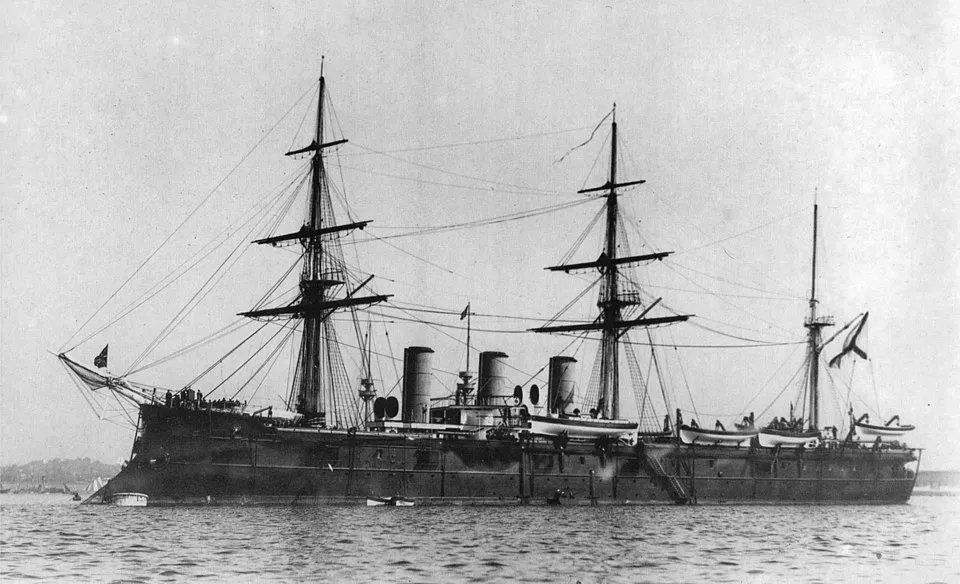
The medium armored cruiser of the first rank "Memory of Azova." During the first Russian revolution (July 20, 1906), sailors revolted against the autocracy on the ship, after which the cruiser was renamed "Dvina."
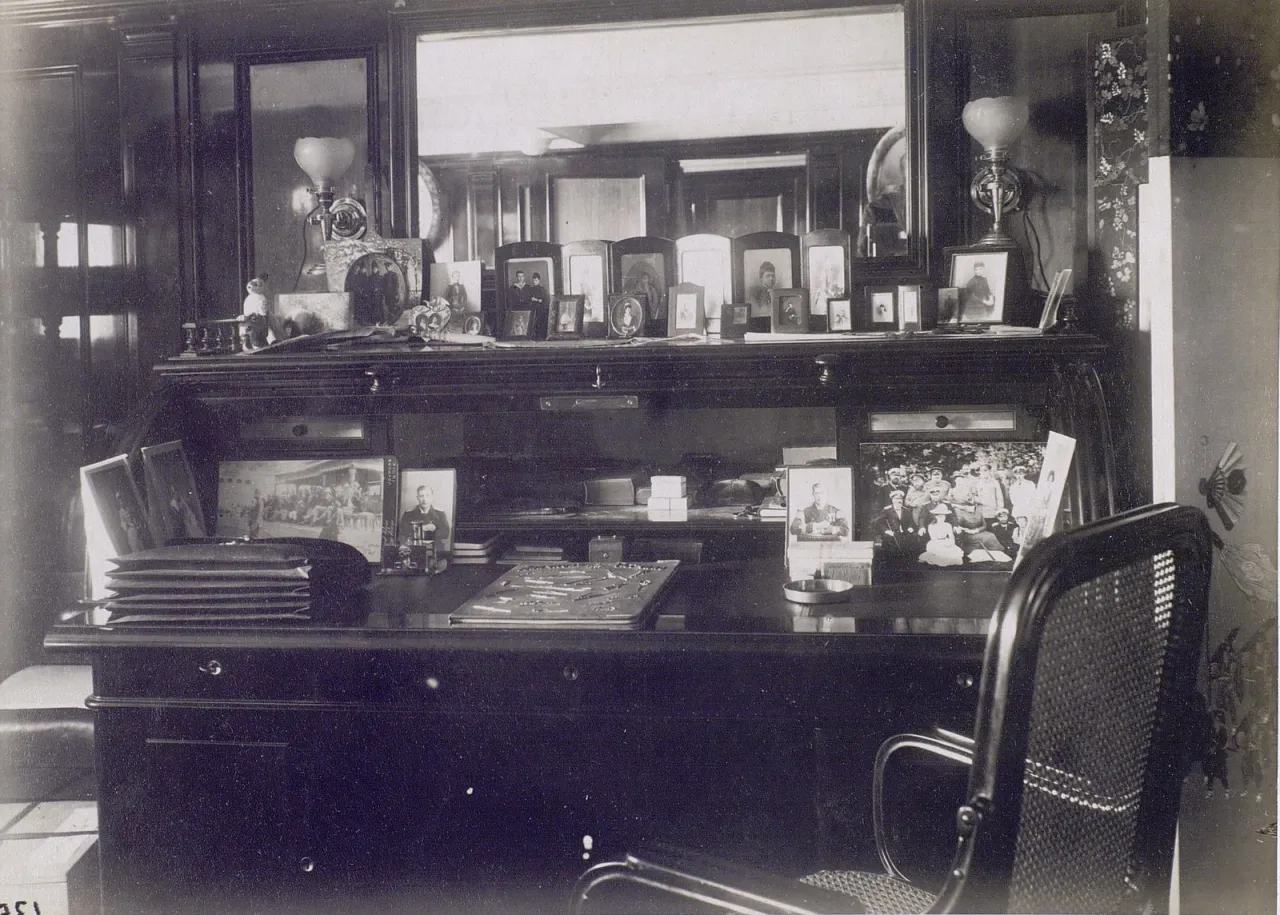
The office of Tsarevich Nikolai Alexandrovich on board the frigate "Memory of Azov"
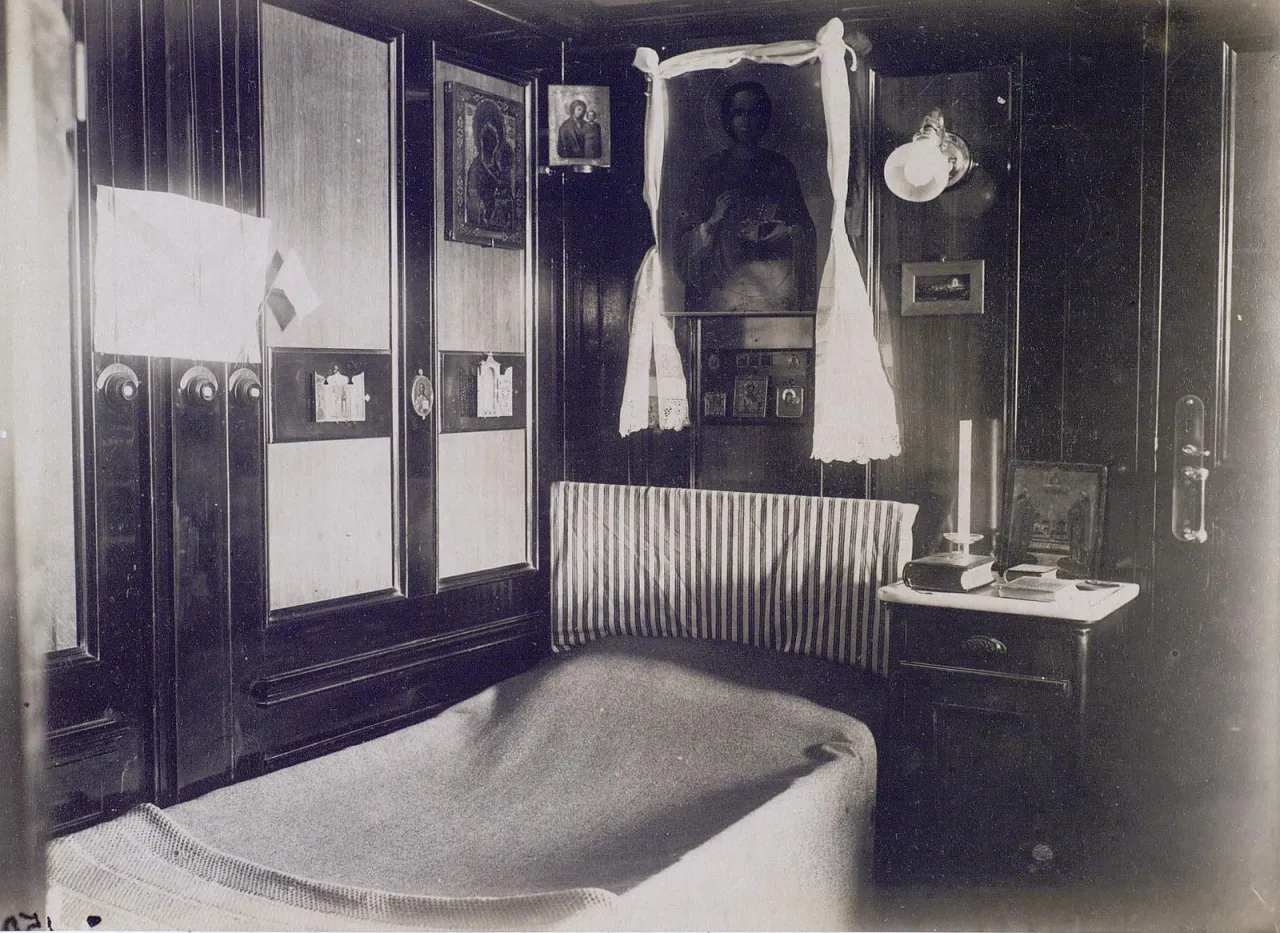
The bedroom of Tsarevich Nikolai Alexandrovich on board the frigate "Memory of Azov"
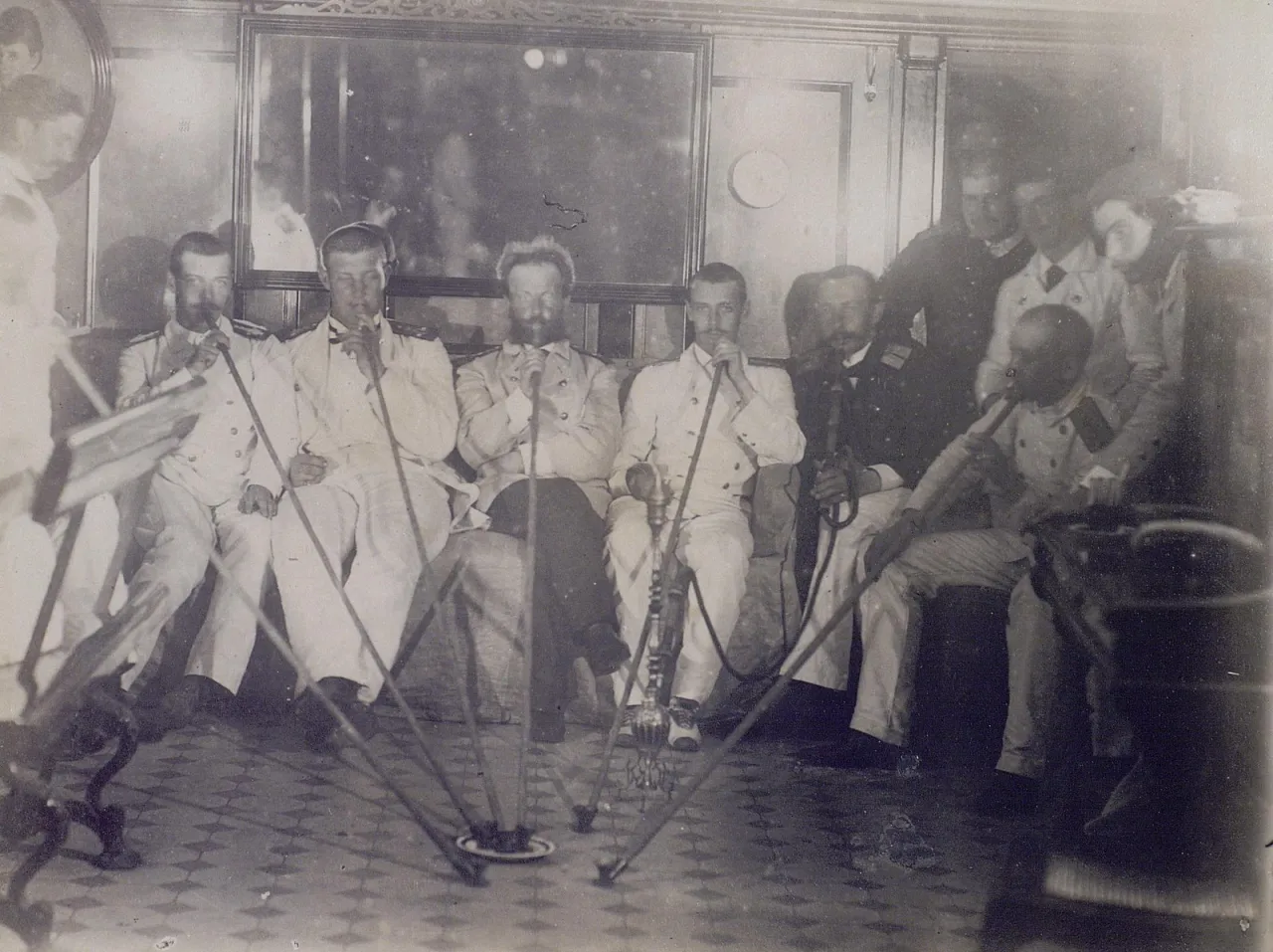
Afternoon rest for the highest officials on the frigate "Memory of Azov"
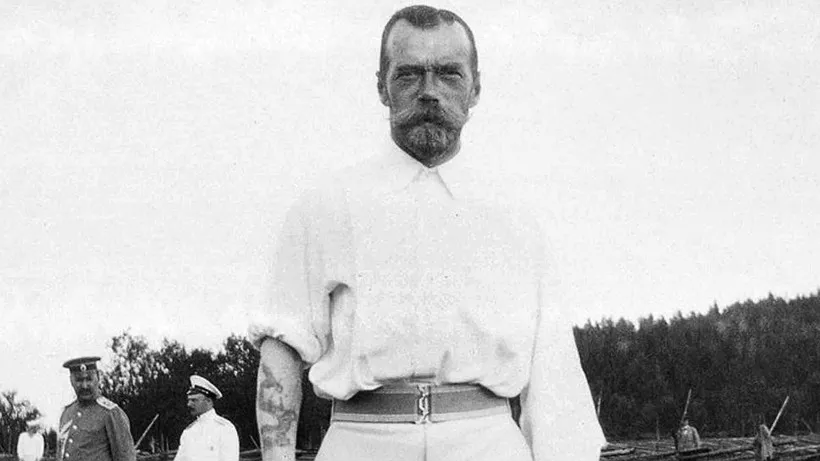
Nicholas II with a tattoo made in Japan
On April 29 (May 11), 1891, in Otsu, Japanese policeman Tsutsu Sanzo suddenly struck the Tsarevich on the head with a saber, but was unable to inflict any serious injury.
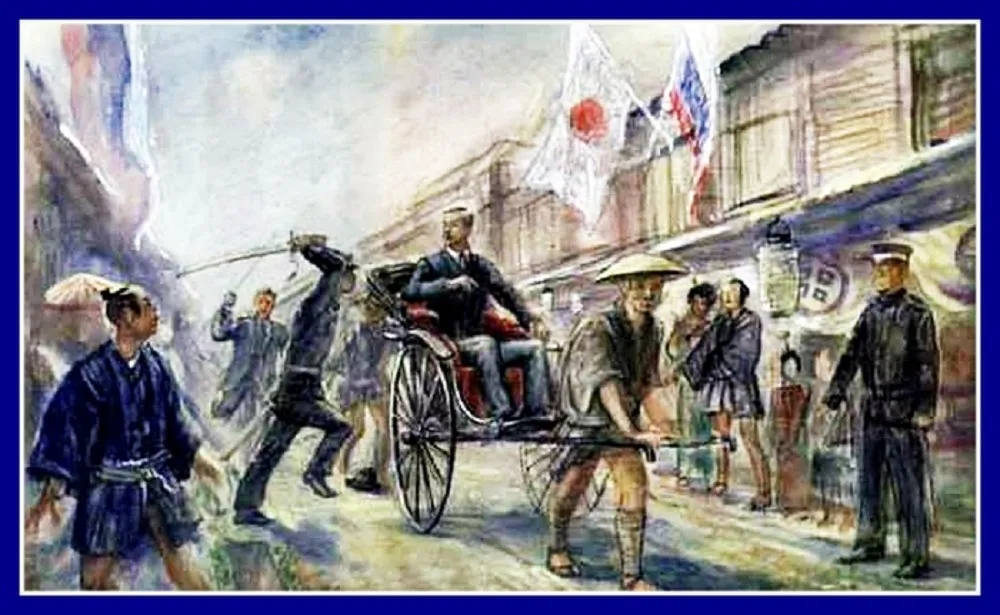
P. Ilyshev, Attack on Tsarevich Nicholas
The most likely cause of the attack is said to be Nikolai's inappropriate and disrespectful behavior at a Buddhist temple, where he entered without removing his shoes. The attacker was subdued by Japanese rickshaw drivers, who subdued him and handed him over to the head of the Russian security.
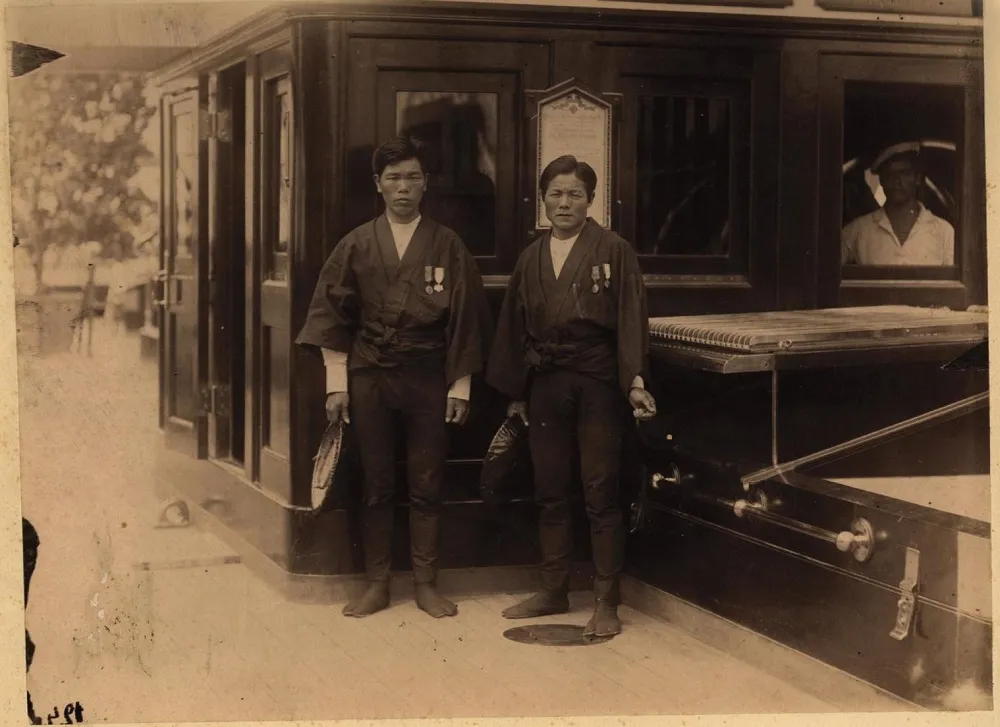
The Japanese janrikshas who saved the Tsarevich
Ordinary Japanese sent Nicholas around 20 telegrams offering personal apologies for the incident, and the 29th Prince of Satsuma Province, Shimazu Tadayoshi, rode 750 km on horseback in three days to convey this message. Furthermore, there were proposals to rename the city of Otsu, which had been tainted by the assassination attempt on its guest. The ship "Memory of Azov" was literally overflowing with gifts.
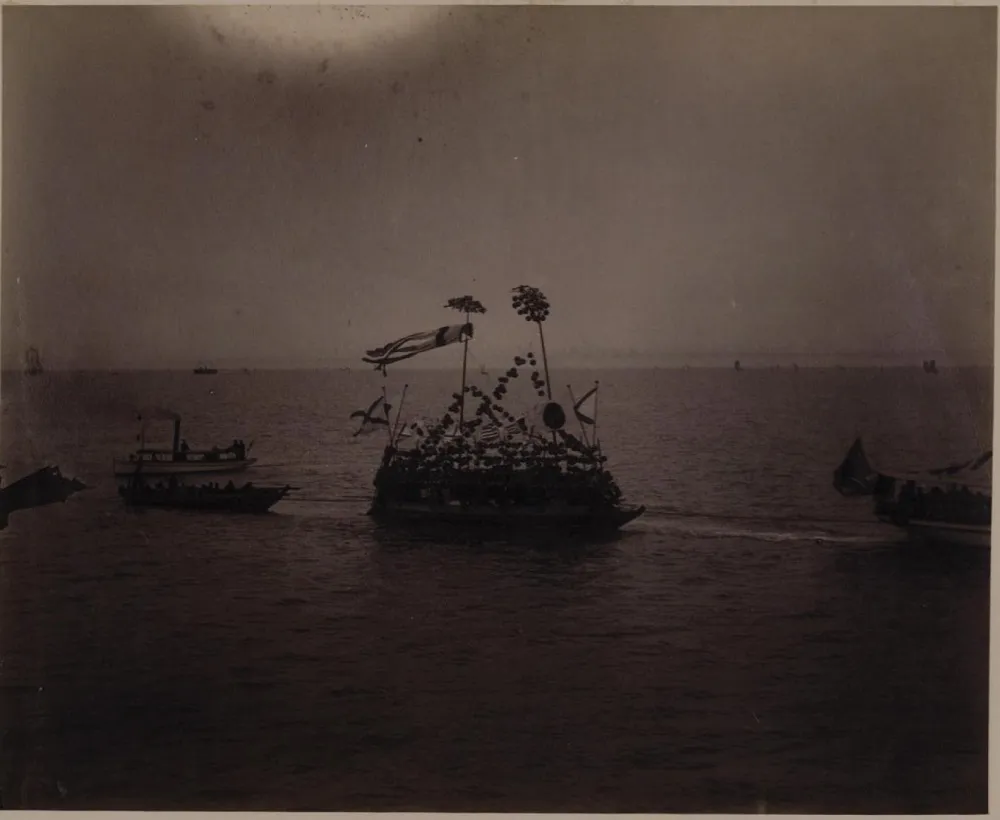
Nagasaki. A raft loaded with gifts from the Japanese for Tsarevich Nicholas.
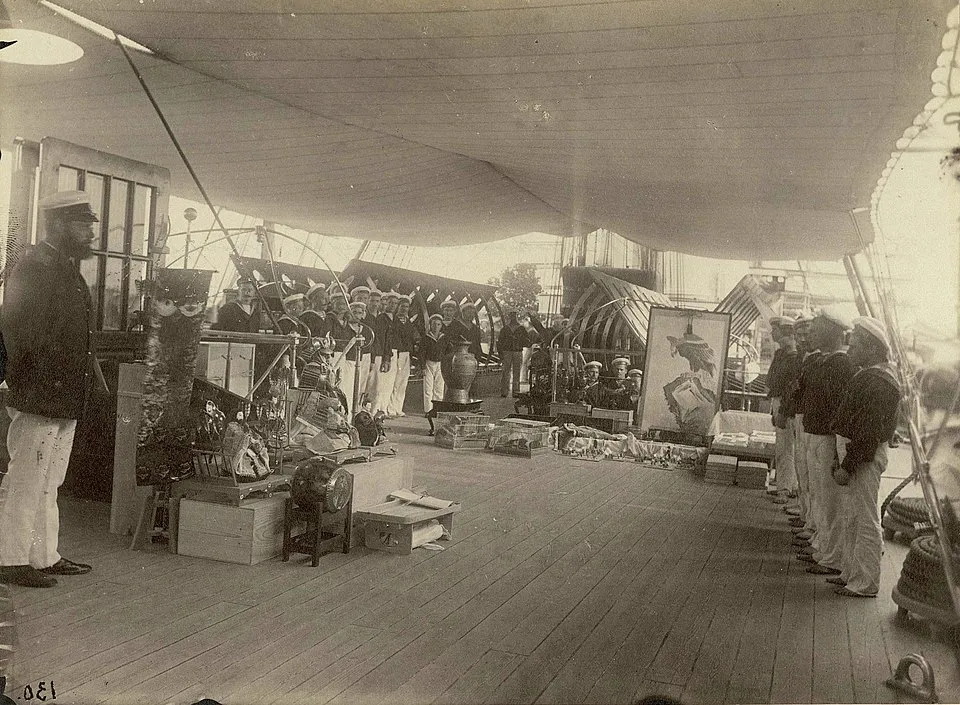
Gifts to Tsarevich Nikolai Alexandrovich on the cruiser Pamyat Azova
Emperor Mutsuhito (Meiji) arrived in Kyoto and, contrary to all protocol, was forced to wait in the antechamber for 30 minutes, after which Nicholas received him from his bed. Another breach of protocol and etiquette was the Emperor and Nicholas's dinner on a Russian warship, effectively on foreign soil. Then the Tsarevich's visit was abruptly cut short, which, of course, left a very unpleasant impression on everyone in Japan.
Tsarevich Nicholas made no outward complaints or demands of Japanese officials, but he retained a lifelong hostility toward the Japanese. The future Russian monarch dismissed any sincere expressions of remorse for what had happened and a desire to atone for his guilt as weakness and cowardice.
But those who quickly entered the world arena stories At first, the Japanese did not want conflict with Russia, offering entirely reasonable and acceptable terms for the division of spheres of influence: they were willing to recognize Russian influence in Manchuria in exchange for non-interference in Korean affairs. However, Nicholas II then fell under the influence of a group of political adventurers who promoted the creation of a so-called "Yellow Russia" and went down in history as the "Bezobrazovtsy." The idea of eastward expansion was also promoted by Pyotr Badmayev—a diplomat, an Actual State Councilor, a teacher of Mongolian at St. Petersburg University, and an expert in Tibetan medicine, who treated aristocrats, ministers, the most prominent representatives of the capital's bohemian elite, as well as Ivan of Kronstadt and Grigory Rasputin.
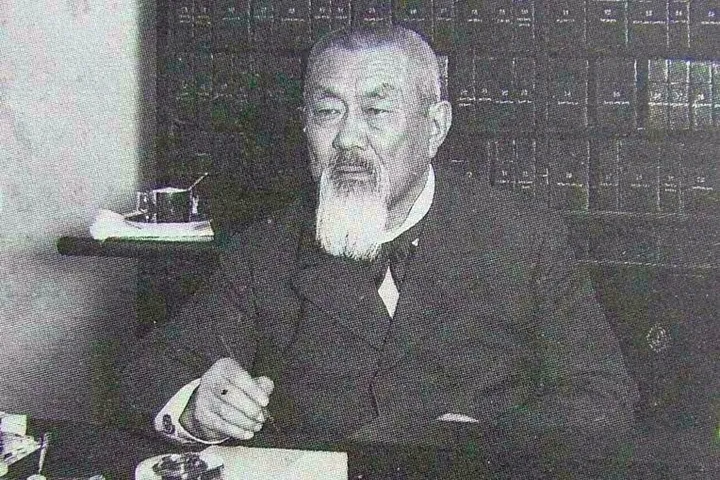
P. Badmaev in a photograph from 1914.
Badmaev went further than anyone else, as he wanted Mongolia, Tibet, and even China to join Russia.
What was the state of affairs in the Russian Far East? And what was the state of the Pacific Fleet?
The appearance of the Russian fleet in the Pacific Ocean
The official founding date of the Pacific Fleet is considered to be May 10 (21), 1731. On this day, Empress Anna Ioannovna appointed Grigory Pisarev, who had been exiled near Yakutsk, as governor of Okhotsk, ordering him to build a port, warehouses, and a small shipyard where ships would be built to transport "government-owned soft goods (furs) and merchants with their goods" from Kamchatka. In 1812, Petropavlovsk-Kamchatsky became the main military port on the Pacific Ocean, with a population of about 500 at the time: soldiers, sailors, officials, clergy, and two or three merchants.
Incidentally, the Crimean War, as is known, began on October 4 (16), 1853, but in Petropavlovsk-Kamchatsky they learned about it only at the end of May 1854 – the news came from the Russian Consul General in the USA.
So, there was supposedly a military port on the Pacific Ocean, but no actual navy yet. The Russian-American Company managed to form something resembling one: in the early 1820s, it had 13 ships at its disposal, ranging in size from 50 to 300 tons.
In 1850, Captain 1st Rank G. I. Nevelskoy founded the Nikolaevsky outpost (Nikolaevsk-on-Amur) without the approval of the Ministry of Foreign Affairs. Nesselrode petitioned for Nevelskoy's strict punishment, but Nikolay declared:
Once the Russian flag is raised, it must never be lowered.
Finally, on August 25 (September 6), 1852, the Russians landed on the southern coast of Sakhalin.
In the spring of 1854, the development of the Amur began, and in February 1855, the first Russian-Japanese trade treaty was signed in Shimodo.
The Siberian Flotilla was finally formed, comprising a steam frigate, two corvettes, two transports, a screw schooner, one seagoing steamship, and two river steamships in 1858-1859. In 1860, these vessels became the core of the 1st Pacific Squadron, which typically sailed from Nikolaevsk in winter to Kamchatka or even Japan or China. A patrol of warships was organized to combat foreign poachers. That same year, Vladivostok was founded, becoming a new military port and, in 1872, the governor's residence. However, in 1875, the Japanese city of Nagasaki became the main base of the Russian Pacific Fleet. Russian ships were based there from late autumn to early summer, returning to Vladivostok for only a few months.
In May 1879, a private shipping company, the "Voluntary Fleet Society" (Dobroflot), was established to establish connections with the Far East. Privy Councilor K. P. Pobedonostsev was appointed chairman of the board. But even in 1896, Russian ships delivered only 31,5% of the cargo to Vladivostok; the rest was carried by German, Norwegian, British, Japanese, American, and even Danish, Austrian, and Korean vessels.
By the treaty with Japan of April 25 (May 7), 1875, Russia received rights to Sakhalin in exchange for 18 Kuril Islands. This resource-rich island became a penal colony in Tsarist Russia.
The Pacific Fleet during the reign of the last Russian Emperor
And so the reign of Nicholas II arrived. Grand Duke Alexander Mikhailovich (the new emperor's childhood friend and cousin) and Rear Admiral and Flag Captain N. Lomen (formerly captain of the armored frigate Pamyat Azova, on which Tsarevich Nicholas once sailed to Japan) convinced the monarch to focus his efforts on creating a powerful Pacific Fleet. In December 1897, a seven-year "program for the needs of the Far East" was adopted, which called for the formation of a squadron there of five battleships, six second-rank cruisers, ten third-rank cruisers, two minelayers, and 36 destroyer destroyers. Since the duration of this program was limited to seven years, two shipbuilding programs in 1895 and 1898 were launched. merged into one with a completion date of 1905.
Even under Alexander III, the first serial submarine, built to a design by S. Dzhevetsky, was commissioned. In 1903–1904, the first Russian combat submarine, the Dolphin, was built at the Baltic Shipyard to a design by I. Bubnov, using both a gasoline engine and an electric motor. During the Russo-Japanese War, seven submarines were transported by rail to the Far East, where in 1905 the world's first tactical submarine force was formed. However, until the outbreak of World War I, no one knew how to use these new ships.
Desperate attempts were made to strengthen the Pacific Squadron. In February 1902, the cruiser Varyag arrived in the Far East, and in January of the following year, two cruisers, Novik 456 and Askold, reached Port Arthur. Rear Admiral E. A. Stackelberg's detachment also arrived: the battleships Retvizan and Pobeda, and the cruisers Diana, Pallada, Bogatyr, and Boyarin. In November 1903, the battleship Tsesarevich and the cruiser Bayan arrived in Port Arthur.
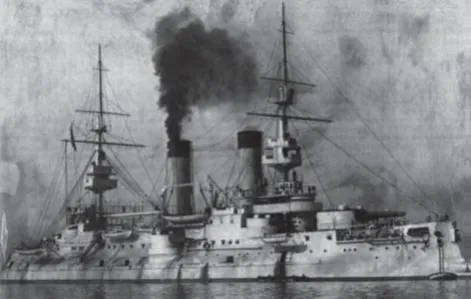
The Russian battleship Tsarevich undergoing sea trials in Toulon, 1903.
In total, the Pacific Squadron consisted of seven battleships, four first-rank armored cruisers, five first-rank armored deck cruisers, two second-rank cruisers, six gunboats, twenty-five destroyers, ten torpedo boats, two minelayers, and two minelayers. A battleship, two first-rank cruisers, a second-rank cruiser, seven destroyers, four torpedo boats, and three transports were en route. They did not complete the voyage before the outbreak of war with Japan and, upon reaching Djibouti, were ordered to return.
In the next article we will continue our story.
Information