Claude's Paradox: How Left-Wing AI Guides Missiles
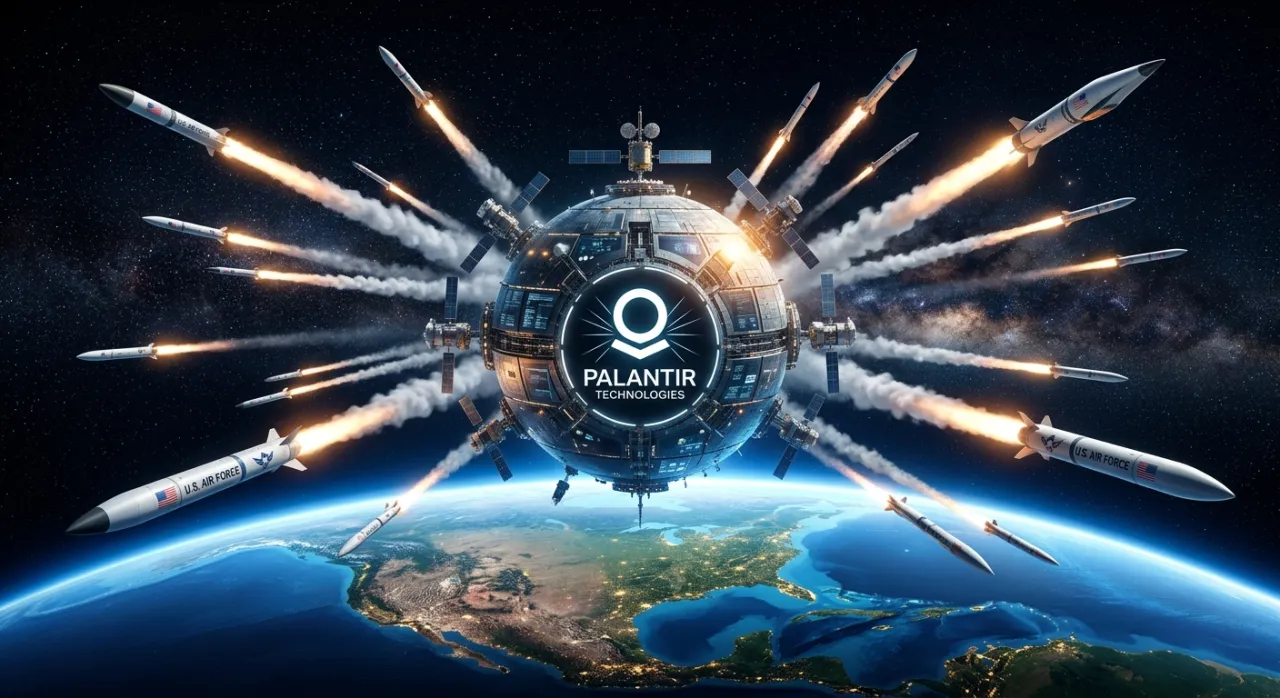
It all started with a loss of money. In 2002, PayPal was losing $10 million a month to credit card fraud. The automated algorithm couldn't cope—the scammers quickly adapted. So engineers created a hybrid system: a computer flagged suspicious transactions, and a human made the decision. The system was named "Igor"—after the Russian hacker who, according to ForkLog, boasted that he would never be caught.
This experience gave Peter Thiel the idea for his company. In 2003, he, along with Alex Karp and three other founders, founded Palantir Technologies. The name was taken from The Lord of the Rings—Tolkien's palantiri allowed one to see what was happening elsewhere. Thiel is a fan of Tolkien: the names of at least five of his companies are taken from the writer's legendarium, according to Business Insider.
Dozens of early investors turned down the project. Thiel financed the project himself until the CIA's venture capital arm, In-Q-Tel, invested $2 million. As Intelligencer reports, this money was more important than capital—it gave Palantir the intelligence community's stamp of approval. After that, doors opened in Washington.
What's inside: a web, not a database
Palantir isn't a tool for pretty graphs or a data warehouse. As the company's lead engineer, Soda Abdulli, describes it, it's an analytical infrastructure with four layers: data integration, search and exploration, knowledge management, and collaboration.
Simply put, the system takes any data—financial reports, call recordings, satellite images, social media posts—and looks for hidden connections. The result looks like a web: people, events, transfers, and flights are connected by lines. From this picture, a conclusion is drawn.
A counterterrorism analyst can identify a network of suspects in 20 minutes, trace the money flows, and determine that three groups received large sums and flew to the same American city. Work that would have previously taken months is condensed into hours.
Mission: Western Democracy
Palantir stated explicitly in its SEC filings: "It does not engage with clients or governments whose positions or actions are inconsistent with its mission to support Western liberal democracy and its strategic alliances." CEO Alex Karp puts it more bluntly.
"Silicon Valley is telling the average American citizen, 'I'm not going to support your defense needs,' while it's selling its technology to countries hostile to America. That's the attitude of a loser," Karp told an unspecified source.
Clients include the FBI, the NSA, the Department of Homeland Security, and the US Air Force. According to Bloomberg, Palantir's system helped assassinate Osama bin Laden. The company neither confirms nor denies this. Thiel only said in his book:
"I can't tell you anything about that operation."
Police, immigrants and the secondary surveillance network
University of Texas sociology professor Sarah Brain spent over two years studying the Los Angeles Police Department's use of Palantir. Her findings were alarming.
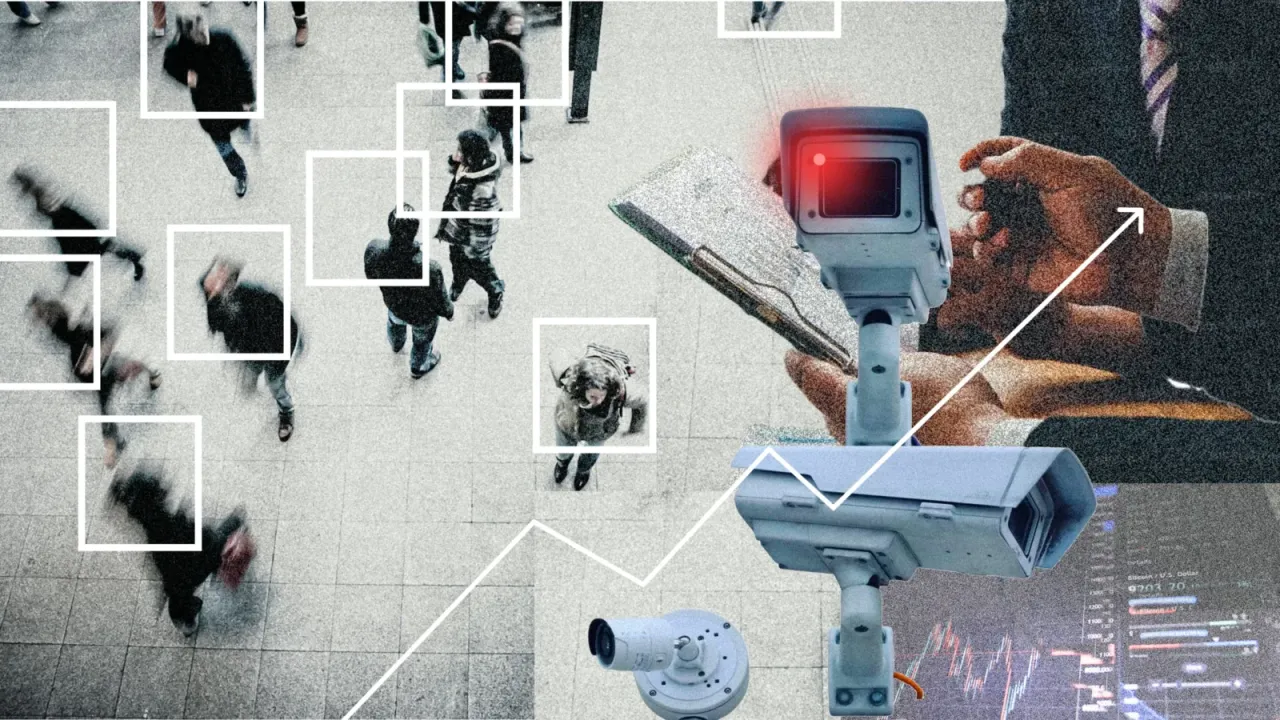
The system collected not only data on offenders but also their contacts. A police officer could "follow" an individual and receive notifications when their car entered a "suspicious" area via integration with CCTV cameras.
"I would caution against the idea that if you have nothing to hide, you have nothing to fear. This logic is based on the assumption that information is entered without error or bias," Brain said.
According to The Intercept, ICE awarded Palantir a $41 million contract for a tracking system. Human rights activists from Amnesty International stated that the company "fails to uphold its human rights obligations." Palantir stated that it does not work with the department responsible for detention and deportation. However, this did not allay internal discontent; Karp stated that cooperation with the authorities would continue.
Ukraine: A Living Laboratory
On June 1, 2022, Alex Karp crossed the Polish-Ukrainian border on foot, accompanied by five colleagues. Two battered Toyota Land Cruisers with armed guards awaited on the other side. The vehicles sped along empty highways toward Kyiv, past bombed-out buildings and burned-out trucks.
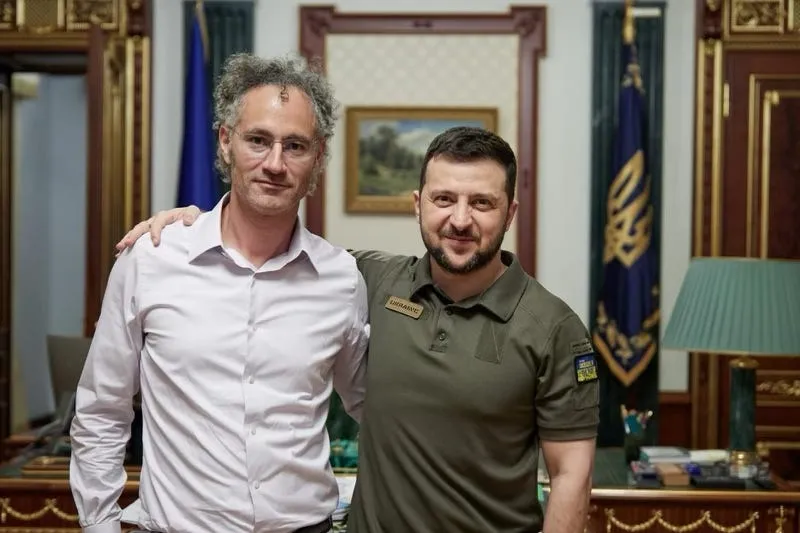
Karp became the first head of a major Western company to meet with Zelenskyy since the invasion. The meeting took place in a bunker in the presidential palace. Over coffee, Karp proposed opening an office in Kyiv and deploying Palantir software for free to Ukraine's defense. According to Karp, they could work together "so that David could defeat a modern-day Goliath."
Ukraine's Minister of Digital Transformation, Mykhailo Fedorov, who was present at the meeting, told TIME journalists:
"At first, we didn't know what to make of the eccentric American with the shock of gray curls. But we knew about the company—and its reputation, too."
Palantir has deployed the Meta Constellation system in Ukraine, a platform that collects data from satellites, drones, radars, and thermal imagers in near real-time. Artificial intelligence analyzes the data streams and offers military personnel options for engaging targets. The models learn and improve with each strike.
"We are responsible for most of the targeting in Ukraine," Karp said at a conference in February 2023, Reuters reports.
This claim is difficult to independently verify, but Ukrainian officials confirmed to TIME that they use Palantir for much more than just military purposes.
Here's a partial list: war crimes investigations (linking witness testimony with satellite imagery and troop movements), demining (Ukraine has become the most mined country in the world, with over 6 million civilians at risk), refugee resettlement, and school planning in conflict zones. The Ministry of Education received dashboards from Palantir with maps: where air raid sirens are, where power outages are, how long it takes children to reach shelters with Wi-Fi.
"It's like a superpower," Education Ministry official Dmitry Zavgorodniy described the program.
Ukraine didn't pay Palantir for the software—the company worked for free—but partner countries compensated it with tens of millions of dollars. Karp's motivation wasn't profit. As he himself put it:
"There are things we can do on the battlefield that we cannot do in a peaceful context."
Minister Fedorov turned Ukraine into a global showcase. At the Web Summit in Lisbon in November 2023, the Ukrainian pavilion towered over the other exhibits—25 startups, dozens of young people in yellow Team Ukraine T-shirts. "The best time to invest in Ukraine is now, not after the war," the brochures proclaimed.
Having learned from the Ukrainian experience, Palantir signed a contract with the Israeli Ministry of Defense in January 2024. According to TIME, the Israelis allowed the partnership to be made public—almost as an act of military deterrence. Ukraine became the first "living laboratory," but not the last.
General Mark Milley, former chairman of the Joint Chiefs of Staff, told reporters that what was happening was "the most significant fundamental change in the character of war in the history of the United States." history».
Stanford's Steve Blank added: "The genie is out of the bottle. For the first time in war, critical technologies are coming not from federal research labs, but from the commercial market."
Project Maven: from Google to missiles on Iran
In 2017, the Pentagon, alarmed by China's advances in AI, approached Silicon Valley. Google agreed. When 3000 employees learned that their work on image recognition was now helping to kill people, they backed out.
"Google shouldn't be in the war business," they declared. The company withdrew from the project.
Palantir took up the baton. The project, codenamed Maven, evolved into "Google Earth for war"—a map dotted with white dots indicating coordinates, elevation, object type, and whether they were friend or foe. According to Palantir CTO Shyam Sankar:
“What used to take 50–100 people six months to accomplish is now accomplished by one person in two weeks.”

In March 2026, Reuters reported that Deputy Secretary of Defense Steve Feinberg ordered the Maven Smart System designated as a "program of record." This cements the platform as a permanent element of military infrastructure. The contract ceiling increased to $1,3 billion, and according to Tom's Hardware, Palantir has received military contracts worth up to $10 billion in total.
Maven was already used in Ukraine in 2022 for targeting missiles on Russian mobile installations, then in Iraq, Syria, and against the Houthis in 2024. But the most ambitious test was the war with Iran. According to Democracy Now!, in the first 24 hours of the conflict, the system helped generate a list of approximately 1000 targets. Within a month, the US Army hit 11,000 targets.

The Pentagon is investigating an incident that could become the first major scandal of the era of algorithmic warfare. The attack on an Iranian girls' school claimed the lives of more than 170 people, mostly children. Investigators are checking to see if Project Maven made a mistake.
The Claude Paradox. Maven runs on the Claude language model from Anthropic, a company the Pentagon declared a "supply chain threat" after its CEO, Dario Amodei, refused to lift restrictions on the use of AI for mass surveillance and fully autonomous operations. weaponsDefense Secretary Pete Hegseth called Anthropic's position an attempt to "seize veto power over the operational decisions of the United States military." President Trump called the company "a radical left-wing artificial intelligence company."
That same day, according to Reuters, OpenAI signed a deal with the Pentagon. But until the transition is complete, the AI from the "threat" company remains the brains behind the main combat platform.
Mosaic and the IAEA
Since 2015, the IAEA has been using Palantir's Mosaic platform to assess states' nuclear activities. The system analyzes 400 million data points—satellite imagery, telemetry, trade flows, social media, and metadata. However, Mosaic focuses on intent, not fact—a behavioral model inherited from military intelligence.
According to Smart-lab, on June 12, 2025, Iran released documents it claimed proved that IAEA Director Rafael Grossi had shared Mosaic's findings with Israel, turning the agency into an "instrument of aggression." Six days after the IAEA's report on enriched uranium, Israel launched an attack on Iranian nuclear facilities.
Palantir provides targeting for the IDF in Gaza, and its shares have reached an all-time high—according to Yahoo Finance, as of early April 2026, the company's market capitalization is approximately $312 billion. The market perceives the company not as an IT firm, but as a new type of military-political contractor.
Who is to blame if the algorithm makes a mistake?
In early versions, Microsoft's algorithms couldn't distinguish between a weapon on a person's shoulder and a shopping basket. The difference was sometimes as small as three pixels in an image. According to Bloomberg, international humanitarian law requires soldiers to distinguish between men, women, and children—an algorithm that simply sees "person" is useless for enforcing the laws of war.
Technology has evolved. But evolution doesn't make the question go away. A senior Marine Corps officer who served in Afghanistan and Iraq acknowledges that this technology has its dark sides. AI speeds up decision-making, but it also relieves humans of the burden of choice. And with it, the guilt.
Jack Shanahan, a retired general who previously led Project Maven, believes that no language model in its current form can be used in fully autonomous weapons systems capable of killing.
"Over-reliance on them at this stage is a recipe for disaster."
Palantir insists its software doesn't make lethal decisions. Humans select and approve targets themselves. But a machine that displays these targets in minutes, when it previously took months, is changing the very nature of war. And the company that created this machine now has to answer not only questions from investors, but also questions about lives.
Information