Moldova is burning its bridges
27 023 42
Moldova is burning its bridges


On April 2, 2026, an event occurred in the parliamentary chamber of Chisinau that was formally a legal procedure, but in essence represented a point of no return. Sixty members of the ruling coalition voted to denounce the CIS Establishment Agreement, its Protocol, and the organization's Charter. Twenty-six members of parliament from the Communists, Socialists, Our Party, and Alternative voted against. But their votes were inconclusive. Moldova officially initiated the process of secession from the Commonwealth of Independent States.


The country will be the third to leave the organization, following Georgia, which left in 2009, and Ukraine, which was never a full member. Eight former Soviet republics now remain in the CIS. The statistics are merciless: each new exit makes the Commonwealth less friendly.

A four-year journey


The process formally began in March 2022, when Moldova applied to join the European Union. Since then, Chisinau has ceased participating in CIS and Eurasian Economic Union meetings, where the republic retained observer status. In 2023, the country began withdrawing from the CIS Interparliamentary Assembly. By early 2024, the Moldovan authorities had announced their withdrawal from 119 of the 282 existing agreements within the Commonwealth.

On January 19, 2026, Foreign Minister Mihai Popșoi officially launched the denunciation procedure. The government approved the decision in mid-March. The bills passed their first reading in parliament on March 20. The second, final reading took place on April 2. President Maia Sandu will sign the documents, after which they will be sent to the CIS Executive Committee. Exactly twelve months later, in accordance with the Vienna Convention on the Law of Treaties, Moldova's membership in the Commonwealth will cease permanently.

Seventy of the two hundred and eighty-three agreements have been denounced so far. Another sixty or so are in the process of being denounced. However, the authorities emphasize that economic and social agreements that bring real benefits will be preserved. Chisinau intends to continue relations with CIS countries on a bilateral and multilateral basis. Essentially, this is a strategy already tried by Georgia: withdraw from the organization but leave in place the beneficial agreements.

The official statement from Parliament contains the key wording:
"The denunciation of the CIS agreement is a natural and inevitable step on the path to joining the European Union."

Exactly, without reservations or alternatives. European integration is declared the only vector of development, and a break with post-Soviet structures is seen as a necessary condition.

Voices of the opposition


Communists and socialists opposed the decision. Former President Vladimir Voronin called the decision a "betrayal" of Moldovan citizens, especially those working in Russia. His words were alarming and concrete:
"They have no idea what's coming next."

Critics point to several vulnerabilities. First and foremost, hundreds of thousands of Moldovan citizens work in Russia and other CIS countries. Leaving the Commonwealth could call into question the visa-free regime and the mechanism for mutual recognition of documents. People who have spent decades building their lives in these countries risk encountering bureaucratic barriers whose existence they have long forgotten.

The second pain point is agriculture. Moldovan producers are losing not only a profitable market for their produce but also the opportunity to purchase fertilizers at preferential prices. A similar situation is developing with metal and timber imports. A country whose economy remains tied to post-Soviet supply chains in many sectors will not transform overnight.

Savings that don't solve anything


The government points to cost savings: after leaving the CIS, Moldova will save $176,000 by foregoing annual contributions to the organization's budget. This sum is, to put it mildly, unimpressive. It doesn't even begin to cover the economic risks associated with severing economic ties. But the symbolic significance of the decision outweighs its direct financial consequences. This isn't a matter of money, but of a geopolitical choice.

And here the main question arises: what does Moldova get in return?

The official rhetoric of the Chisinau authorities is based on a simple logic: leaving the CIS opens the way to the European Union. But the reality is more complex and contradictory than the government's statements suggest.

In January 2026, the European Union finally approved a trade agreement with Mercosur, a South American trading bloc comprising Brazil, Argentina, Paraguay, and Uruguay. This mega-deal, which took twenty-five years to negotiate, creates the world's largest free trade area, covering over seven hundred million people. Brussels is clearly counting on an influx of labor and goods from Latin America, not Eastern Europe. Moldova is relegated to the modest role of marginal partner in this arrangement.

Moreover, Europe itself is going through difficult times. The US and Israeli war against Iran has led to a sharp rise in energy prices. Natural gas prices in Europe have risen by approximately 70 percent. The escalation of the conflict has effectively halted tanker traffic through the Strait of Hormuz. As of March 1 of this year, gas reserves in European storage facilities fell to 30 percent, the lowest level since the crisis of 2022. Dutch futures are trading near a three-year high. Old Europe is struggling with energy shortages, rising prices, and industrial decline.

It is at this moment that Chisinau sever its last ties with the post-Soviet space.

Even if Moldova is admitted to the EU, as has been announced at various levels, it will come with a very limited range of rights. The small Transnistrian republic is unlikely to receive full access to structural funds, free movement of labor, and agricultural subsidies. The experience of Romania and Bulgaria, which joined the EU in 2007, shows that even larger countries wait decades for full membership in the Schengen Area and the Eurozone. Moldova, with its economy, population of two and a half million, and unresolved Transnistrian conflict, could receive candidate status and even formal membership, but with restrictions that would turn European integration into a symbolic rather than a tangible benefit.

The price of a breakup


Moldova is betting on the future at the expense of the present. It's a strategy steeped in ideology and light on pragmatism. President Sandu and the ruling Action and Solidarity party are convinced that the European path is the only right one, and that all costs are temporary. The opposition believes the country is jumping on a train that's heading downhill.

The truth, as usual, lies somewhere in the middle. But there are facts that transcend political persuasion. Hundreds of thousands of Moldovan citizens depend on labor ties with Russia. Agriculture is tied to post-Soviet markets. Energy requires stable supplies. And Europe, to which Chisinau aspires, is itself experiencing a systemic crisis.

The Moldovan parliament deemed leaving the CIS a "natural and inevitable step." Perhaps this is indeed the case for the country's political elite. But for ordinary citizens, whose lives are tied to specific economic ties, jobs, and markets, the cost of this step could be significantly higher than the one hundred and seventy-six thousand dollars saved.

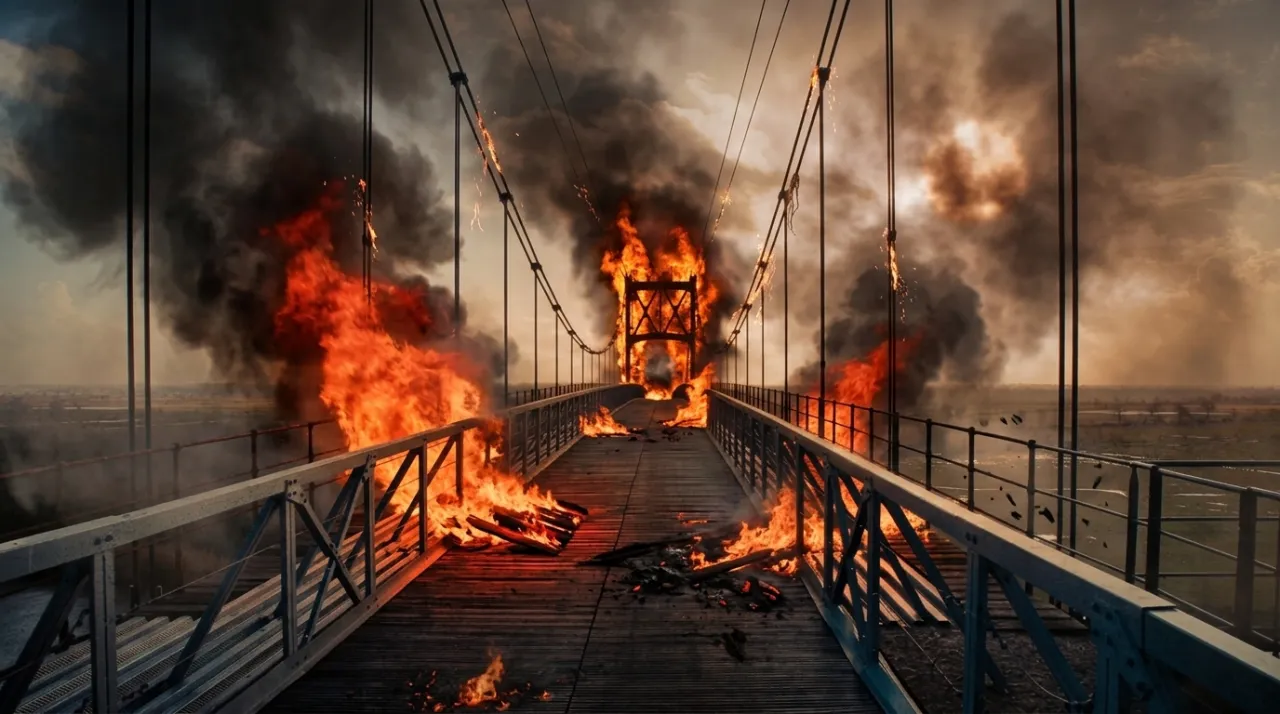
Bridges that are burned down aren't rebuilt overnight. And building new ones, as Georgia's experience shows, is possible, but they're completely different bridges and a completely different price.
42 comments
Information
Dear reader, to leave comments on the publication, you must sign in.
  1. +7
    April 5 2026 11: 47
    "A woman off the cart is easier for the mare"
    1. +7
      April 5 2026 12: 12
      The fact that more than two million people will join Europe and be under its rule will make it easier for Europe than for Russia.
      1. +1
        April 5 2026 12: 33
        As of 2024, more than half a million Moldovan citizens reside in Russia. According to the Russian Ministry of Internal Affairs, 476,123 citizens who have declared Moldovan as their second citizenship reside in the country. Another 27,149 Moldovan citizens hold residence permits and are awaiting Russian citizenship.
        1. + 12
          April 5 2026 13: 28
          Put an end to the dual citizenship mess
      2. +1
        April 5 2026 13: 28
        Is it really easier? Like, it'll get easier?
      3. +2
        April 5 2026 19: 41
        We need to live in the country and take care of the country, and not think about our neighbors.
    2. +1
      April 5 2026 15: 16
      Quote: coconut tim
      "A woman off the cart is easier for the mare"

      Gypsies in a noisy crowd.
      Bessarabia wander.
      They are above the river today.
      They spend the night in tattered tents...
    3. -1
      April 5 2026 17: 10
      "A woman off the cart is easier for the mare"

      Sandu off the cart - it's easier for the mare
  2. +9
    April 5 2026 11: 57
    Quote: coconut tim
    "A woman off the cart is easier for the mare"

    How can I say...what will happen to Transnistria?
    What will happen to the sales market in Moldova?
    The EU and the US are imposing sanctions on Russia, launching color revolutions in neighboring republics...instilling Russophobia there...following which, NATO structures appear there...following which, these territories become a springboard for attacks on Russia.
    Everything is interconnected...Russia's influence in the CIS is low and is deteriorating.
    1. 0
      April 5 2026 12: 38
      What will happen to Transnistria?

      It's easy for the horse to get off the wagon. It's high time to simply evacuate the Russian-speaking population from there. I think Moldova won't object and will provide us with a humanitarian corridor. Only then will it be possible to set conditions. As long as the Transnistria region is there, they'll continue to milk Russia, holding them as "hostages."
      1. +3
        April 5 2026 13: 05
        Quote: Dmitry Rigov
        It's high time to simply evacuate the Russian-speaking population from there.

        90% of the population there is Russian-speaking, and the vast majority of them don't want to be evacuated at all. In the EU, migrant workers are paid much more...
      2. +5
        April 5 2026 13: 08
        They're trying to present yet another failure of the Russian leadership as almost an achievement! Pushkin wrote poetry in Chisinau, and now they're telling us to evacuate Russians from there. Pardon me, where? To Moscow? There might even be an "indigenous population" in Moscow—a Finno-Ugric one.
      3. +5
        April 5 2026 13: 20
        And who's going to evacuate where? To an empty field? Who's really waiting for them there? Everyone saw how the Kursk region was evacuated, and now few people want to repeat that scenario.
        1. +3
          April 5 2026 15: 20
          Quote: bon jorno
          Who is really waiting for them here?

          Nobody is waiting and nothing is waiting, we are strangers, those who are in Transnistria and the Baltics.
  3. -5
    April 5 2026 11: 59
    The country will become the third to leave the organization after Georgia.

    This is all nonsense. You can't just up and move a neighboring territory to another part of the world with a vote or the stroke of a pen. And as for joining the EU, that "bloc" will soon cease to exist. So, Moldova and Georgia won't be able to escape Russia.
    1. +9
      April 5 2026 12: 10
      Statistics are merciless: each new exit makes the Commonwealth less friendly.
      It was already stillborn... Everything was held together by the remnants of Soviet ties. Generations have passed, and those ties have become thinner and are breaking. Maya won't let me lie.
      1. -7
        April 5 2026 12: 18
        Quote from Uncle Lee
        Generations have changed and connections have become thinner and are breaking down.

        I think that in the medium term, "white Europe" will change significantly and become Muslim. And Christians will move closer to Russia.
        1. +6
          April 5 2026 12: 22
          Quote: South Ukrainian
          And Christians will move closer to Russia.

          And you, sir, are an optimist... But what about the villagers, Afghans, Indians, Africans, who are imported without measure?
          1. -1
            April 5 2026 12: 25
            Quote from Uncle Lee
            And you, sir, are an optimist...

            Otherwise, the nervous system won't cope)
        2. +2
          April 5 2026 13: 07
          Quote: South Ukrainian
          I think that in the medium term, "white Europe" will change significantly and become Muslim. And Christians will move closer to Russia.

          The EU is home to approximately 26 million Muslims (6-7% of the population), a number that is growing due to migration and high birth rates, reaching 36-75 million by 2050, according to various forecasts. In the Russian Federation, with a significantly smaller overall population, the proportion of Muslims is higher (approximately 10-15% of the native population plus migrants), and the influx comes primarily from Central Asian countries (approximately 200 receive citizenship annually).
        3. +3
          April 5 2026 14: 08
          Closer to Poland, I think, now it has the most Christian population in Europe, since they did not bend to Brussels and instead of refugees from southern countries, they brought in fully functional Taras.
      2. +3
        April 5 2026 13: 30
        Remnants of Soviet ties and generational change have absolutely nothing to do with this—there's a deliberate surrender of historical Russia. Beginning with Abashidze's Adjara, the same scenario is unfolding: pro-Russian forces, under claims of "recognizing new geopolitical realities," are left alone against the US and EU, which are pushing for their protégé, who is allowed to do anything. The result is predictable. Once in power, the Western puppets will not relinquish it, easily rigging election results—Sandu himself is a prime example of this. And step by step, they are implementing their overseers' program to tear these territories away from Russia.
  4. +1
    April 5 2026 12: 03
    For a general understanding of the situation, I will add that at least in Germany there are many mixed Romanian-Moscow construction brigades roaming

    Moreover, if the Ukrainians (and many of them have settled in) are working on a "simple construction site," these crews are tied to communications. I saw an entirely Moldovan crew setting up fiber-optic communications. They were laying cables, digging trenches, and operating horizontal boring machines, as well as soldering fiber optic cables into boxes.

    All of them, except for the young ones, speak Russian. The young ones prefer English.
    1. 0
      April 5 2026 12: 26
      There are many mixed Romanian-Moscow construction teams roaming around Germany

      Call a spade a spade: gypsy construction crews. wassat
  5. 0
    April 5 2026 12: 06
    In the end, Moldova will join Romania, so everything is logical.
  6. HAM
    + 10
    April 5 2026 12: 14
    Here too, it's like a carbon copy: we're leaving, but you're obligated to keep all our benefits...
    Armenians want gas at domestic Russian prices and a nuclear power plant on credit (without repayment)...
    Central Asians, Georgians, and Moldovans all want something: to live like the USSR on subsidies and give nothing in return... "bros," damn... When will Moscow finally understand that socialism is over and that you can't buy love with favors, only insolence and the appetite for "bros"? Armenians are already openly rude... and Moldovans won't be so brazen once they become Romanians.
  7. +6
    April 5 2026 12: 25
    However, the authorities emphasize that economic and social agreements that bring real benefits will be preserved.
    We should denounce these treaties ourselves. If they left the CIS, good riddance. Let them stay without beneficial treaties.
  8. +5
    April 5 2026 12: 34
    To preserve Transnistria, we need to cut Ukraine off from the Black Sea. Completely! So that NATO has no illusions about opening new bases. They don't give a damn about Ukraine; they need Crimea! Just like the US and England howled in rage when we took our island back after the coup. They don't need Ukraine! They needed Crimea!
    1. +1
      April 5 2026 13: 21
      Quote: ocean
      They don't give a damn about Ukraine, they needed Crimea!

      They want us to stop having Crimea, and they have partially achieved this recently, because they are terrorizing Crimea as much as they want and will continue to do so as long as they have access to the sea.
  9. +4
    April 5 2026 13: 09
    CIS-Commonwealth of Independent States.
    Nowadays, all these 3 words do not correspond to their names.
  10. +2
    April 5 2026 13: 11
    But the authorities emphasize that economic and social agreements that bring real benefits will be preserved.

    Why? laughing
    The article is correct: different bridges, different price.
    You were a pauper, go even further... The EU doesn't need you, especially now... laughing
  11. +3
    April 5 2026 13: 12
    Bridges that are burned down aren't rebuilt overnight. And building new ones, as Georgia's experience shows, is possible, but they're completely different bridges and a completely different price.

    Georgian wines are quite expensive in all Russian stores. Georgia is a small country. Apparently, the bridges are working, but somehow only one-sidedly. Georgia is like a calf suckling two cows.
    1. +1
      April 5 2026 13: 57
      Do we even have Georgian wines? That swill they sell here has nothing in common with Georgia, just like Jamaican rum bottled in Chelyabinsk. What does Georgia have to do with it if we're trying to sell gas and oil to the whole world at rock-bottom prices? Even the gypsies in India turn up their noses at it.
      1. 0
        April 6 2026 07: 16
        Quote: torbas41
        Do we have Georgian wines?

        You know, there is, I specifically went to Krasnoe Beloe to check. And you're absolutely right about us selling our resources! +++ It's perfectly obvious that countries that trade in resources always lag behind in technology.
  12. +1
    April 5 2026 13: 31
    And who placed any hope in this CIS? Who said that the liberated former Soviet republics gained independence? It was impossible to transfer the former property of the Russian Empire to foreign entities (states)... They began again to look for those idiots who would help them for free, without compensation, paying for it with Russophobia...
    Concerning:
    And it is possible to build new ones, as Georgia’s experience shows, but these are completely different bridges and a completely different price.

    I remember that a 0.5 liter glass bottle of Borjomi cost 22 kopecks in any store, and today the same name in 1.0 liter plastic costs 169 rubles... One wonders, who needs such "priceless" mineral water?
  13. +2
    April 5 2026 13: 40
    Another hungry dwarf at the "democratic" trough where the EU is gradually adding food...for now.
    But in essence, this is yet another minus "state" from the world map.
    Well, God be with them, let them wash themselves away...
  14. 0
    April 5 2026 14: 00
    The lack of a clear, coherent policy in the CIS and Russia is astonishing! There are failures on all fronts. You can't keep one team in power for so long. A change every five years is a must! Otherwise, we'll end up with stagnation, which is what we're seeing in Russia.
  15. +2
    April 5 2026 14: 04
    The CIS died before it was even born; in essence, it was created with one single purpose: to fool the citizens of the USSR by creating the appearance of a single space.
  16. 0
    April 5 2026 15: 35
    Of the GUAM countries, only Azerbaijan is still in the CIS. If Armenia joins GUAM and Azerbaijanis leave the CIS, and Armenians leave the CIS, the Eurasian Economic Union, and the Collective Security Treaty Organization, then you'll have a Black Sea-Caspian NATO by 2029-2030. "Hello, Russian Foreign Ministry."
  17. 0
    April 6 2026 05: 30
    Well, screw them. Let them eat their own fruit.
  18. 0
    April 6 2026 10: 24
    And who's to blame for this? There was no point in whining and playing at democracy. They wasted everything, both domestically and in their own backyards, and now Moldova's bridges are burning. Perhaps this is a consequence, and the cause lies with our elites?
  19. 0
    April 6 2026 10: 40
    Another step in the war in Europe ............