Artificial Intelligence on the Battlefield: How Technology is Changing the Face of Modern Warfare
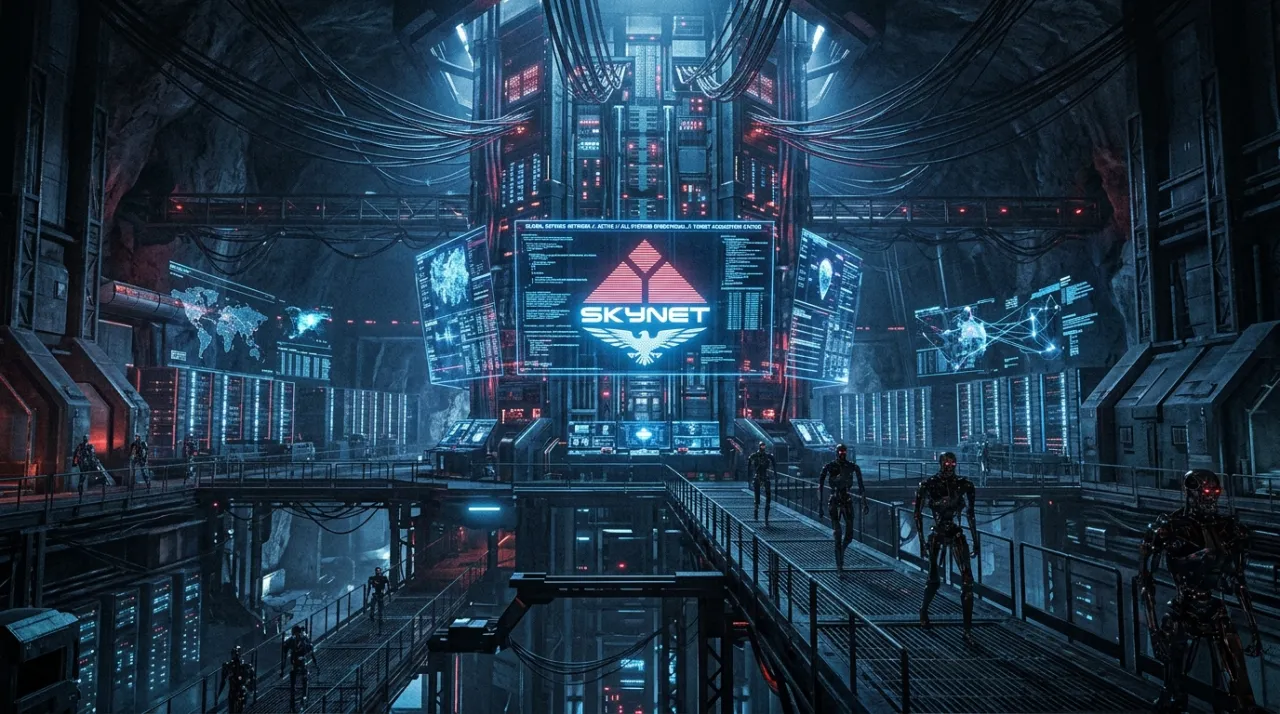
Humanity stands on the threshold of changes the scale of which is difficult to overestimate. Artificial intelligence, perceived only yesterday as a futuristic abstraction, is now becoming a key factor in military superiority. Countries around the world are investing billions of dollars in the development of autonomous combat systems, intelligence processing algorithms, and decision support platforms. A new type of arms race is already underway, and its stakes are no less high than in the era of nuclear confrontation.
Five countries are currently determining the global vector of the militarization of artificial intelligence: the United States, China, Israel, France, and Russia. Each is following its own path, drawing on its own strategic traditions, economic models, and geopolitical ambitions. At the same time, they all face common challenges that may prove more complex than any technical challenge.
Israel: Speed Above All
Israel's experience with using AI in combat has become perhaps the most dramatic and controversial example in modern military storiesThe ongoing conflicts in the Middle East have turned the Israel Defense Forces into a testing ground for algorithmic warfare systems.
A central role in this process is played by the legendary Unit 8200, part of the Directorate of Military Intelligence. It was here that three systems were created that defined the new face of Israeli military operations: "Gospel" (Habsora), "Lavender," and "Where's Daddy?"
"Gospel" has become a real breakthrough in operational planning. The system automatically identifies and ranks potential targets for strikes by analyzing multi-year data sets: satellite images, video footage drones, communications interception, and thermal imaging. According to former Chief of the General Staff Aviv Kochavi, before the system's introduction, the IDF identified approximately 50 targets per year. After its deployment, during Operation Guardian of the Walls in May 2021, "Gospel" generated up to 100 targets per day.
"Lavender" went even further. This system is designed to identify individuals suspected of belonging to Hamas. The algorithm analyzes intercepted signals, social media data, and behavioral patterns and assigns each suspect a rating from 1 to 100. According to investigations by Israeli journalists, in the first weeks after the attack on October 7, 2023, the system included up to 37 Palestinians as potential targets.
Where's Dad? System Works in conjunction with Lavender, tracking the geolocation of an identified target in real time. When the suspect returns home, the system determines the optimal window for attack. This has led to numerous cases of residential buildings being destroyed, resulting in the deaths of militants' families.
Critics point to a flagrant violation of international humanitarian law. Lavanda's error rate exceeds 10 percent, and operators were given approximately 20 seconds to check each target. This was only enough to confirm that the target was male, as there are no women in Hamas's military wing. This approach effectively turns military decisions into a statistical sampling, with the acceptable percentage of civilian casualties built into the algorithm itself.
Israel's refusal to sign the 2023 Hague REAIM Declaration on the responsible use of AI in military affairs was a clear statement: Tel Aviv prioritizes strategic effectiveness over international norms. The IDF plans to integrate AI into half of its military systems by 2028, including automated reconnaissance and fire control systems. This is consistent with the Dahiya Doctrine, which advocates the use of disproportionate force to demoralize the enemy.
USA: The State and Silicon Valley at the Same Table
The American model of AI militarization is built on a symbiosis between the state and the private technology sector. This alliance, which seemed unthinkable just ten years ago, is now becoming the cornerstone of national security.
The turning point came in 2025. In January, President Trump signed an executive order "Removing Barriers to American Leadership in Artificial Intelligence." In June, four leaders of major tech companies were sworn in and commissioned as lieutenant colonels in the Army Reserve: Shyam Sankar of Palantir, Andrew Bosworth of Meta, Kevin Weil of OpenAI, and Bob McGrew of Thinking Machines Lab. They led a new unit, Detachment 201, designed to attract IT specialists to defense work.
This institutional breakthrough was accompanied by the lifting of internal restrictions. Google and OpenAI lifted protocols prohibiting the use of their developments in production. weapons, paving the way for close cooperation with the defense industry. The Pentagon's share of US government spending on AI projects amounted to approximately 75 percent from 2013 to 2023.
Coordination efforts are spread across several key structures. DARPA, created in 1958 in response to the Soviet launch of Sputnik, has now become the Pentagon's primary agency for developing new technologies. The Defense Innovation Unit (DIU), based in Silicon Valley, serves as a bridge between the military and IT startups. National laboratories, including Lawrence Livermore and Los Alamos, known for their nuclear weapons development, are now actively involved in the creation of dual-use AI systems.
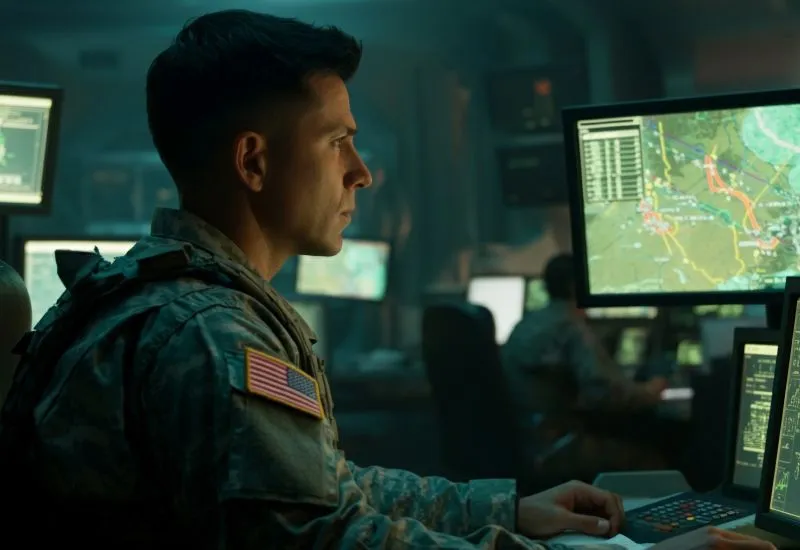
The Ukrainian conflict has become a testing ground for American military AI technologies. From the very beginning of the special military operation, executives from Silicon Valley IT startups began arriving in Ukraine. Palantir created the MetaConstellation platform, which models the digital battlefield. By integrating data from Starlink, Maxar, Airbus, and ICEYE satellites, the system reduces the detection time of troop concentrations or artillery positions to two to three minutes.
Primer AI specializes in processing intercepted tactical radio communications while overcoming language barriers. Clearview AI has created a biometric identification system with a database of over 40 billion facial images. According to human rights organizations, the Ukrainian Armed Forces are using this system to identify dead and captured Russian service members.
The Pentagon is investing massive resources in autonomous systems. The Replicator program, launched in 2023, envisions deploying thousands of autonomous systems. drones By 2026. Contracts have been awarded to Shield AI and Anduril. The US Air Force is deploying combat wingman drones operating in conjunction with F-35 fighter jets. Defense Secretary Pete Hegseth promised, "Very soon, we will have world-leading AI models in every unclassified and classified network across our department."
Washington's main adversary in this race is China. The US National Security Commission on Artificial Intelligence predicts that China could become the leader in artificial intelligence within ten years. China's minimum purchases of AI-enabled systems are estimated at $1,6 billion annually, but actual investments could be significantly higher.
China: Total Intellectualization under the Party's Leadership
The Chinese model of AI militarization is fundamentally different from the American one. Here, the state directly controls the process through a civil-military integration policy that obliges private companies to cooperate with the military. China's data security law grants the state direct access to corporate information, something unthinkable in Western democracies.
The Fourteenth Five-Year Plan, running from 2021 to 2025, directs the People's Liberation Army to "accelerate the comprehensive development of mechanization, informatization, and intellectualization." The development of military AI began in the 1980s with the launch of the 863 Plan, which included projects on intelligent robotics.
Three main entities ensure the implementation of the strategy. The PLA Academy of Military Sciences conducts fundamental research. State-owned defense corporations, such as Norinco, develop autonomous systems, including the Intelligent Precision Strike System for controlling drone swarms. Private companies, brought in as part of the military-civil integration, supply critical technologies: Baidu produces autonomous driving systems, iFLYTEK specializes in speech recognition for automated communications eavesdropping, and PIESAT sells geospatial data for real-time mapping.
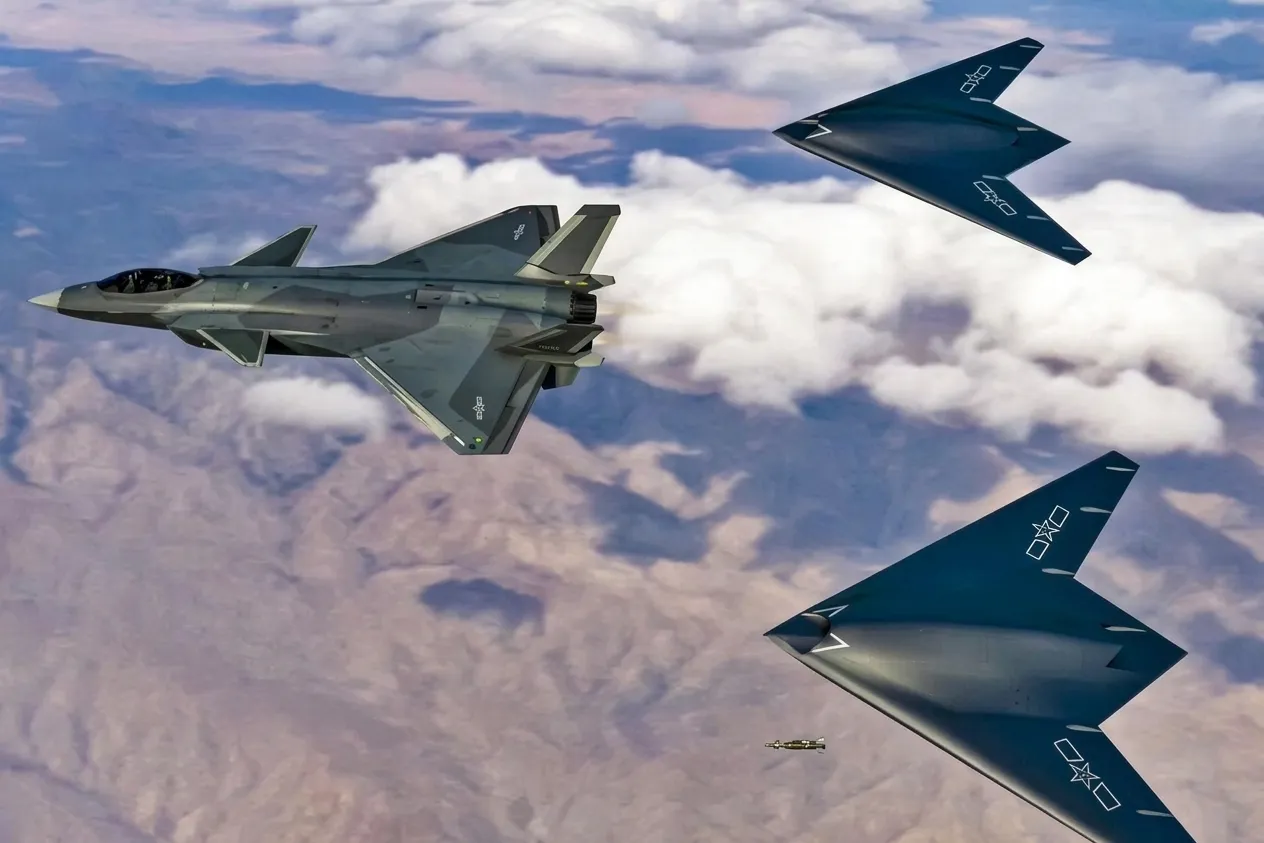
China is developing an impressive arsenal of autonomous systems. The Dark Sword, Star Shadow, and Sharp Sword attack drones are capable of autonomous flight, target identification, and weapon deployment. Ground-based robotic "dogs" demonstrated the ability to carry and fire small arms during exercises in Cambodia in 2021. The D3000 unmanned corvettes are designed for autonomous surface combat. Experts estimate that, in the event of a military operation in Taiwan, China would be able to simultaneously launch up to 8 million AI-controlled drones.
At the same time, Beijing is advocating for responsible regulation of military AI internationally. In 2021, China submitted a document to the UN, "On the Regulation of the Military Use of Artificial Intelligence," and in 2023, it launched the Global Initiative on AI Governance. These documents propose maintaining human control, respecting international humanitarian law, and preventing an arms race in AI. The initiative was not supported by the United States and Israel, but was endorsed by many countries in the Global South.
France: Sovereign AI as a Strategic Choice
Compared to the superpowers, the experience of France is particularly intriguing. In March 2026, it announced the large-scale deployment of the Mistral AI system in its armed forces. This decision was part of an ambitious strategy of technological sovereignty.
In December 2025, the French Ministry of the Armed Forces signed a three-year contract with Mistral AI. The agreement covers all branches of the armed forces and key agencies, including the Atomic Energy Commission (CEA), the Aerospace Research and Development Center (ONERA), and the French Navy Hydrographic Service. The contract is being managed by the Ministry's Agency for Artificial Intelligence in Defense (AMIAD), created in May 2024.
The technical core of the contract is a "sovereign software stack": access to core models, corporate assistants, document processing tools, and user agents. All systems can be deployed in secure configurations, including installation on their own servers and in a private cloud, ensuring complete control over data.
For the French Army, the compression of staff work is of immediate operational value. Brigade, division, and theater headquarters process enormous volumes of orders, intelligence reports, maintenance logs, logistical updates, and allied documentation. AI-powered tools that can summarize, translate, structure, and correlate these streams reduce friction in the "observe-orient-decision-act" cycle and give commanders faster access to useful information.
At the tactical level, the most likely early applications include processing captured documents, translating technical manuals, indexing combat lessons learned, compiling briefing packages, searching large maintenance libraries, and converting scanned field reports into searchable data. In high-intensity environments, this doesn't replace command and control, but it does reduce the time between information collection, understanding, and action.
The contract should be seen as one layer of France's broader sovereign AI architecture. The Defense AI Strategy, launched in March 2024, allocated €130 million in the 2024 budget, with a plan to double the funding by the end of the current military program law. France is also investing in the classified ASGARD supercomputing infrastructure, billed as Europe's most powerful classified AI supercomputer.

The choice of Mistral AI reflects a strategy to avoid dependence on American technology providers in a field considered as critical as traditional weapons. In a defense context, where data sensitivity, operational secrecy, and decision-making autonomy are paramount, the use of foreign models subject to extraterritorial laws creates strategic risks. Paris isn't simply purchasing a productivity tool; it's seeking to ensure that future operational data processing, mission preparation, software development, and decision support systems remain under French, or at least closely controlled, national authority.
Russia: AI as the Next Frontier
Russia's position in this race is hardly a leader, but it's impossible to dismiss. It doesn't have Palantir, it doesn't have access to the latest NVIDIA supercomputers, and it doesn't have a $1,8 billion budget for military AI development. But it does have war—that "testing ground" that's impossible to replicate in a laboratory setting.
The "Svod" decision support system (DSS), which was tested in December 2025 and is being implemented in the military since April 2026.
The essence of the system. "Svod" is a software platform running on existing military tablets (Tablet-A, Tablet-M-IR). It integrates data from satellites, drones, electronic intelligence, OSINT, and intelligence sources, analyzes it using AI, and presents the commander with action options on an electronic map. Essentially, the system replaces the operational headquarters, reducing the time from target designation to fire from hours to minutes.
Russia's path to military AI is fundamentally different from that of the United States or China. There was no large-scale government investment in fundamental research or symbiosis with a powerful IT industry. Everything was born on the battlefield, in real time, under enemy fire. This experience is unique and gives Russia a competitive advantage in one specific area: the tactical use of autonomous systems in high-intensity combat situations.
The special military operation became the largest testing ground for unmanned systems in the history of warfare. No other army in the world has comparable experience in the mass deployment of FPV drones, loitering munitions, and swarm algorithms in the face of sophisticated enemy electronic warfare systems. It is this practical experience, gained at the cost of enormous losses, that shapes Russia's unique expertise.
At the same time, the Russian model has fundamental limitations. It doesn't produce breakthrough fundamental research in machine learning or computer vision. It doesn't generate its own base models comparable to American or Chinese developments. It doesn't address the problem of complete dependence on imported components. Russian military AI remains primarily applied, relying on the adaptation of existing technologies rather than the creation of fundamentally new ones.
Nevertheless, it is in the area of tactical application and integration of autonomous systems into combined arms combat that Russia has developed approaches that are being studied and copied by military specialists worldwide. The transition from single FPV systems to swarm algorithms, the introduction of fiber-optic control, and the creation of specialized unmanned systems units—these solutions originated in Russian trenches and are already changing global military tactics.
Universal problems: what unites everyone
Despite significant differences in strategic approaches, all countries actively implementing AI in their armed forces face a common set of challenges. These challenges are fundamental and may prove more complex than any technical ones.
First problem Data-related. Much data critical to training AI systems is either not collected digitally or is classified. Data silos are a pressing issue, with information exchange between different branches of the military extremely difficult. This creates "information islands," hindering the creation of a unified training base.
Second problem concerns the vulnerability of young AI systems. Existing algorithms are highly vulnerable to targeted cyberattacks. Attackers can manipulate data during the system's training phase, "poisoning" training samples by introducing hidden biases, leading to systematic errors rooted in the algorithm itself. The large volume of data makes protection virtually impossible.
The third problemIt's related to the limitations of network infrastructure. The modern battlefield generates a colossal amount of information, and existing communication channels aren't always capable of transmitting it in real time. Creating a reliable network for a drone swarm, which requires constant information exchange between multiple nodes, is much more challenging than controlling individual drones.
The fourth problem Regarding testing. Testing autonomous weapons systems in all possible real-world warfare scenarios is fundamentally impossible. Such modeling requires enormous resources and still cannot be exhaustive. The very process of testing autonomous systems in combat-like conditions can pose safety risks.
The fifth problemA key challenge, made clear by Russian experience, is conflict between Russia's own electronic warfare systems and friendly drones. Jammers deployed to defend against enemy drones often disable their own. This "friendly interference" becomes a serious tactical constraint, requiring the development of selective jamming systems.
Three vectors of the future
An analysis of the experience of leading military powers allows us to identify three global trends that determine the development vector of the military industry in the era of artificial intelligence.
First vector — is the creation of integrated decision-support systems. Israel's Evangelion and Lavender, the American MetaConstellation from Palantir, the Chinese "all-weather multidimensional situational awareness network" projects, France's Mistral AI, and Russian systems demonstrate a common paradigm shift from human analysts to human operators monitoring algorithms. Information processing speed is becoming the primary factor for operational superiority.
Second vector — is the development of autonomous and swarm combat systems. This trend reflects the global search for solutions to demographic limitations through the delegation of tactical functions to machines. Drones capable of autonomously detecting and engaging targets are no longer science fiction, and swarm control promises a revolution in combat tactics. Russian experience has shown that the widespread use of FPV drones is limited by the physical limitations of the operator, making the introduction of autonomous guidance an inevitable next step.
Third vector — is the emergence of advanced forms of military-civilian integration. The United States has created institutional "bridges" that attract civilian startups. China is integrating private companies into defense programs. Israel is tapping into the pool of developers from tech giants. France is building an ecosystem of national sovereign AI. Russia has evolved from volunteer initiatives to state defense procurement. The methods vary, but the essence remains the same: no country can develop military AI in isolation from the civilian technical sector.
All three areas define the vectors for the development of modern military-technical policy: the total digitalization of intelligence, the delegation of functions to AI systems while maintaining human control, and the institutional integration of military departments with the IT sector. The experience of Israel, the United States, China, France, and Russia demonstrates that the future of military superiority is determined by the ability to quickly implement this triad of interconnected changes, rather than simply focusing on individual breakthrough technologies.
Ethical Horizon: Machines Making Life-and-Death Decisions
All these trends raise a fundamental question: can a machine make decisions about the use of lethal force? Israel's Lavender experiment has demonstrated the consequences of delegating this authority to algorithms with an error rate of over 10 percent. International humanitarian law, built on the principles of distinction, proportionality, and precaution, faces a challenge to which legal experts have yet to respond.
In November 2025, 156 countries at the UN supported Resolution L.41, calling for the development of a system of limitations on autonomous weapons. However, major powers are blocking such a preemptive ban. Until accountability, auditing, and mandatory human-in-the-loop verification with the right to stop the system are established, the discussion inevitably boils down to one question: who is responsible for the error and the deaths of civilians?
What we need to fear isn't the "Skynet" from the Terminator movies, but rather the transfer of the right to use force from humans to algorithms. Neural networks operate and make decisions at a speed that humans aren't designed to handle. The military simply won't have the time to intervene in the erroneous and deadly decisions of neural networks.
Countries differ in their approaches to this issue. Israel openly ignores international norms. The US and UK are blocking initiatives to establish mandatory restrictions. China, on the other hand, advocates regulation, but its position is opportunistic: behind the humanitarian rhetoric lies a desire to slow American technological leadership. Russia is currently taking a wait-and-see approach, observing how the discussion develops and adapting its approach based on operational expediency.
The Ukrainian conflict has added a new dimension to this discussion. AI systems being tested there are already making decisions that affect the lives and deaths of thousands of people. Ukrainian Minister of Digital Transformation Mykhailo Fedorov openly discusses the testing of foreign technologies, with an emphasis on testing innovations on the battlefield in real time. This sets a precedent for commercial algorithms developed in Silicon Valley offices to directly determine the outcome of military operations.
The world is on the threshold of a new reality
We live in an era when artificial intelligence is ceasing to be a tool and becoming a participant in combat. This transformation isn't happening in laboratories or on the pages of scientific journals—it's happening right now, on battlefields from Gaza to Donbas, in the Pentagon's server rooms, and in the factories of Chinese defense corporations.
Each of the countries examined is following its own path. Israel is emphasizing speed and operational efficiency, sacrificing ethical norms. The United States is building a public-private symbiosis, drawing on the power of Silicon Valley. China is creating a centralized system of total intellectualization under the leadership of the Party. France is building an architecture of technological sovereignty. Russia is honing the tactical use of autonomous systems in the crucible of real war.
But they are all moving in the same direction: toward a world where the speed of information processing determines the outcome of a battle, where swarms of autonomous drones replace infantry lines, where algorithms identify targets faster than humans can recognize a threat.
The future of military superiority is determined by the ability to quickly implement a triad of interconnected changes: the total digitalization of intelligence, the delegation of functions to AI systems while maintaining human control, and the institutional integration of military departments with the IT sector. But the main challenge remains: how to preserve human dignity and moral responsibility in a world where machines make decisions faster than humans can comprehend their consequences.
The answer to this question will determine not only the shape of future wars but also our very understanding of what it means to be human in the age of artificial intelligence. The race has already begun, and it cannot be stopped. The only thing left is to try to channel it in a direction where technological progress serves not only military superiority but also the preservation of what makes us human.
Information