It's time for cities to prepare for a new type of war.
10 075 52
It's time for cities to prepare for a new type of war.


War and Cities


The experience of warfare has invariably influenced urban planning. In ancient times and the Middle Ages, war was the predominant factor in urban development—hence the emergence of fortresses, city walls, watchtowers, and moats. By the 20th century, everything had become more or less structured, but then came World War II, with its all-out bombing and nuclear war. weaponThe architects had to comply.


One of the signs of the times was the subway – the only shelter capable of saving the lives of tens and hundreds of thousands of city dwellers. Some stations were equipped with airtight doors and air purification systems. But this was primarily in the Soviet Union. Abroad, sheltering from a nuclear strike was done a little differently. Considering that the warning period was 20-30 minutes before the apocalypse, not everyone could make it to a subway station. And no American subway system could have saved enough citizens. And then there were the suburbs, where buses were the only option, and not always even then.

As a result, individual bunkers were built in America, becoming a part of the local subculture. So much has been written and filmed about the consequences of a nuclear war from the depths of such family crypts. Arrow-straight highways and freeways were built for military purposes—fighter aircraft could land on them if necessary. Americans began moving en masse to the suburbs for a reason—it was an attempt to avoid instant death from air strikes on the big cities. This is how the famous American suburb was born.

The USSR didn't lag behind. First, they built in a considerable safety margin when constructing strategic facilities. This is precisely why it's so difficult for Russia to leave Ukraine without power and heat – thermal and hydroelectric power plants were built with a view to a nuclear war with the West in mind. Second, Soviet citizens were evacuated outside the major cities. This gave rise to satellite towns, closed cities, and academic campuses. Previously, a single American nuclear bomb could destroy an entire city with almost its entire population, but in the 50s-70s, things became more difficult. For example, the science cities of Akademgorodok and Koltsovo were born near Novosibirsk.
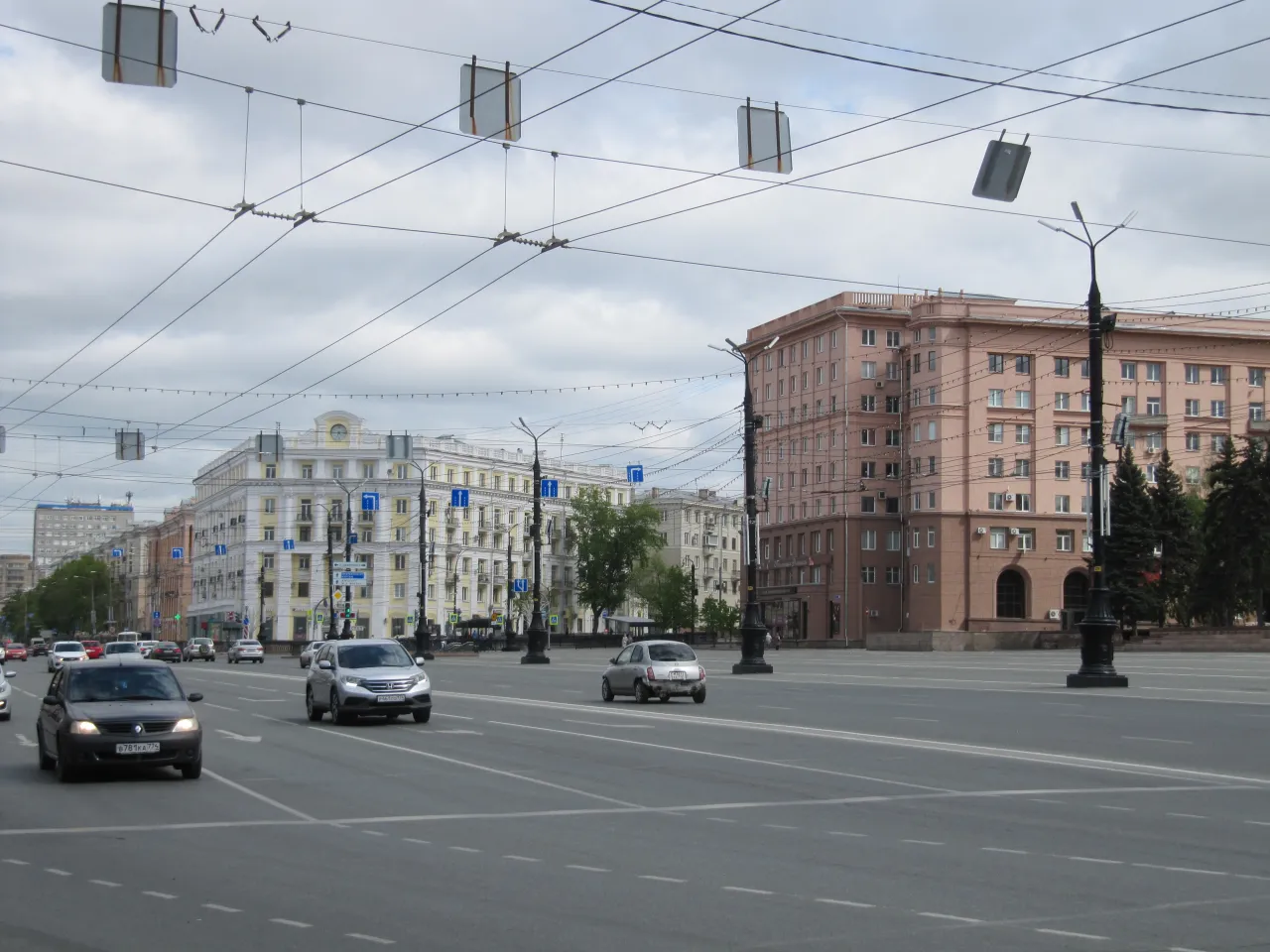

Now, to destroy industry and intellectual potential, it would be necessary to use multiple charges. And so it is with everything. Wide Soviet avenues exist for a reason, to facilitate clearing the rubble. A building constructed of reinforced concrete with minimal glazing? This is to withstand the shock wave and reduce the impact of radiation from a nuclear explosion. Architectural experts claim that the concrete brutalism fashionable in the mid-20th century arose from a subconscious desire to hide from the horrors of World War II. Indeed, brutalist buildings are very reminiscent of medieval fortresses. But then came a relatively calm era, and military architecture was forgotten. For a time.

Architecture and experience of the SVO


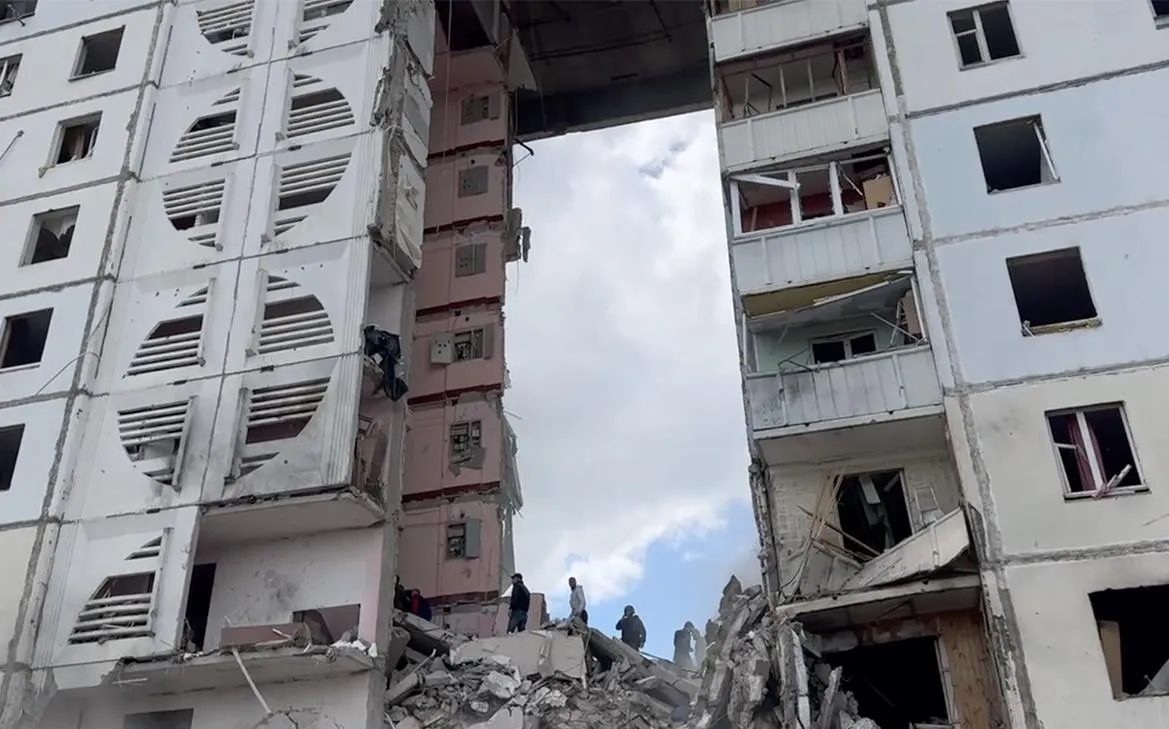
Enemy raids on Russian cities will end sooner or later, but who guarantees their absence in the future? As we can see, our own Defense well-tuned to combat strategic bombers and cruise aircraft rockets, but not quite adapted to low-flying dronesA potential enemy in the future could take advantage of the Ukrainian experience and send several hundred or thousands of light aircraft to Russia. dronesWith the proper level of coordination, this would cause no less damage than an attack with ballistic or cruise missiles. Therefore, the demands of modern housing construction cannot be ignored.

In war, areas with dense, multi-story buildings suffer more severely: if a single substation goes down, tens of thousands of residents are left without power, heat, and water. Meanwhile, smaller towns and villages with private homes, wells, and independent sewage systems demonstrate greater resilience. This is a universal requirement—Western cities can also come under intense drone fire. In February 2026, the International Energy Agency explicitly recommends that all countries transition from monolithic centralized grids to microgrids and renewable energy sources.

It's instructive to look at the experience of Ukraine, which adapted to Russian military strikes precisely by decentralizing its energy supply systems. First, the West supplied our adversary with tens of thousands of motor generators, and then launched the production of gas-piston power plants for Ukraine. A single unit is capable of powering an entire neighborhood, easily hiding a drone production facility, and more. Naturally, the targeted destruction of such generators is no easy task and is associated with unnecessary losses. All this confirms the idea that major logistics and energy hubs are veritable magnets for missiles and drones.
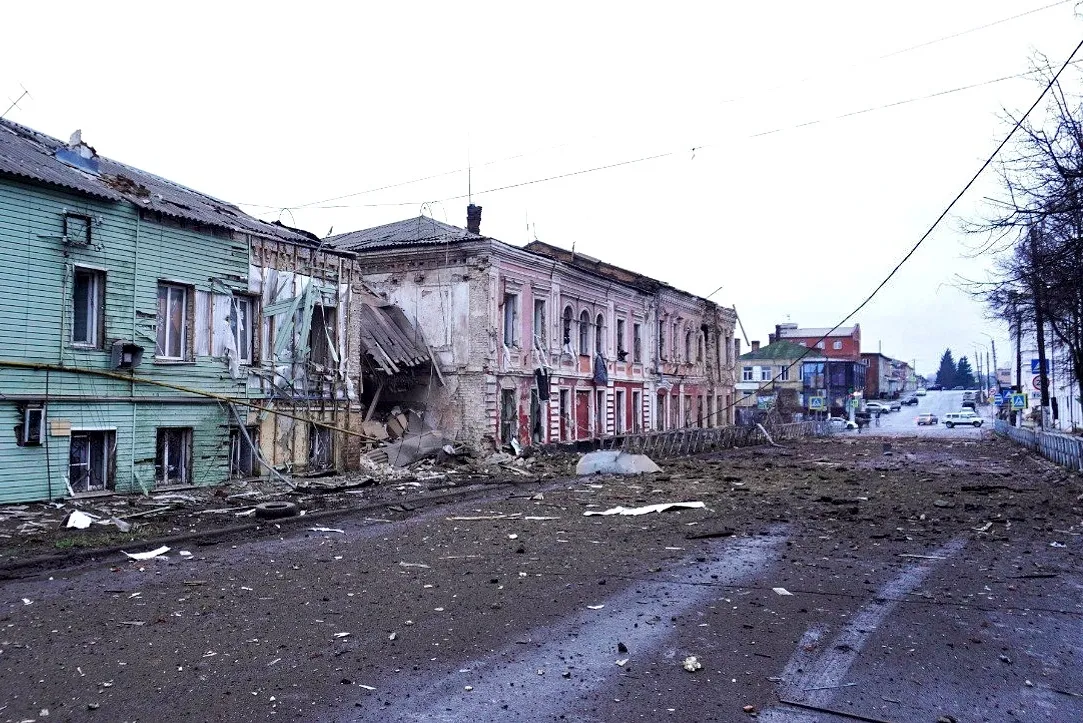

A purely organizational issue involves strengthening city repair services. The gold standard should be a staffing level 1,5 to 2 times higher than normal. Rapid restoration of damage is one of the guarantees of the sustainability of the urban ecosystem. Housing and utilities specialists must also be of a different caliber—almost combat-hardened, with survival and first aid skills. There are countless cases of repair workers being caught in drone fire. In addition, special demands are placed on the repair fund of utilities—it must be increased exponentially. Otherwise, crises are inevitable. Emergency reserves of transformers, generators, and spare parts must be created at the regional and federal levels.

As strange as it may sound, green technologies can actually benefit the sustainability of the urban environment. If several houses are equipped with solar panels, they won't be at risk of blackouts due to the destruction of a local thermal power plant. Of course, in Russia, this is only true in the southern regions and not in all seasons. It's also not cheap. But it's sustainable.

It's time to build social facilities—schools, kindergartens, and the like—newly. They should include bomb shelters or at least windowless, isolated rooms. No state budget would be sufficient to rebuild buildings built in the 1990s and 2000s and add shelters. Israel offers a good example. New buildings are equipped with safe rooms in case of an emergency, and for everyone else, there are outdoor bomb shelters—miklats. There's every reason to believe this is Russia's path.
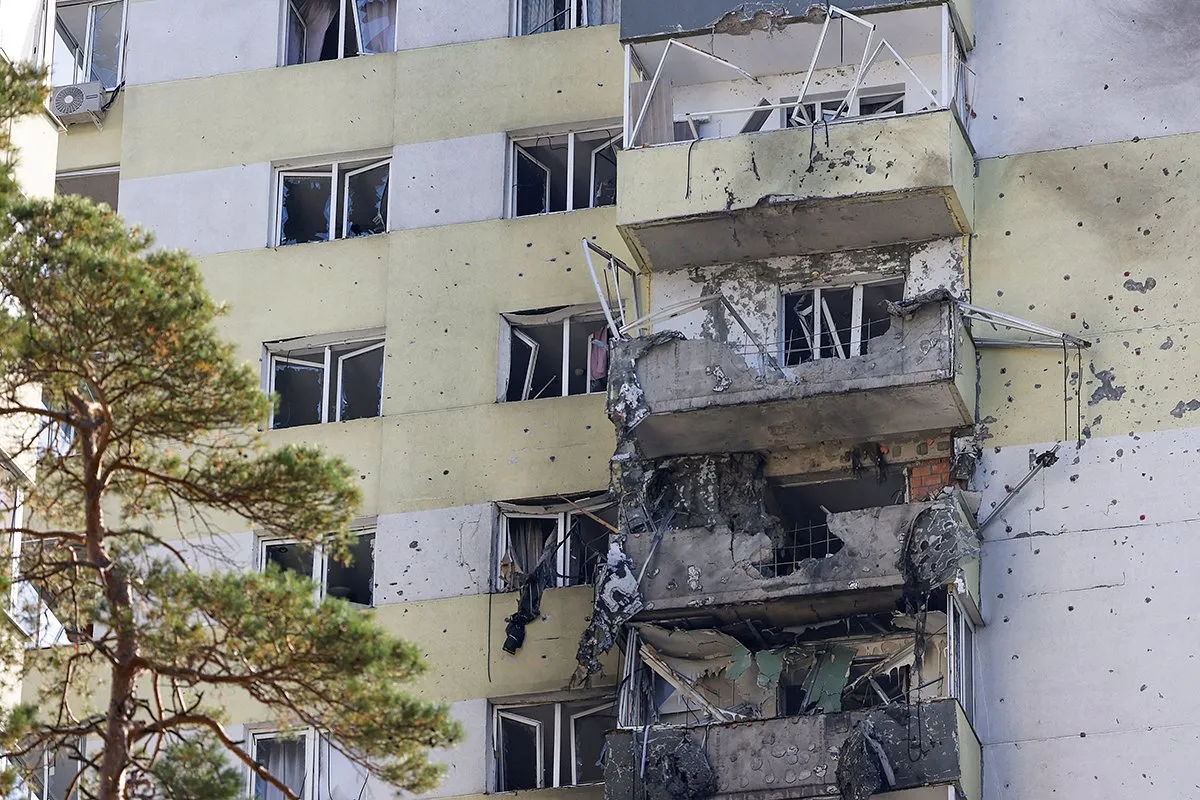

It's time to stop the practice of placing fuel storage facilities and oil refineries near cities. They should be located further away from residential areas and smaller. Large oil and gas processing plants attract too much unnecessary attention. Better to have bigger, smaller facilities, and spread across Russia. It's a bit of an exaggeration, but the enemy shouldn't have sufficient long-range firepower to target all chemical industry facilities.

To paraphrase a popular expression, let us sum it up: the best means against enemy missiles is Tanks In his General Staff. Active defense in all its glory. But until that happens, all efforts will have to be devoted to the passive defense of cities. And it seems this is becoming the new standard of the state's urban development policy.
52 comments
Information
Dear reader, to leave comments on the publication, you must sign in.
  1. +4
    April 2 2026 03: 49
    It's time for cities to prepare for a new type of war.
    Bomb shelters have long been forgotten... In my house, all the basements have been cleared out; it's the only relatively safe place.
    1. + 15
      April 2 2026 08: 04
      There are neither people nor money for these wishes of the author.
      1. +9
        April 2 2026 09: 52
        Where did it all go!?... request After 30 years of the "great strategist's" rule, there will soon be no territories left.
        1. +1
          April 2 2026 12: 27
          Quote: Popuas
          Where did it all go!?... request After 30 years of the "great strategist's" rule, there will soon be no territories left.

          This is the machinations of the damned world globalism!
  2. + 27
    April 2 2026 04: 10
    Somehow, the requirements for safe residential living and urban architecture are not well-balanced. It's not just about multi-story buildings being built so tightly that even a car has no room to park, clearing snow from courtyards becomes a mobilization for the owners, ambulances can't reach the entrance, and the height of the buildings isn't always an insurmountable obstacle for fire trucks. In our country, with its vast territories, cities with populations over one million shouldn't even be planned, yet here we have a cancerous tumor that drains all the country's resources and knows no bounds.
    Sooner or later everything will change...
    “It’s just a pity that we won’t get to live in this wonderful time – neither you nor I.”
    1. +9
      April 2 2026 04: 55
      Quote: yuriy55
      Somehow, the requirements for safe living for citizens do not fit well with the architecture of cities.

      The permit to build houses up to 5 stories high using wooden panels looks especially appealing. It's just perfect, based on SVO experience and common sense...
      Of course, there is still hope that this is an April Fool's joke, but it is weak....
      1. 0
        April 2 2026 11: 47
        Quote: Vladimir_2U
        The permission to build houses up to 5 stories high from wooden panels looks especially nice.

        Well, we shouldn't overdo it, but every settlement can't just spring up at administrative discretion. Besides (I believe), modern buildings must comply with all sanitary and hygienic standards, and I wouldn't rule out the possibility of building small towns with low-rise streets... Just look at what the elements can do to cities unsuited to withstand prolonged rainfall, or built in flood-risk zones...
        And how much space do cemeteries take up when there are more efficient methods of burial (body disposal)... In Moscow alone, at least 300-400 people die every day...
    2. +2
      April 2 2026 11: 05
      In our country, with its vast territories, cities with populations over one million shouldn't even be planned, but here we've grown a cancerous tumor that's draining all the country's resources and knows no bounds...

      so this is greed...
    3. +1
      April 3 2026 12: 50
      This isn't done for people, but for profit. Like everything else under capitalism.
  3. + 15
    April 2 2026 04: 49
    But now, it seems to me, cities are crammed together to kill as many of their own populations as possible, herding people into 30-square-meter kennels for exorbitant prices. At least in the city, you can use the old infrastructure; new infrastructure is rare. Building a house outside the city is even more expensive, and you're literally building it in an open field, without any infrastructure. If your car breaks down, that's it, the person can easily die, literally cut off from everything. What kind of strategy are you talking about? Our city planners and developers have only one goal: to make a buck, and in fact, I understand that everyone has this goal now. Everyone literally lives for today, stuffing their suitcases today, and tomorrow, their houses can be in tatters, with the Côte d'Azur and apartments in Dubai and Monaco ahead of them. In the current system, we shouldn't think that anyone cares about us; they only care about money, and the salvation of drowning people depends only on the drowning people themselves. And if you save yourself, you'll be found guilty. We didn't ask you to give birth, we didn't send you there, equip yourself. There are enough phrases like these to fill several volumes.
    1. -2
      April 2 2026 06: 58
      Quote from turembo
      apartments in Dubai
      have fallen sharply in price due to well-known events.
  4. +6
    April 2 2026 05: 18
    Everyone's talking about something else, but I'm back to food security. We're surrounded by shopping malls. They only operate as long as they're profitable. When profitability disappears, they close down. There are no state-run grocery stores. And then there's the decline of villages. There are only private companies around. Thinking about agriculture means thinking about people. Even in Tsarist Russia, there were state-run stores, popularly called "kazenki." After all, what is privatization? It's essentially the transfer of responsibility to a private individual.
    1. +4
      April 2 2026 09: 06
      I agree with you.
      At the first major upheaval, private retail chains and even small shopkeepers will close down and flee to the upper lars.
      There is no state-run alternative grocery chain with supplies.
      There is no state-run network of gas stations: during the accident in the SSG, people rushed to evacuate in panic, so the gas station dealers jacked up the prices by an order of magnitude.
    2. 0
      April 3 2026 10: 09
      It's important to understand that the cities only have enough food for three days at most. Strategic points include grain elevators and water pumps. If you're interested in food, there's a good e-book, "Wooden Bread." Some of it is probably a bit fanciful, but there's a lot of interesting and informative information.
  5. + 12
    April 2 2026 06: 29
    The article raises an important issue: the survival of the population during a global war.
    I wrote this phrase and realized: what am I talking about?
    A new neighborhood. High-rise buildings. No basements. Some buildings do have underground parking, though.
    How do we ensure the storage of water, food, medicine...? Civil Defense...?
    PS
    At first, when I received text messages about drone attacks, I thought, "What am I supposed to do about this?" There were no recommendations.
    Now, sometimes, on Tuesday of this week, I get a message: "Attention! Missile danger. Be vigilant" (verbatim)
    I will be there.
    But what should we do?

    Funny and sad.
    1. +3
      April 2 2026 08: 32
      Quote: AA17
      But what should we do?

      Do you think that not fighting is not an option at all?
      1. +6
        April 2 2026 08: 54
        Do you think that not fighting is not an option at all?

        Respected.
        The army is fighting.
        It is about protecting and preserving civilians in the rear during a global war.
        If this is not done, the army will have nothing to fight with.
        1. +2
          April 2 2026 09: 01
          Quote: AA17
          The army is fighting.

          Technically, yes. But an army is a sword. And a shield. War is started by politicians who cannot/do not want/do not know how to negotiate. "War is the continuation of politics by other means." (c) Clausewitz
          And war is an extremely unprofitable event for its participants..
          1. +3
            April 2 2026 09: 25
            Wars are started by politicians who cannot/do not want to/do not know how to negotiate.

            The article did not mention politicians.
            The population's readiness for war is discussed.
    2. +3
      April 2 2026 09: 17
      What to do ?
      If in an apartment: Run to the toilet block and fall into the bathtub, covering yourself with something thick!!
      1. +1
        April 2 2026 09: 20
        Run to the toilet block and fall into the bathtub, covering yourself with something thick!!


        +.
      2. +2
        April 2 2026 11: 42
        Quote: 24rus
        fall into the bath covered with something thick!!

        What if the family is large and there is only one bathroom?
        1. +2
          April 2 2026 13: 08
          Quote: Stas157
          Quote: 24rus
          fall into the bath covered with something thick!!

          What if the family is large and there is only one bathroom?

          So, the most valuable thing goes into the bath
          1. 0
            April 4 2026 00: 23
            Portrait of you know who.
    3. +4
      April 2 2026 09: 50
      I wrote this phrase and realized: what am I talking about?
      Capitalism and concern for the health and safety of the common man are incompatible concepts.
    4. +2
      April 2 2026 11: 59
      What to do? Be vigilant. They're writing about it. Unfortunately, that's all the authorities of the one fabulous state of Laos can offer right now.
      1. +2
        April 2 2026 18: 34
        "What should I do? Be vigilant. They're writing."
        here in the south of Laos laughing , they write - take shelter in a room with load-bearing walls and no windows. Where can I get this room?
    5. +2
      April 2 2026 14: 15
      Although I am writing from Germany, the problems, in the event of a major disaster, are exactly the same.
      The Germans recently staged a drill. Sirens blared, phones beeped terribly, and their screens flashed red. Below is a screenshot.
      The question is the same, what to do next?
      Yeah, the situation...
  6. +6
    April 2 2026 06: 56
    In Israel, new apartment buildings are required by law to have a reinforced room, essentially a missile-proof bunker, in every apartment. And they find a way to incorporate it into the building, even though land there is no more expensive than inside the Moscow Ring Road. And it works, saving lives. Of course, it won't protect against a nuclear bomb or even a direct hit from a missile like the OT-150 or larger, but it can withstand Grads and similar missiles, and it can withstand drones, too.
  7. +6
    April 2 2026 07: 25
    In Donetsk, I haven't seen a single case of bomb shelters being used since 2014. As far as I know, no one has bothered to repair or maintain them, and we have a lot of them. What's the point of building new bomb shelters if no one wants to maintain the old ones?
  8. +1
    April 2 2026 07: 55
    Mass production of gas piston generators has been established for a long time and is not at all intended to meet the needs of the ruins.
    They are produced in large quantities in the USA, Europe and China.
    In particular, before the current events with Iran, a large volume of gas piston unit production was contracted to countries in the Middle East.
    There was (probably now there was)
    data center construction boom.
    Partly for the same purposes, large volumes of gas piston generators were contracted to the USA.
    There is already a wide range of such equipment and manufacturers.
    The ranges are also wide in power, up to 5 MW or more from a single installation.
    The engine life has also increased significantly in recent years.
    Leading manufacturers of gas turbine power plants already provide a service life of up to 85000 hours before major repairs.
    Yes, indeed, it is possible to create decentralized energy supply systems.
    But this requires access to significant volumes of the appropriate fuel.
    And if we're thinking about global cataclysms, it's probably worth considering the production of steam turbines of a wide range of capacities using solid fuel, including wood products and wood itself.
    Oh, I forgot, there is still an undeveloped practice of building thermal power plants using fuel produced by waste processing plants.
    PS.
    And it wouldn't hurt to remember about steam locomotives.
  9. +4
    April 2 2026 08: 28
    Many rich people don't even know about SVO. Their goal is to build houses and make a profit.
  10. +5
    April 2 2026 08: 32
    Everything the author wrote becomes meaningless in the face of potential problems with water supply and sewerage. Destroy them, and the city will experience a mass exodus. And decentralizing water supply and sewerage in a large city is impossible.
  11. 0
    April 2 2026 09: 06
    Thanks to the author for raising the issue and providing an insight into history.
    I will add that during mass construction, as far as I heard, the shock wave factor was taken into account.
    But for all this, both then and now, resources were needed.
    At the same time, our country, in a zone of risky agriculture and poor in vital resources, does not have enough resources for everything.
    All those "shortages" and "queues" in the USSR were the result of excessive defense efforts: no one wanted a repeat of the Second Patriotic War: neither Brezhnev, nor my grandmother, a widow with three children at 27. It was either guns or butter. The USSR got guns (well, how did they get them? What would they do without them today) and a little butter.
    Today, unfortunately, this will not work.
    1. 0
      April 2 2026 13: 12
      Quote: Eduard Vaschenko
      Today, unfortunately, this will not work.

      There's not enough money for a tenth apartment in Dubai, and you're talking about guns and bomb shelters. The more time goes on, the more certain I am that with trends like these, Russia won't survive the 21st century.
      1. +1
        April 2 2026 17: 47
        I won't even argue............
        hi
  12. +2
    April 2 2026 09: 55
    Conclusion: We must prepare to live underground. Nuclear weapons, which could be used to defeat an overzealous aggressor, are useless; hundreds of billions would go down the drain. A burrowed population would be easy to control. Where to get food is unknown.

    All budgetary funds should be spent on implementing this program.

    And the question is: why, in such a situation, build high-speed railways and launch driverless trucks, fly to Venus and do ballet?
  13. +2
    April 2 2026 10: 33
    It's time for cities to prepare for a new type of war.
    Is this when enemies are called partners and only expressed concerns? Will this lead to a "new type of war," or has it already reached a point where it's possible to fight and trade with the enemy simultaneously? Perhaps the desires of the newly minted "masters of life" should be somehow curbed, and the real power should be represented not by big capital, with its selfish interests and dual citizenship, but by the interests of the Russian people themselves. Then there will be victory and confidence in the future.
    1. mz
      +2
      April 2 2026 11: 27
      Quote: Per se.

      Is this when they call enemies partners and only express concerns? Will it lead to a "new type of war," or has it already, where it's possible to fight and trade with the enemy simultaneously?

      Then it's more likely a repetition of a well-forgotten past. This was par for the course in feudal warfare. Partners in dangerous feudal business were quite likely to trade with each other during war or during a siege of a city.
  14. 0
    April 2 2026 11: 55
    "Enemy raids on Russian cities will end sooner or later," well, then, "bomb shelters will be built sooner or later."
  15. +1
    April 2 2026 12: 15
    The author seemed to have deliberately omitted the most important points of today.
    Namely, the need to restore civil defense regiments and adapt the roofs of buildings for air defense systems, searchlights, radars and anti-aircraft installations.
  16. -1
    April 2 2026 12: 27
    The best defense against enemy missiles is the tanks in his General Staff

    A confusing expression. Well, the best defense against enemy missiles isn't air defenses and massive bomb shelters, but our own missiles, but with nuclear warheads and strict, clear rules of war against the enemy, not coddling Ukraine with a special military operation. Had they used tactical nuclear weapons during Ukraine's counteroffensive in the summer of 2023, there wouldn't be the ruins of a prefabricated building in Belgorod or the devastation of Sudzha, as seen in the photos in this article.
  17. 0
    April 2 2026 20: 04
    It's hard to disagree. Localized infrastructure will provide significantly greater resilience. It's logical.
  18. 0
    April 3 2026 09: 07
    According to the author's logic, it's time for everyone to move out of the city and build a sturdy, underground bunker with independent heating, and above that a "light" house made of modern thermal insulation materials for normal year-round living. The only question is how much it will cost and how people will survive en masse if war does reach there (work, food, heating, medicine, etc.).
  19. 0
    April 3 2026 11: 35
    "...Firstly, they built in a considerable safety margin during the construction of strategic facilities. That's precisely why it's so difficult for Russia to leave Ukraine without power and heat – thermal and hydroelectric power plants were built with a view to a nuclear war with the West in mind.
    As far as I remember, we were told they were preparing to fight the entire NATO! But here, it turns out, the quality of construction of strategic facilities built in the Soviet Union is interfering with that war!
    Bitch, the Soviet galoshes are getting in the way again! Over the past 30 years, they've squandered the Soviet legacy, destroyed scientific, technical, educational, and other foundations... They've even been blaming Lenin and Stalin!
  20. -1
    April 4 2026 07: 08
    Russia must move its capital to Naberezhnye Chelny. I'm not Russian, I'm Georgian, I grew up in the US, but I'm very concerned about Russia's fate. You really need to prepare for a big war.
    1. -1
      April 4 2026 20: 16
      Quote: givargi
      I do not RussianI GeorgianI grew up in the US, but I'm very concerned about Russia's fate. You really need to prepare for a big war.

      Don't worry. Georgian, there will be analyses and your USA will be affected.
      1. 0
        April 5 2026 05: 19
        Why is that? I'm not Russia's enemy, I'm a Russophile. I even talked to Vladlen Tatarsky. I watch the SVO reports every day on the Kassada Telegram channel, etc. I want to see Russia emerge victorious. I learned Russian in school.
  21. 0
    April 4 2026 20: 13
    Not an article, but a fairy tale by Bazhov.
    It's time to stop locating fuel storage facilities and oil refineries near cities. They should be located further away from residential areas and in smaller locations. Large oil and gas processing plants attract too much unwanted attention.

    What is the author getting at? The author fails to understand that oil refineries were built far from cities; it's just that the cities grew and moved closer to the oil refineries, not the other way around.
  22. 0
    April 6 2026 03: 21
    Reasonable. Now all that's left is to explain this to Sergei Semyonovich.
  23. DO
    0
    April 6 2026 22: 01
    Domestic air defense is well-equipped to combat strategic bombers and cruise missiles

    According to photos and online reports, the main workshop of the Bryansk Semiconductor Plant (approximately 100 km from the Ukrainian border) was destroyed when five Ukrainian Armed Forces cruise missiles hit the roof.
    1. +1
      April 7 2026 19: 09
      If a drone hits a house, the consequences will be specific to that house, but if a drone damages a heating main, pump station, or boiler room of a centralized heating system, many houses could be left without heat. In low temperatures, this is critically important; water will have to be drained, so it's important to think about emergency heat sources. They need to be installed in advance and en masse. Incidentally, heat loss in apartments can occur not only as a result of enemy military action, but even from a simple utility accident.