Satellite images of Chinese missile defense sites
After the end of the Cold War, it became clear that China was far behind in the field of modern means Defense and missile defense from Russia and the United States. At that time, China did not have the scientific and technological base necessary for the independent design of long-range systems that could also be used to repel missile The PLA's acquisition of anti-aircraft missile systems with limited anti-missile capabilities was made possible by Russian-Chinese military-technical cooperation that began in the 1990s.
In 2007, the first of twelve S-300PMU-2 air defense systems arrived in China. Each divisional set included six launchers with four anti-aircraft missiles. This anti-aircraft system is capable of simultaneously engaging six air targets at a range of up to 200 km and an altitude of up to 27 km, as well as intercepting operational-tactical missiles at a distance of up to 40 km.
In 2019, the delivery of two S-400 air defense missile system regiments (four SAM systems) to China was completed. According to publicly available reference data, the new 48N6E2 missile enables the interception range of ballistic targets to reach 70 km.
The Chinese HQ-9 air defense missile system, of which more than forty units are deployed in China, is also capable of combating ballistic missiles with a firing range of up to 500 km.
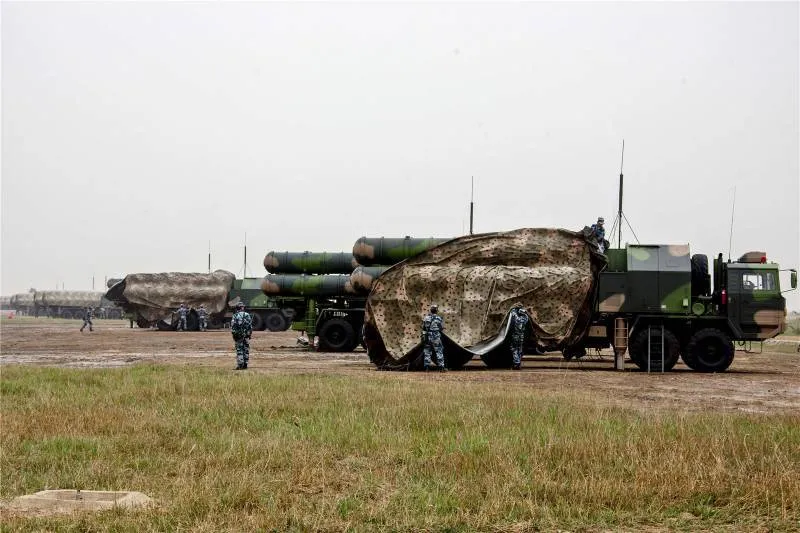
Self-propelled launchers for air defense systems HQ-9
According to experts, the latest versions of the HQ-9 are roughly equivalent in their anti-missile capabilities to the Russian S-300PMU-2 system.
Chinese anti-missile systems developed during the Cold War
China has now reached a level of scientific, technological, and technical development that allows it to independently develop and mass-produce the most complex and expensive weapons, including missile defense systems. However, it would be wrong to think that China's top political and military leadership is only now becoming concerned about the need to protect its most important administrative, industrial, and defense facilities from missile attacks.
Practical work on developing anti-missile systems designed to intercept intercontinental ballistic missile (ICBM), medium-range ballistic missile (IRBM), and submarine-launched ballistic missile (SLBM) warheads began in the PRC in the second half of the 1960s. Project 640 involved the development of interceptor missiles, combat lasers, and even large-caliber anti-aircraft artillery guns, which were intended to shoot down the warheads in the final stages of their flight.
The first experimental Chinese anti-missile system was the HQ-3, based on the HQ-1 anti-aircraft missile, which in turn was a Chinese copy of the Soviet SA-75 Dvina SAM. However, it soon became clear that the SAM, originally designed to engage aerodynamic targets at medium and high altitudes, was unsuitable for engaging warheads flying at hypersonic speeds. The missile's acceleration characteristics did not meet the required requirements, and manual target tracking did not provide the required guidance accuracy. Therefore, it was decided to develop a new anti-missile system, the HQ-4, which was better suited to intercepting ballistic targets.
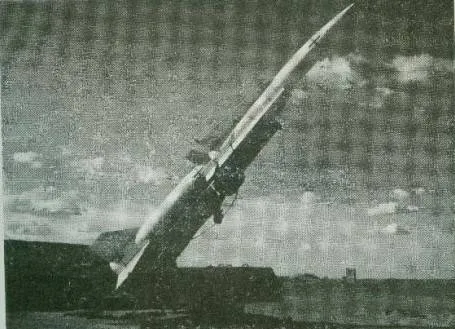
HQ-4 anti-ballistic missile interceptor
Chinese sources state that the HQ-4 missile defense system weighed over 3 tons, had a firing range of up to 70 km, and a minimum range of 5 km. Its altitude reach was over 30 km. The guidance system was combined, using radio command guidance in the initial phase and semi-active radar homing in the terminal phase. To achieve this, a target illumination radar was added to the guidance system. The ballistic missile was to be destroyed by a high-explosive fragmentation warhead weighing over 100 kg, with a proximity fuse. The interceptor was boosted in the initial phase by a solid-fuel motor, after which the second stage, fueled by heptyl and nitrogen tetroxide, was launched. However, the results of practical firings were unsatisfactory, and in the early 1970s, development of the HQ-4 anti-missile system was discontinued.
Following the failure of the HQ-4, China decided to develop a new anti-missile system, the HQ-81, from scratch. This missile defense system utilized the FJ-1 interceptor, which was visually very similar to the American two-stage solid-fuel interceptor Sprint. However, unlike the American interceptor, the first version of the interceptor developed by Chinese specialists had two liquid stages. The first stage was subsequently converted to solid fuel.
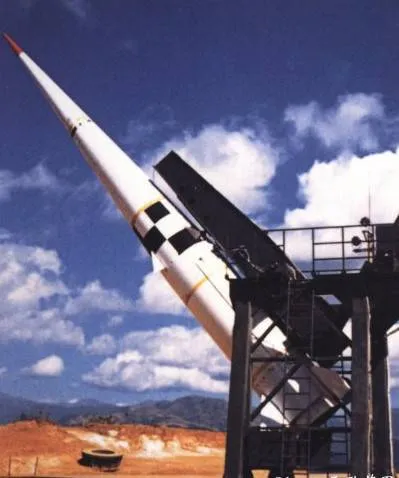
Missile defense FJ-1
The FJ-1 interceptor missile, submitted for testing in 1966, was 14 meters long and weighed 9,8 tons. It was launched from an inclined launcher at an angle of 30–60°. The main engine burn time was 20 seconds, the kill zone was approximately 50 km, and the interception altitude was 15–20 km.
However, due to the general economic and technological decline caused by the Cultural Revolution, development of the Type 715 interceptor missiles and fire-control radar proceeded very slowly, and guided launches of the FJ-1 at a test site near Kunming only began in 1972, but were plagued by control system failures and engine explosions. Encouraging results were achieved by 1978. During test firings conducted in August-September 1979, the telemetric interceptor missile successfully destroyed the warhead of a DF-3 medium-range ballistic missile, after which the decision was made to deploy 24 FJ-1 interceptors north of Beijing. However, by 1980, work on the practical implementation of China's missile defense program was halted. The Chinese leadership concluded that a national missile defense system would be too expensive and its effectiveness questionable. By that time, the USSR and the US had developed and fielded ballistic missiles carrying multiple independently targetable warheads and numerous decoys.
The FJ-3 interceptor was designed for long-range interception of ballistic missile warheads. Development of this interceptor began in mid-1971. Testing of the long-range, three-stage, solid-fuel, silo-based interceptor began in 1974. To increase the probability of intercepting a target in near space, it was planned to simultaneously guide two interceptors to a single target. The interceptor was to be controlled by the S-7 onboard computer (later used on the DF-5 ICBM). However, shortly after the death of Mao Zedong, the FJ-3 development program was canceled.
In addition to interceptor missiles, China planned to use 140mm high-ballistic anti-aircraft guns to provide missile defense for local areas. artillery The system was developed by the Xi'an Electromechanical Institute.
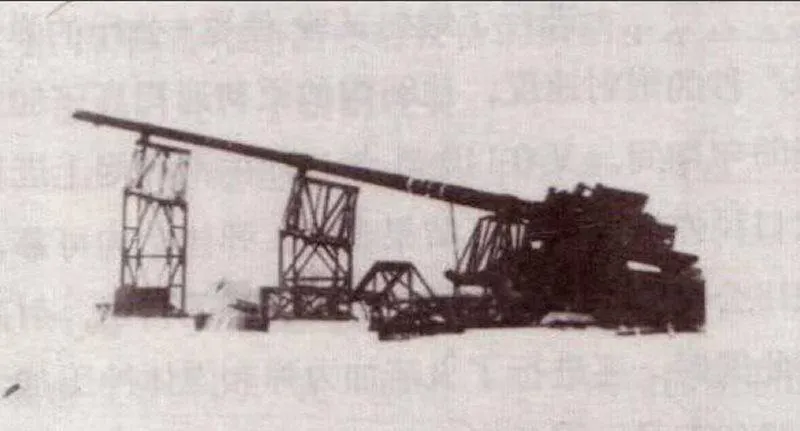
According to design specifications, the smoothbore gun could fire an 18-kg projectile at a muzzle velocity of over 1600 m/s to an altitude of over 70 km, with a maximum firing range of over 130 km. During tests conducted from 1966 to 1968, the experimental gun demonstrated encouraging results, but its barrel lifespan was very short. Although the anti-missile gun's altitude reach was quite acceptable, when using a projectile without a "special" warhead, even when coupled with a fire control radar and a ballistic computer, the probability of hitting a ballistic missile warhead approached zero. Calculations showed that a 140-mm anti-aircraft gun would only be able to fire a single shot in combat, and even with dozens of guns deployed in a single area and conventional projectiles with radio fuses added to the ammunition loadout, acceptable effectiveness would not be achieved with this caliber.
In 1970, a 420mm smoothbore gun, referred to in Chinese sources as the "Pioneer," entered testing. The anti-missile gun, with a 26-meter barrel, weighed 155 tons. Its projectile weighed 160 kg, and its muzzle velocity exceeded 900 m/s.
During testing, the weapon fired unguided projectiles. To address the extremely low hit probability, it was proposed to use a projectile with a nuclear warhead or a rocket-assisted fragmentation projectile with radio command guidance.
When implementing the first option, the developers encountered objections from the Second Artillery Corps command, which was experiencing a shortage of nuclear warheads. Furthermore, the detonation of even a relatively low-yield nuclear weapon at an altitude of approximately 20 kilometers above the protected facility could have extremely unpleasant consequences. The development of a guided missile was hampered by the imperfection of the radio-electronic components produced in China and the overburdened research of the institutes at Academy No. 2 with other topics.
Tests showed that the electronics inside the guided missile could withstand accelerations of approximately 3000 Gs. The use of special dampers and epoxy casting in the manufacture of electronic circuit boards increased this figure to 5000 Gs. Considering that the G-forces from a 420-mm Pioneer cannon were approximately twice this figure, it was necessary to develop a "soft" artillery round and a guided artillery projectile with a rocket motor. By the late 1970s, it became clear that anti-missile weapons were a dead end, and the project was finally abandoned in 1980. A byproduct of these full-scale experiments was the development of parachute recovery systems that returned the missiles with their electronics to the ground without damaging the measuring equipment. Subsequently, the developments in recovery systems for experimental guided missiles were used in the creation of spacecraft re-entry capsules.
In the development of anti-missile weapons Chinese specialists also focused on combat lasers. The Shanghai Institute of Optics and Precision Mechanics was appointed as the organization responsible for this area. Work was also underway there to create a compact free-particle accelerator that could be used to destroy targets in space.
The SG-1 oxygen-iodine laser, developed in the late 1970s, could disable a ballistic missile's warhead at a relatively short distance, which was primarily due to the peculiarities of laser beam propagation in the atmosphere.
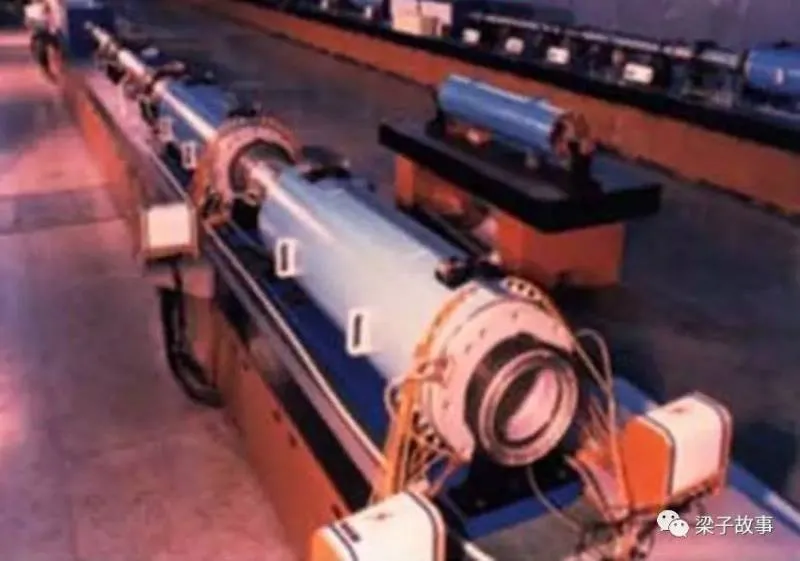
SG-1 Oxygen Iodine Laser
In space, its firing range was significantly greater, but it was not possible to place a device of this size in orbit.
Like other countries, China considered using a disposable nuclear-pumped X-ray laser against enemy warheads. However, generating high-energy radiation requires a nuclear explosion with a yield of approximately 200 kilotons. It was proposed to use charges embedded in rock, but the release of a radioactive cloud would have been inevitable in the event of an explosion. Ultimately, the option of using a ground-based X-ray laser was rejected.
China's "Project 640" was highly ambitious, bordering on technological adventurism, and ultimately failed. Chinese leaders greatly overestimated the capabilities of their own research, development, and industrial base, as well as the cost of developing a national missile defense program.
Mobile Chinese radars used in anti-missile systems
Chinese specialists drew the necessary conclusions and, in the next phase of work, began creating the necessary foundation, building on existing technical solutions and prototypes. Along with the design and deployment of fixed over-the-horizon early warning radars and long-range surface-to-air radars, primarily designed for the early detection of ICBM, IRBM, and SLBM warheads, mobile radars were developed that could detect operational-tactical missiles, which have become widespread and are actively used in combat in the 21st century.
These stations were developed both by upgrading existing models, originally designed to detect aerodynamic targets, and by creating entirely new ones. According to foreign experts, the YLC-8B, JY-27A, and JL-1A radars are of greatest interest in this regard.
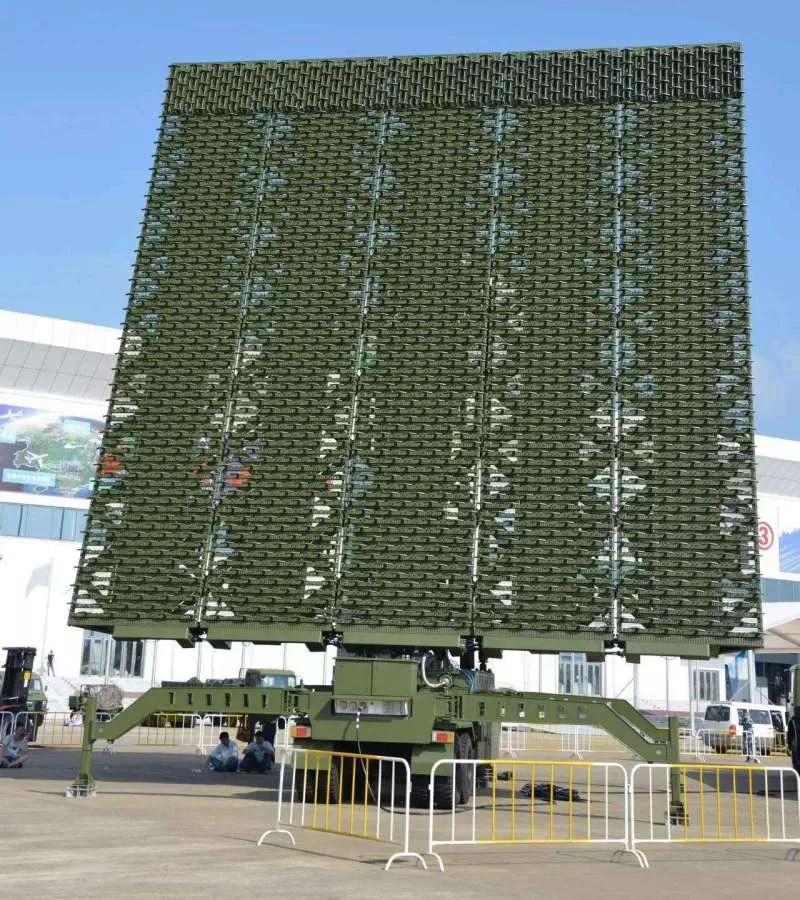
Radar Antenna Post YLC-8B
Promotional materials from China Electronics Technology Group Corporation (CETC) claim that the YLC-8B, operating in the decimeter-wave range, is capable of effectively targeting stealthy manned aircraft and cruise missiles. Its detection range for aerial targets reaches 450 km, while ballistic missiles can be detected at a range of over 600 km. This radar combines traditional mechanical scanning detection with phased array technology.
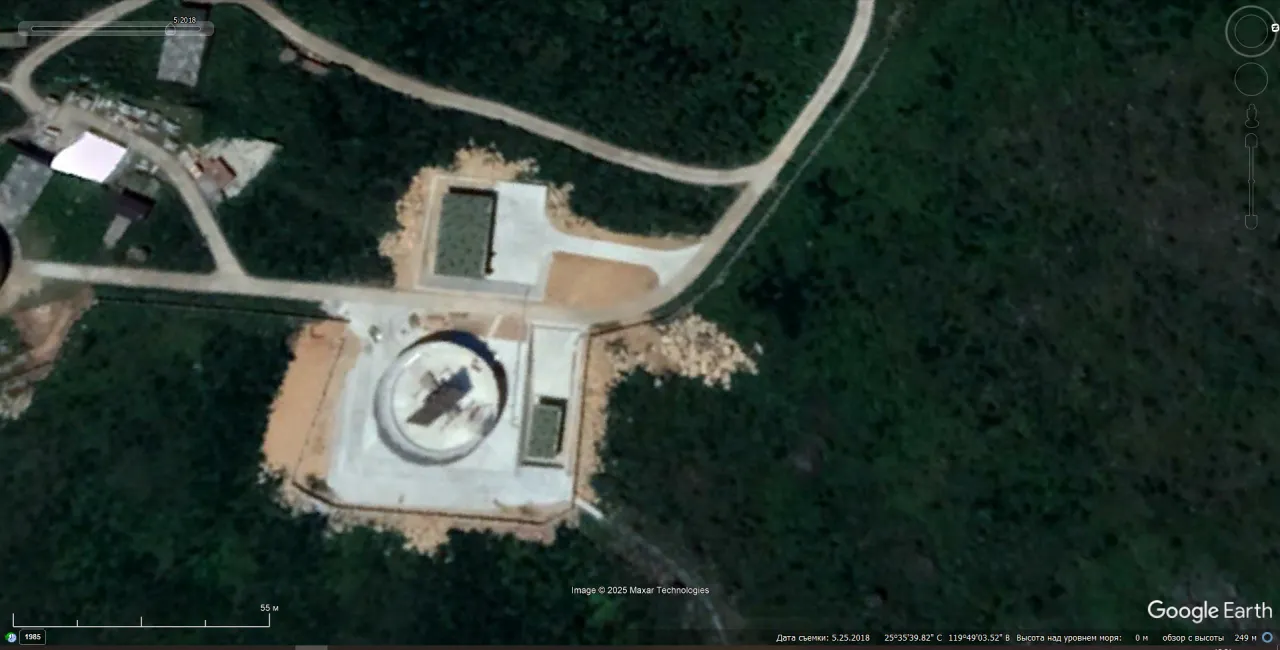
Google Earth satellite image of the YLC-8B radar on Pingtan Island. The image was taken in May 2018.
Since 2018, such a station has been deployed in the mountains on Pingtan Island in Fujian Province. It allows for monitoring airspace over most of Taiwan. Initially, the station's antenna post was located in the open, but it is now covered by a radio-transparent dome.
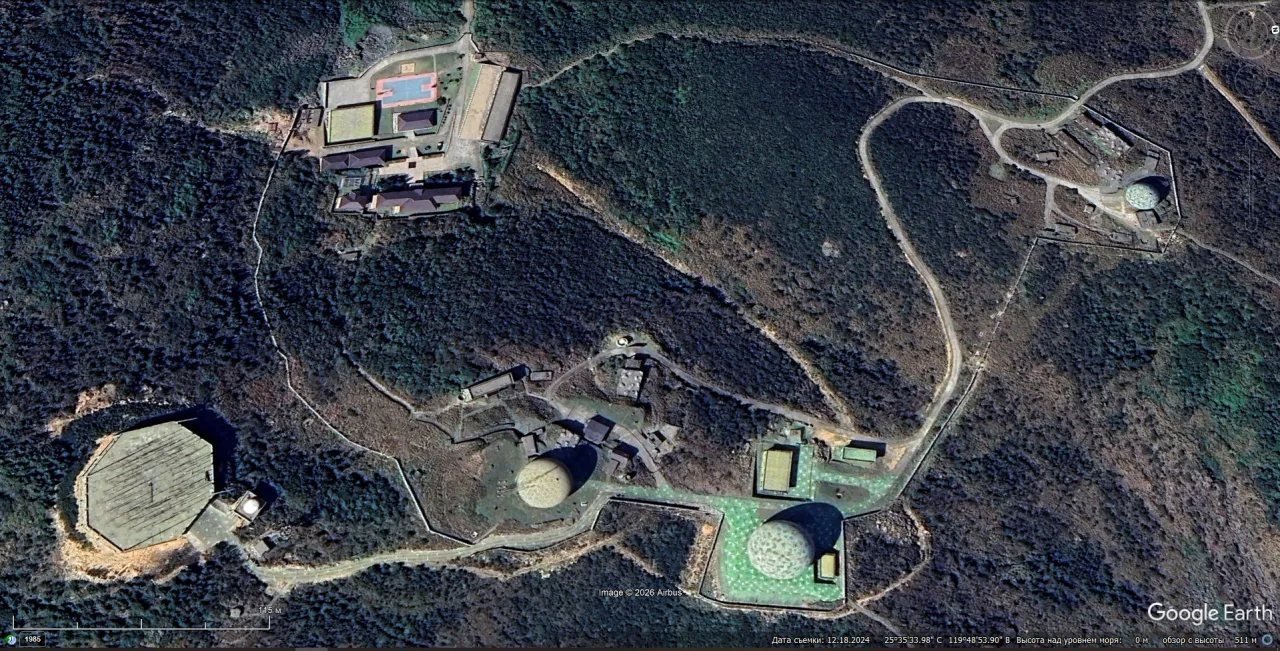
Google Earth satellite image of a YLC-8B radar at a radar outpost on Pingtan Island. The image was taken in December 2024.
Currently, several other radars operate near the YLC-8B radar on Pingtan Island as part of a radar hub.
In addition to monitoring Taiwan and other potentially dangerous areas, YLC-8B radars are used by Chinese missile and aviation ranges for monitoring missile launches and air situation.
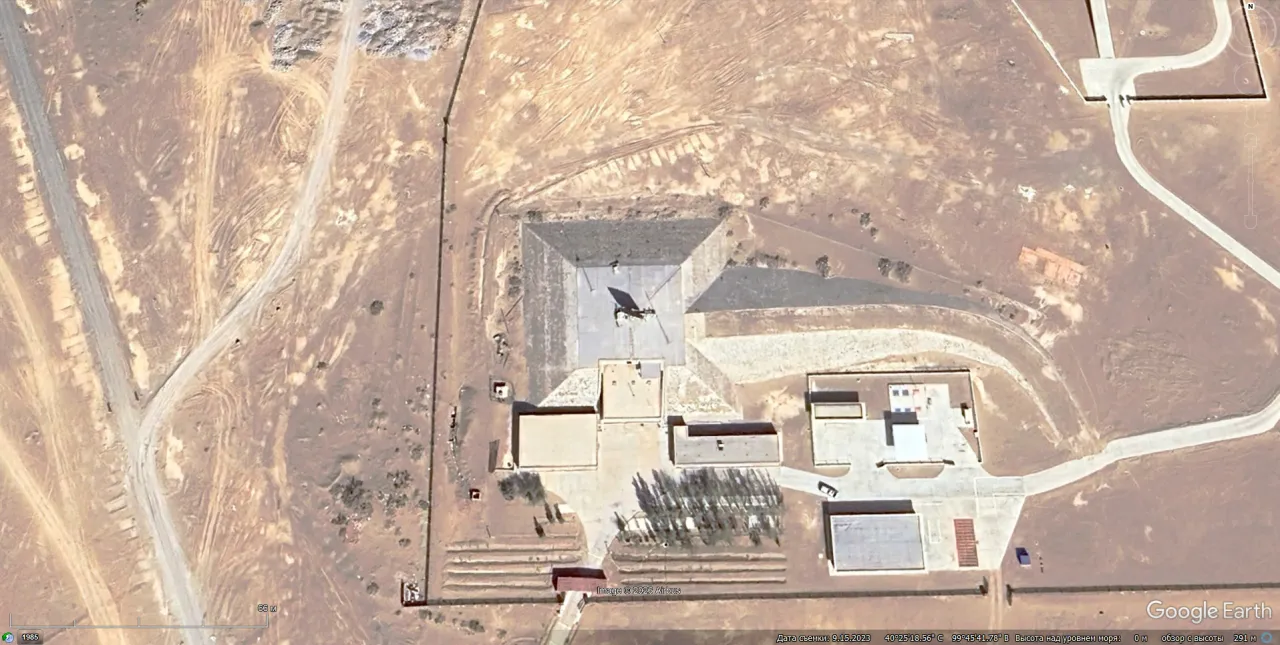
Google Earth satellite image of a YLC-8B radar near Dingxin Air Base. The image was taken in September 2023.
One such radar operates in the vicinity of Dingxin Air Base in Gansu Province, home to the PLA Air Force Joint Tactical Training Center.
The mobile three-coordinate meter-range radar station JY-27A is based on the two-coordinate standby mode radar JY-27.
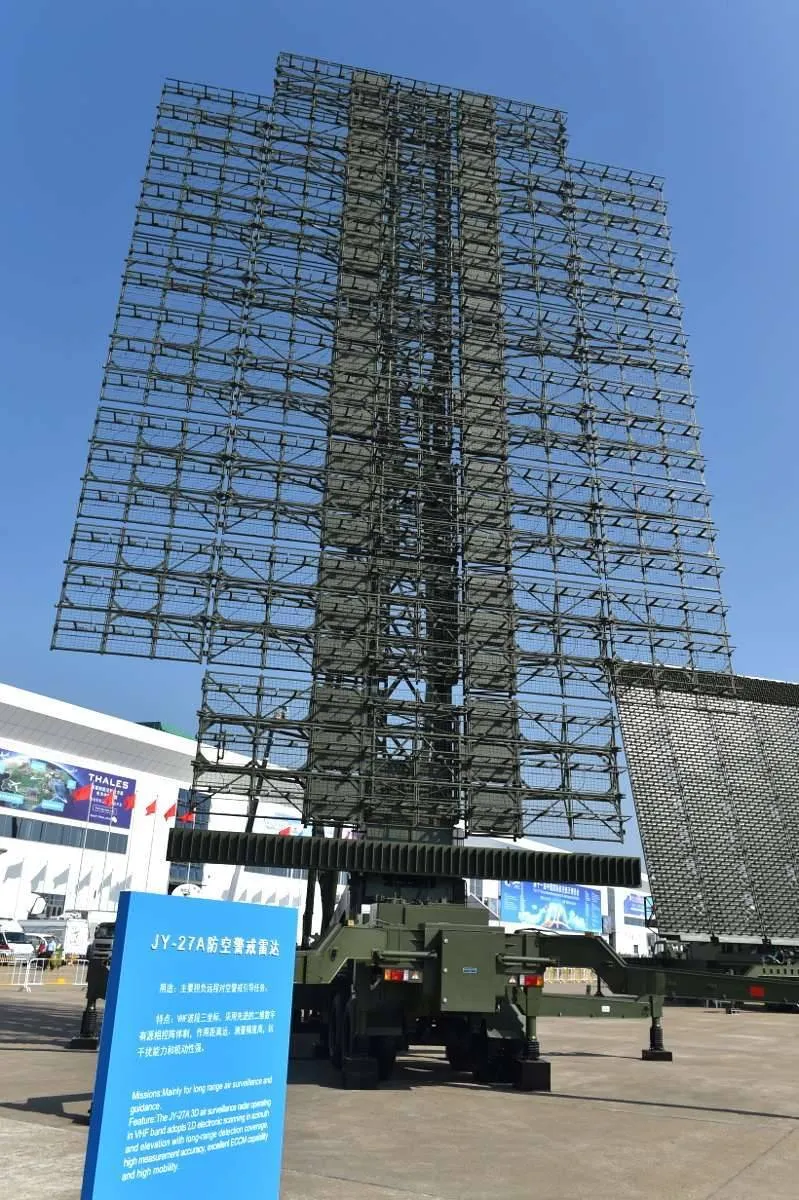
JY-27A radar antenna post
The JY-27A radar is designed to detect ballistic missiles and aerial targets. This system also has good capabilities for detecting aircraft built using low-observable technology. According to advertising, the detection range of high-altitude aerodynamic targets reaches 500 km, and for ballistic targets above the horizon, it reaches approximately 700 km.
Chinese sources claim that in the future, the JY-27A radar could work in conjunction with mobile missile defense systems designed to protect against operational-tactical missiles.
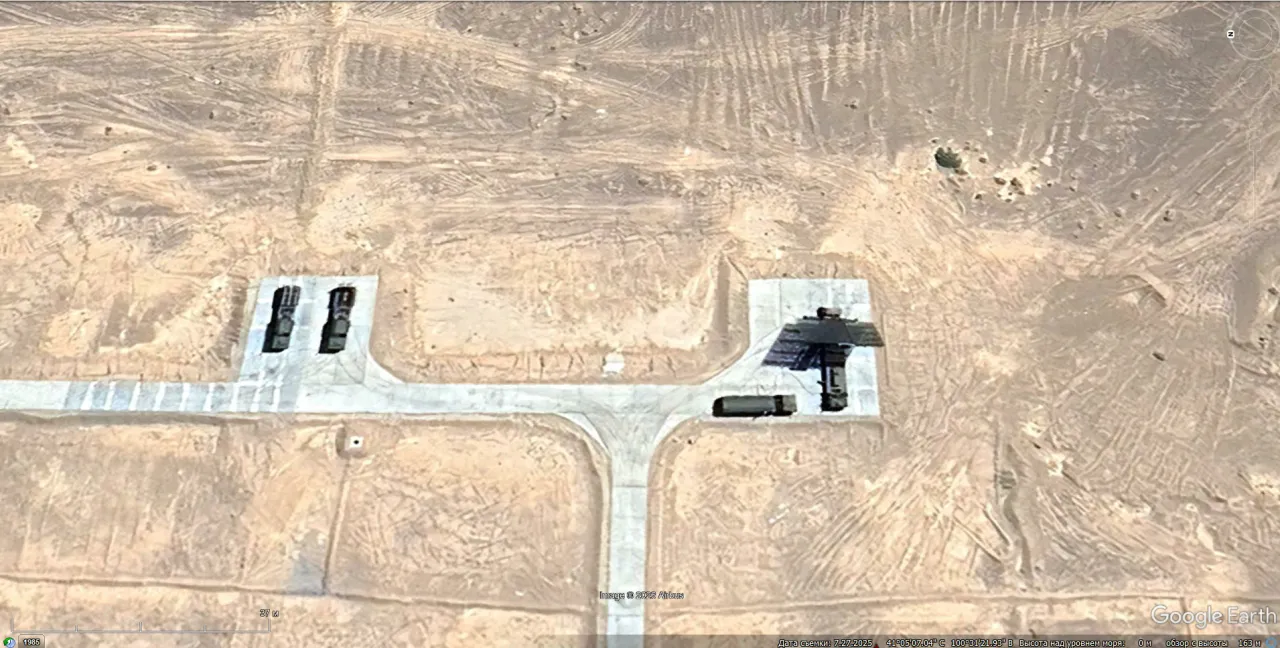
Google Earth satellite image of the JY-27A radar at Site 72. This image was taken in July 2025.
This claim is partly supported by the fact that the JY-27A radar was discovered at an air defense and missile defense test site in Gansu Province, known as "Site No. 72," located 20 kilometers north of the Jiuquan Cosmodrome.
According to information published in Chinese sources, the JL-1A centimeter-wave radar is designed to operate as part of various air defense and missile defense systems. The radar's main components are mounted on three heavy-duty all-wheel drive trucks.
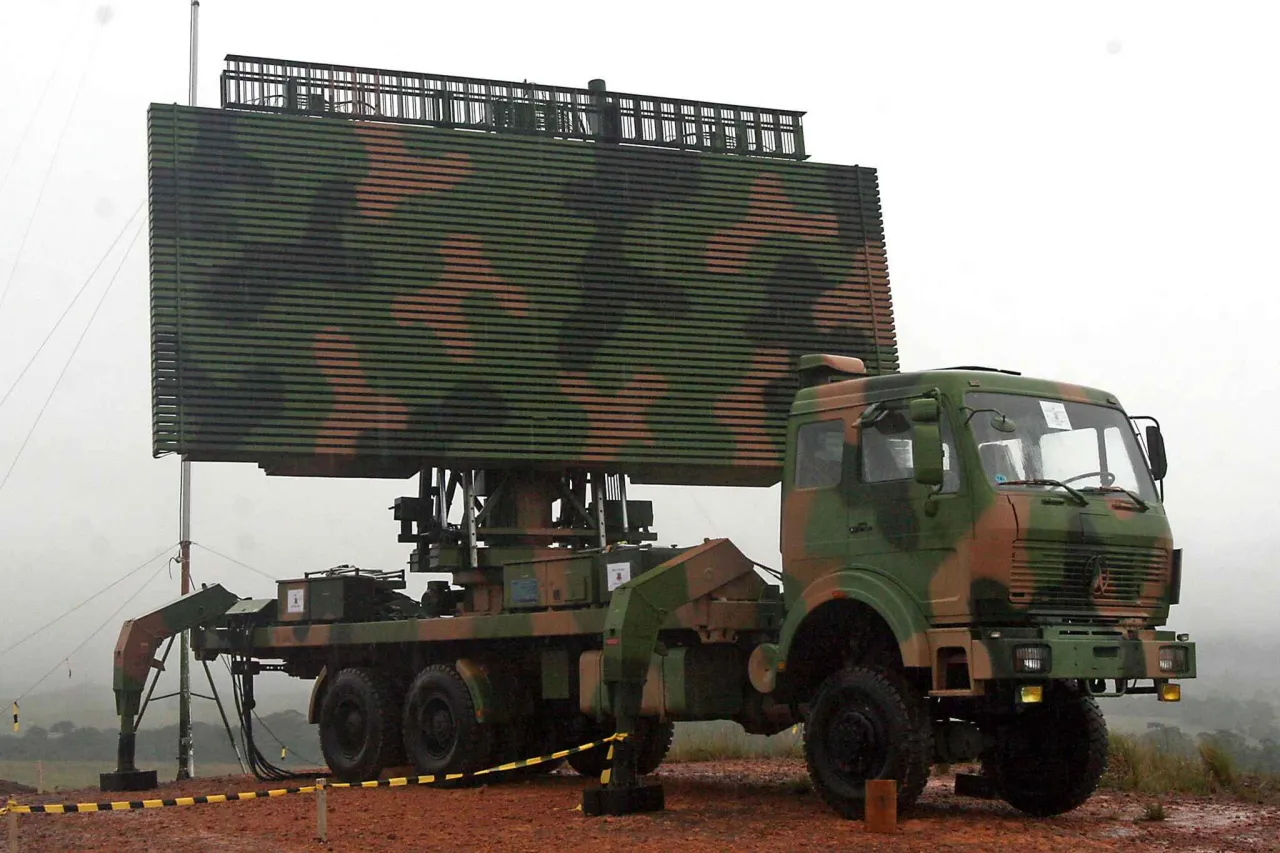
JYL-1A radar antenna post
The instrumented detection range for air targets exceeds 450 km, and for ballistic targets, it's up to 600 km. In anti-missile mode, the station scans a specified sector.
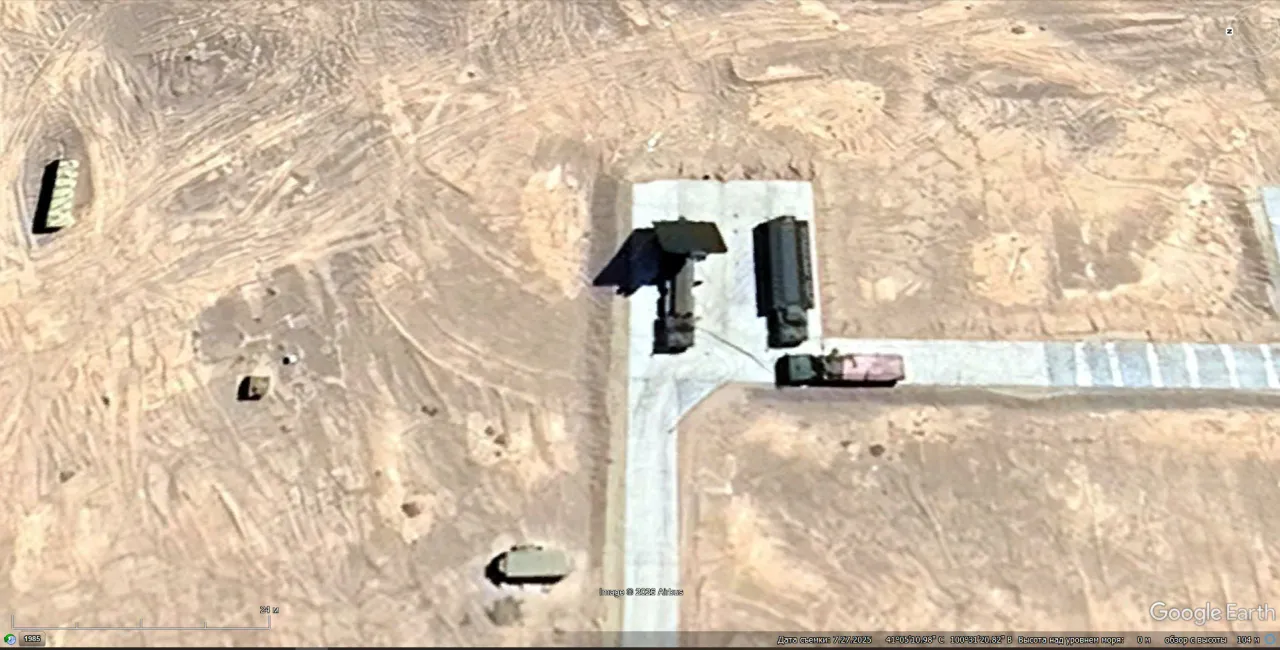
Google Earth satellite image of the JYL-1A radar at Site 72. The image was taken in July 2025.
The JYL-1A radar is also deployed in Yunnan Province in southwest China, near the city of Kunming, where one of the missile testing grounds is located.
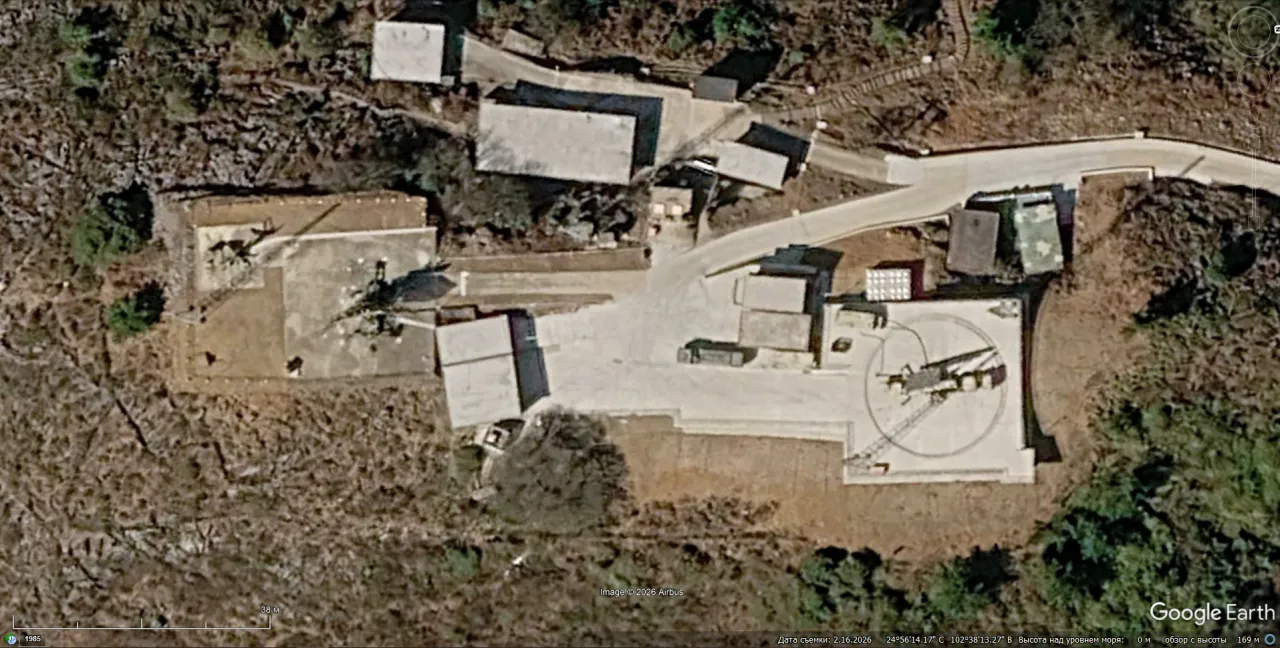
Google Earth satellite image of the JYL-1A radar near Kunming. The image was taken in February 2026.
The NT-233A multifunctional illumination and guidance radar stands apart, created on the basis of the NT-233 radar, which is part of the HQ-9B air defense missile system.
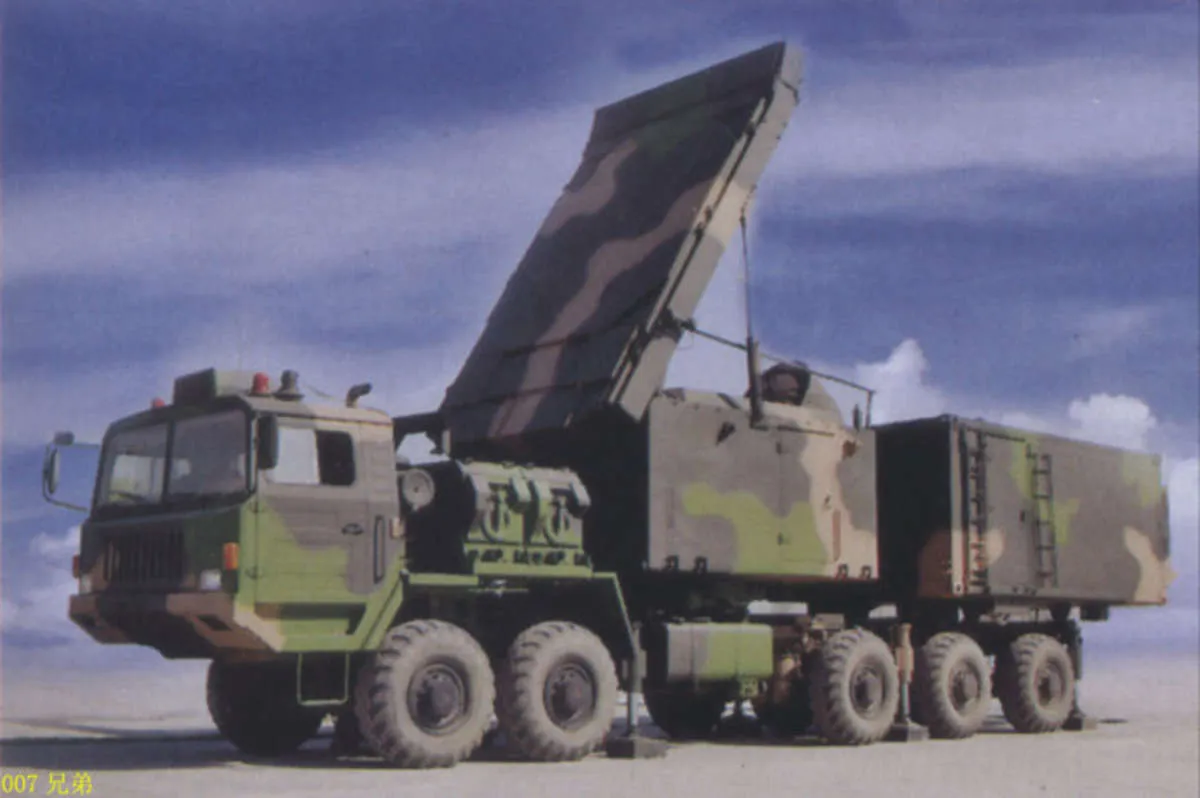
NT-233 radar
The HT-233 radar consists of an antenna post and a hardware container mounted on a single Taian TAS5501 wheeled chassis with a 30-ton payload. The HT-233 radar's antenna system is a phased array with digital beam position control. The station's coverage area extends 360° in azimuth and from 0° to 65° in elevation. The detection range of large, high-altitude targets reaches 300 km. It provides simultaneous detection of over 100 targets, automatic tracking of over 50 targets, identification of their nationality, acquisition, tracking, and guidance of anti-aircraft missiles. The performance of the improved HT-233A station is unknown, but it is presumed that they are significantly superior to the first modification.
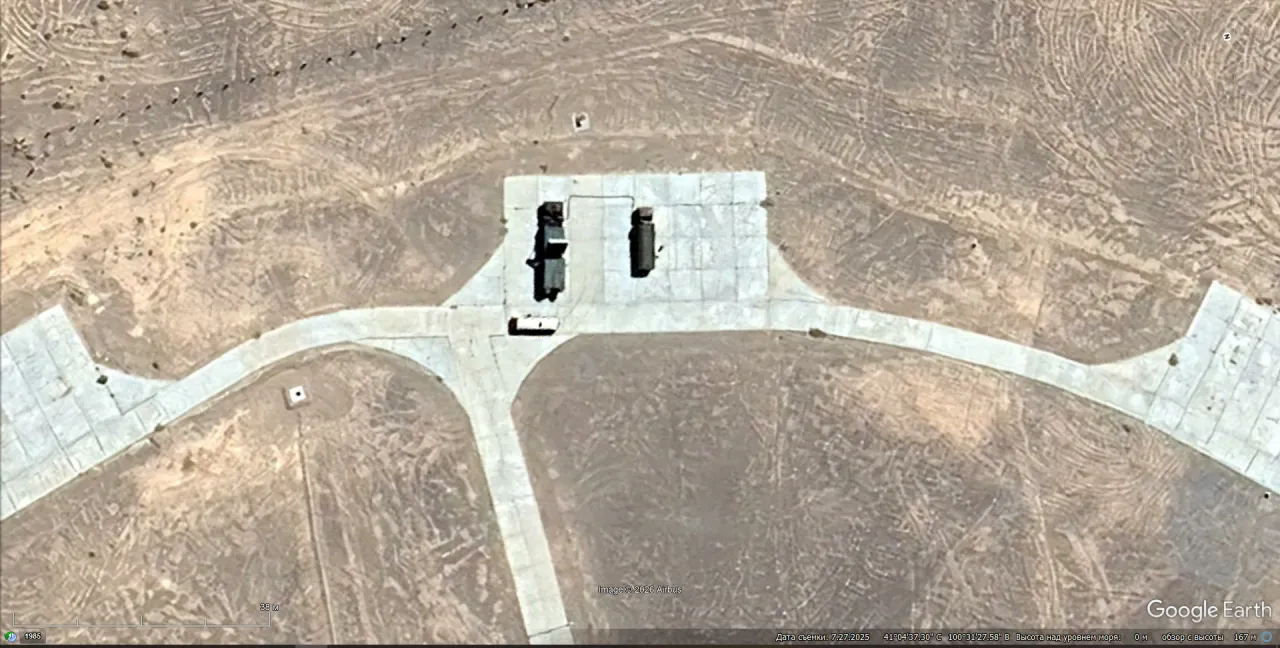
Google Earth satellite image of the HT-233 multi-functional radar at Site 72. The image was taken in July 2025.
There is information that the modified NT-233A station will be used to guide interceptors of the HQ-19 mobile anti-missile system.
Chinese ground-based missile defense systems and missile defense test site infrastructure
China is currently implementing a program to develop anti-missile systems designed to intercept all types of ballistic targets: tactical, short-range, short-range, medium-range, and intercontinental ballistic missiles. Work in this area is known to have begun in the late 1980s as part of Project 863.
Following the US withdrawal from the Anti-Ballistic Missile Treaty in 2001, Beijing dramatically increased the pace of its own missile defense development. China generally remains silent about its plans and the status of its advanced missile defense developments. Advances in this area are often revealed through reports from Western intelligence agencies monitoring Chinese test sites. This makes it very difficult to assess the actual progress China has made in developing anti-missile and anti-satellite weapons.
In the late 1990s, development of the HQ-19 anti-missile system began. It was intended to be a functional analogue of the American THAAD and intercept tactical missiles at ranges of up to 200 km. The HQ-19 system reportedly utilized radar systems and technical solutions implemented in the HQ-9 air defense system.
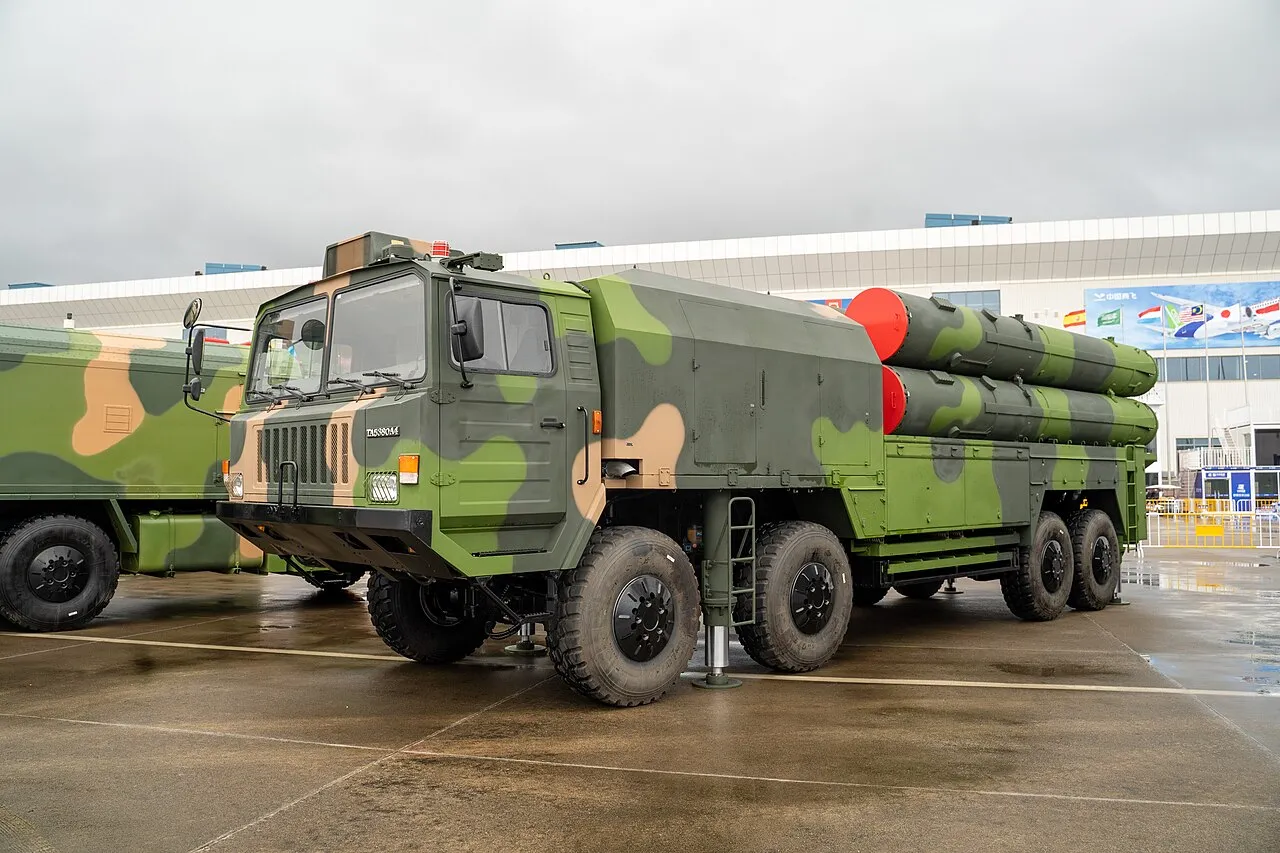
An HQ-19 launcher at the 2024 Zhuhai Air Show.
The HQ-19 has been in trial operation since 2018, and the system was demonstrated to the public at Airshow China 2024. Tests of the HQ-19 were conducted in remote and deserted areas of China, including at Site 72 in Gansu Province.
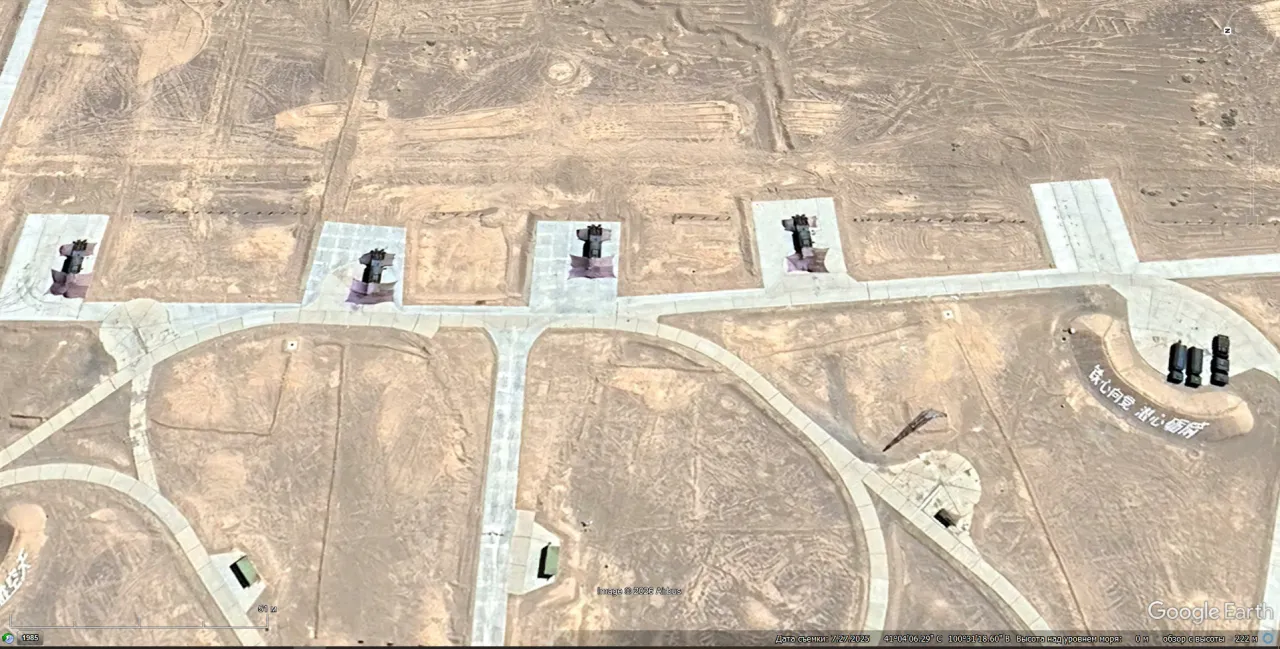
Google Earth satellite imagery shows elements of an unknown anti-aircraft system at the "Site No. 72" test site. The image was taken in July 2025.
Unfortunately, it was not possible to positively identify the HQ-19 system in publicly available satellite imagery. An image of one of the launch sites at the Gansu Province test site shows launchers partially concealed by camouflage nets, which may be elements of the HQ-19 missile defense system.
At the military parade held on September 3, 2025, dedicated to the 80th anniversary of the victory in the Chinese People's War of Resistance against Japanese Aggression and World War II, self-propelled launchers of the HQ-29 system were demonstrated.
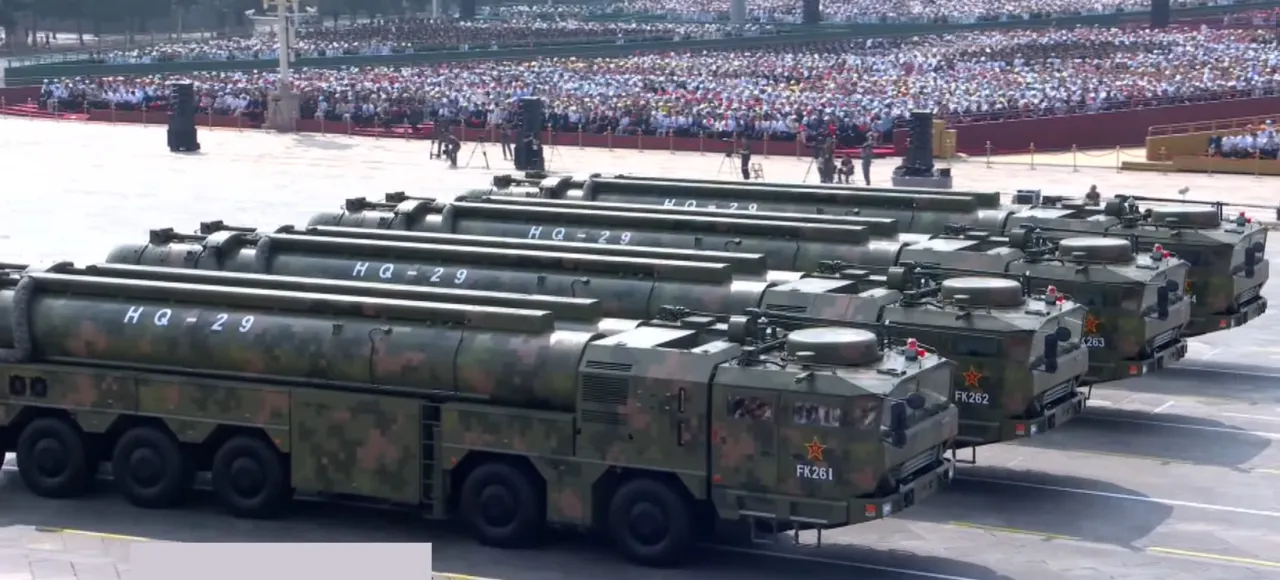
Self-propelled launchers of the HQ-29 missile defense system
Details regarding this missile defense system are scarce. Western experts write that the HQ-29 interceptor is similar in capabilities to the American SM-3 Block IIA interceptor and, in addition to countering ballistic missile warheads, is capable of shooting down satellites in low orbits.
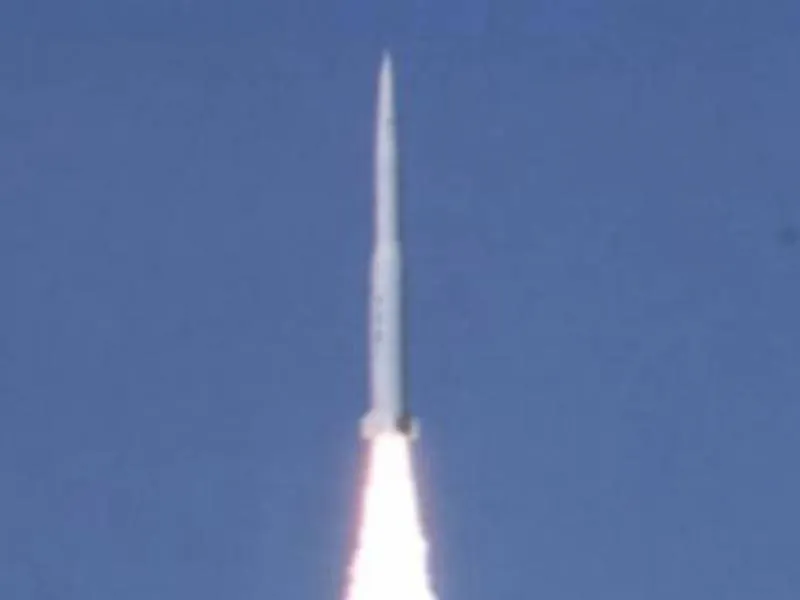
Test launch of Chinese anti-missile system
A tungsten kinetic energy warhead, designed for a direct hit, is presumably used to destroy targets. Course correction during the final phase is accomplished using miniature disposable rocket motors, of which the warhead contains over a hundred.
Heavy anti-missile tests were carried out, among other sites, from the Xichang Cosmodrome in Sichuan Province.
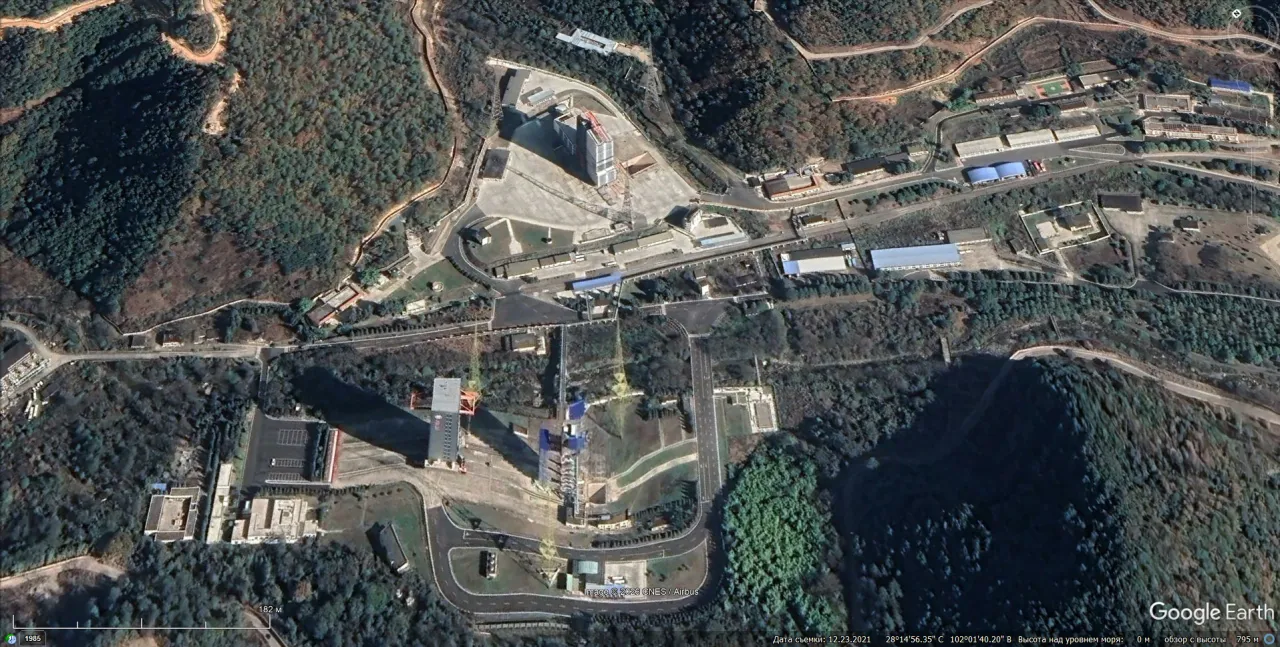
Google Earth satellite image of the Xichang Cosmodrome facilities. The image was taken in December 2021.
Test launches of missile defense systems were also conducted from missile testing sites near the city of Korla in the Xinjiang Uyghur Autonomous Region, located approximately 10 km south of the over-the-horizon early warning radar.
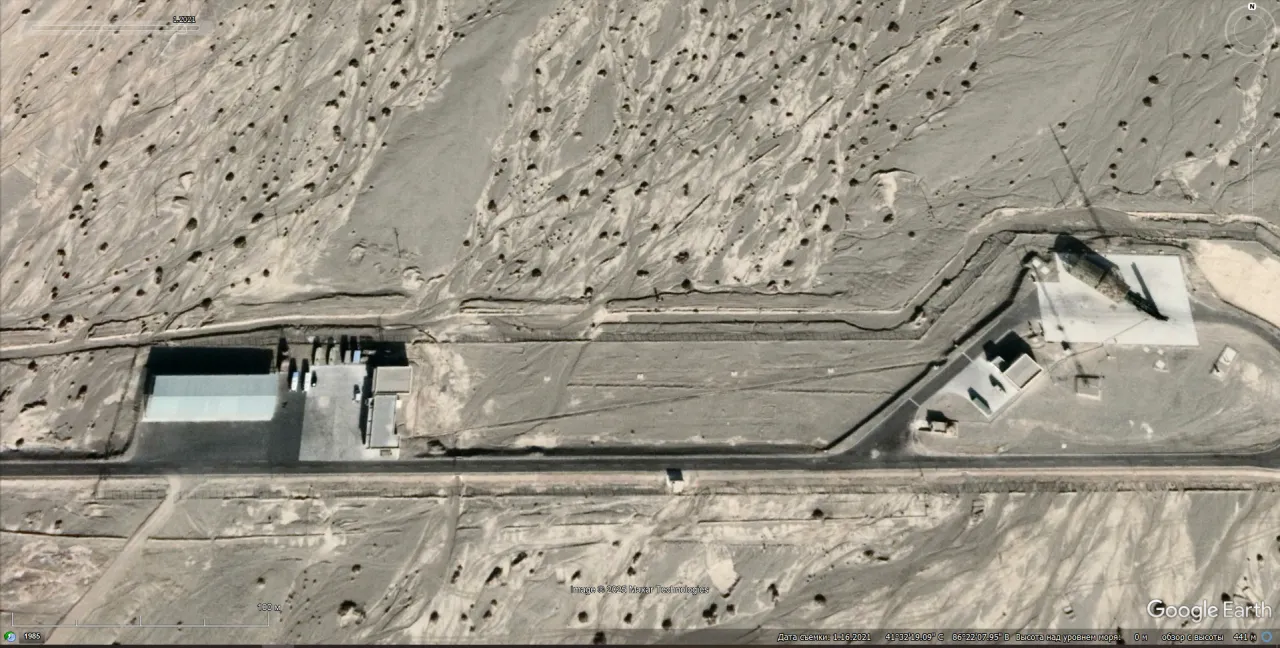
Google Earth satellite image of the Korla missile test site. The image shows the self-propelled launcher partially covered by a camouflage net. The image was taken in January 2021.
During test preparations, anti-missile launchers are covered with camouflage nets that distort the equipment's outline, making it difficult to identify the missile defense systems in satellite images. There are also large metal frames with nets stretched over them, and the launchers are positioned inside these frames to conceal the launchers from reconnaissance satellites.
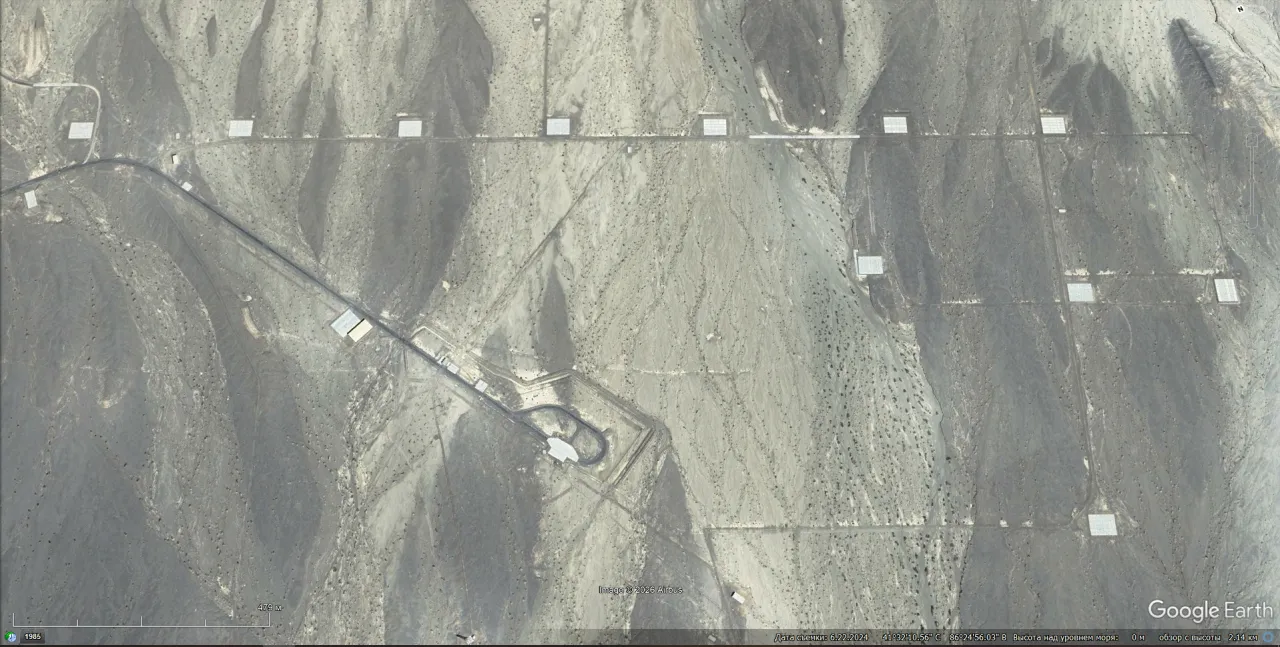
Google Earth satellite image of new launch pads at the Korla missile range. The image was taken in June 2024.
While studying images of the Korla test site over the years, it is noticeable that the test site has expanded greatly over the past few years, and the number of concrete launch pads in the area has increased significantly, spaced from several kilometers to 200 meters apart.
Elements of China's sea-based missile defense system
It is known that Chinese specialists closely monitor trends in the development of weapons and military equipment outside of China and often replicate models created in other countries. story happened with the PLA Navy's newest Type 055 destroyers, which were designed with an eye on American cruisers and destroyers equipped with the Aegis system.
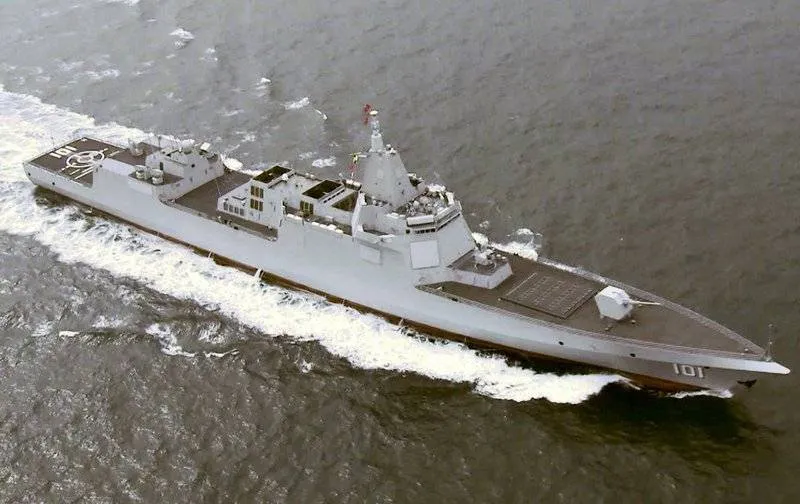
Destroyer Type 055
The lead destroyer, hull number "101," named "Nanchang," entered service in January 2020. The ship, with a displacement of up to 13,000 tons, is 180 meters long, 20 meters wide, and has a draft of 6,6 meters. Four gas turbine engines with a total output of 150,000 horsepower provide a speed of 30 knots. The ship has a cruising range of 5000 nautical miles. The crew consists of over 300 people. The Type 346B active electronically scanned array (AESA) radar is considered a functional analogue of the American AN/SPY-1 naval radar.
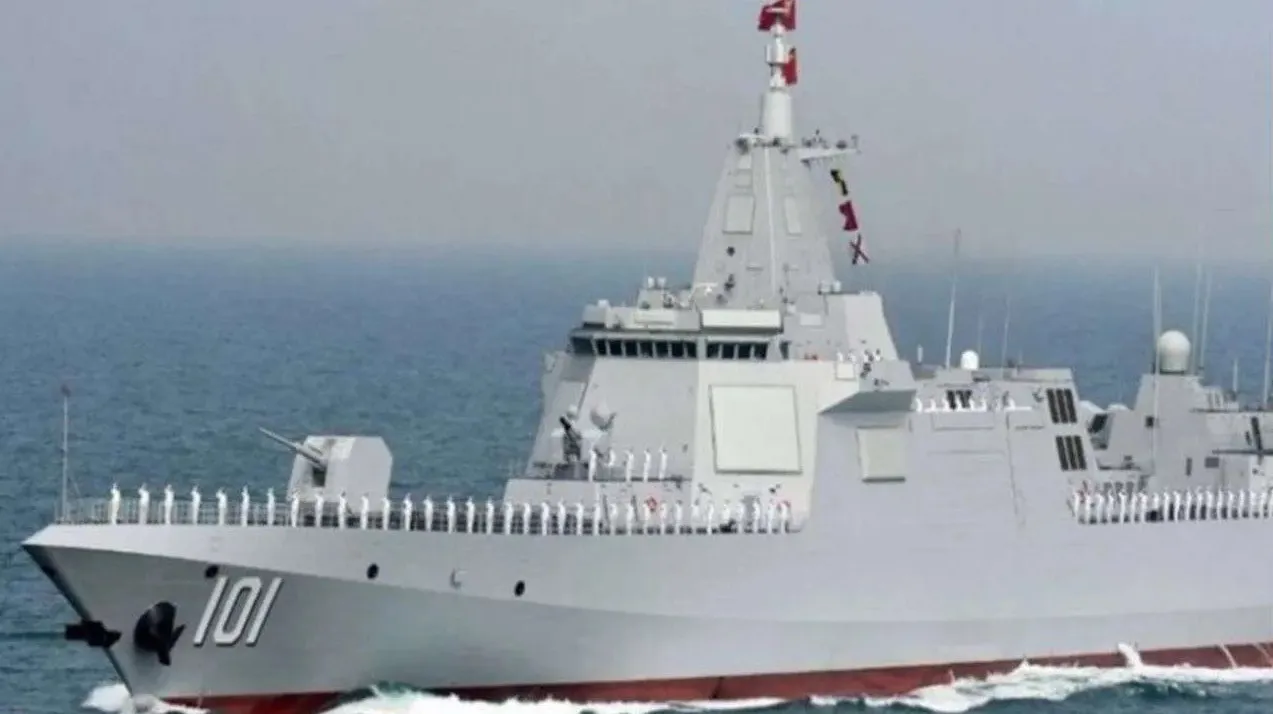
The ship is equipped with a universal 130mm gun mount, a seven-barrel 30mm anti-aircraft gun, and a short-range surface-to-air missile system. Its main armament consists of long-range HHQ-9 surface-to-air missiles (the naval version of the HQ-9), YJ-18 anti-ship cruise missiles, and anti-submarine missile-torpedoes, all housed in modular universal vertical launchers.
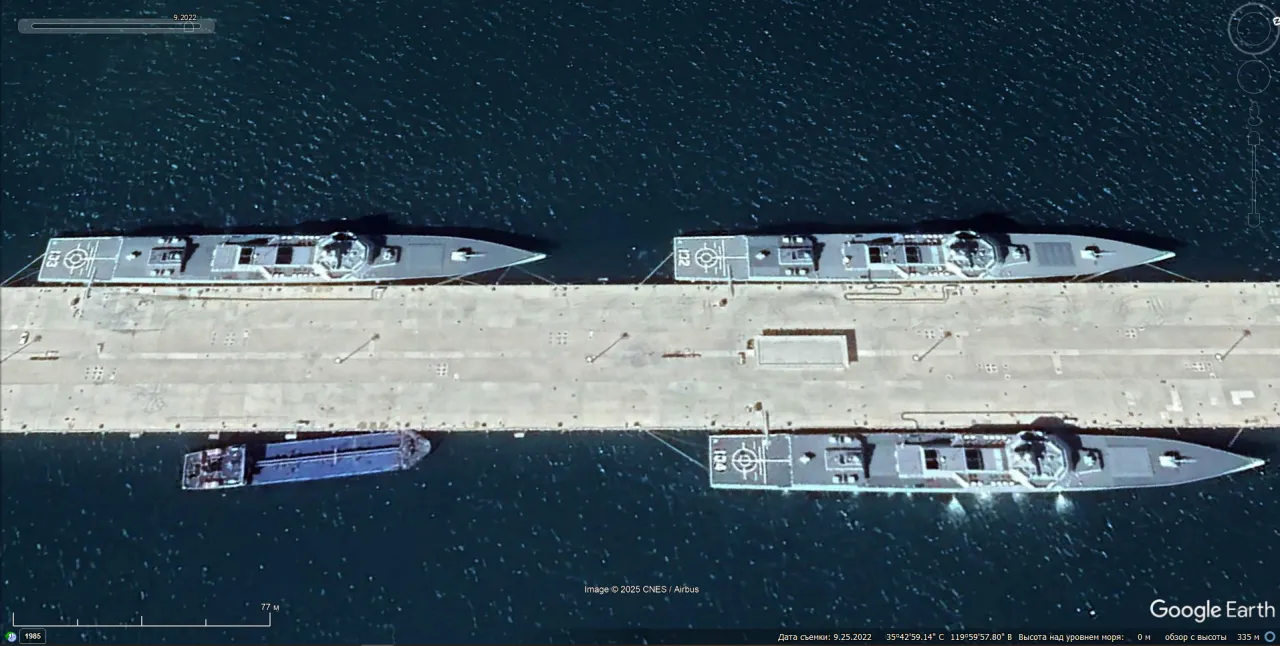
Google Earth satellite image: Type 055 destroyers of the Northern Fleet fleet The PLA Navy at the Yuchi Naval Base pier. This photo was taken in September 2022.
As of 2024, the PLA Navy had ten Type 055 destroyers: four in the Northern Fleet (numbers: "101", "102", "103", "104"), four in the Southern Fleet (numbers "105", "106", "107", "108") and two in the Eastern Fleet (numbers "109" and "110").
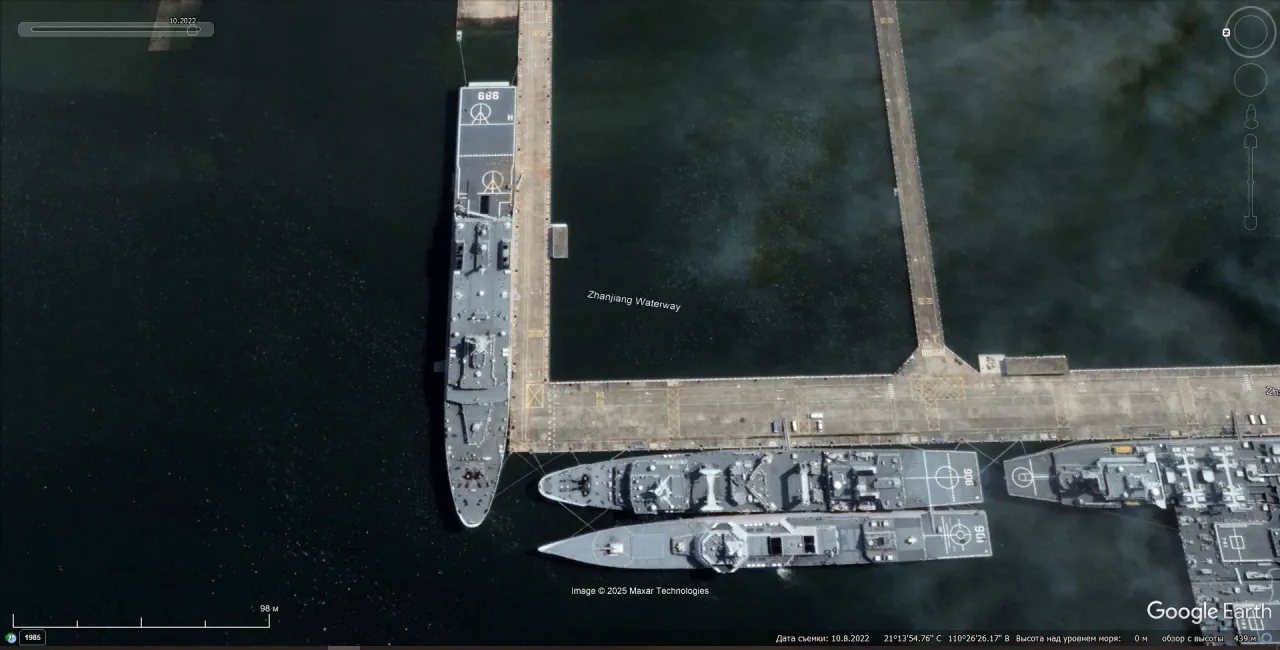
A Google Earth satellite image shows a Type 055 destroyer, a supply ship, and a landing ship of the Southern Fleet at the pier of the Zhanjiang naval base. The image was taken in October 2022.
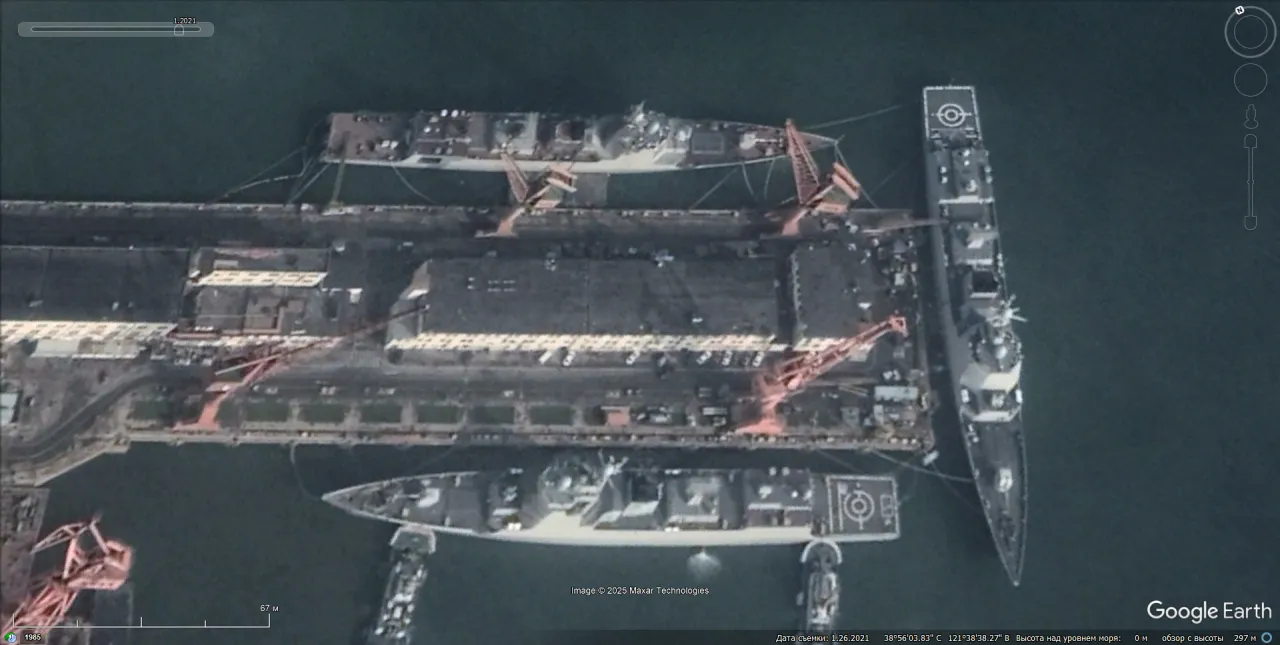
In total, at least fifteen Type 055 ships are expected to enter service. They are currently being built at the Dalian Shipbuilding Industry Company (DSIC) shipyard in Dalian.
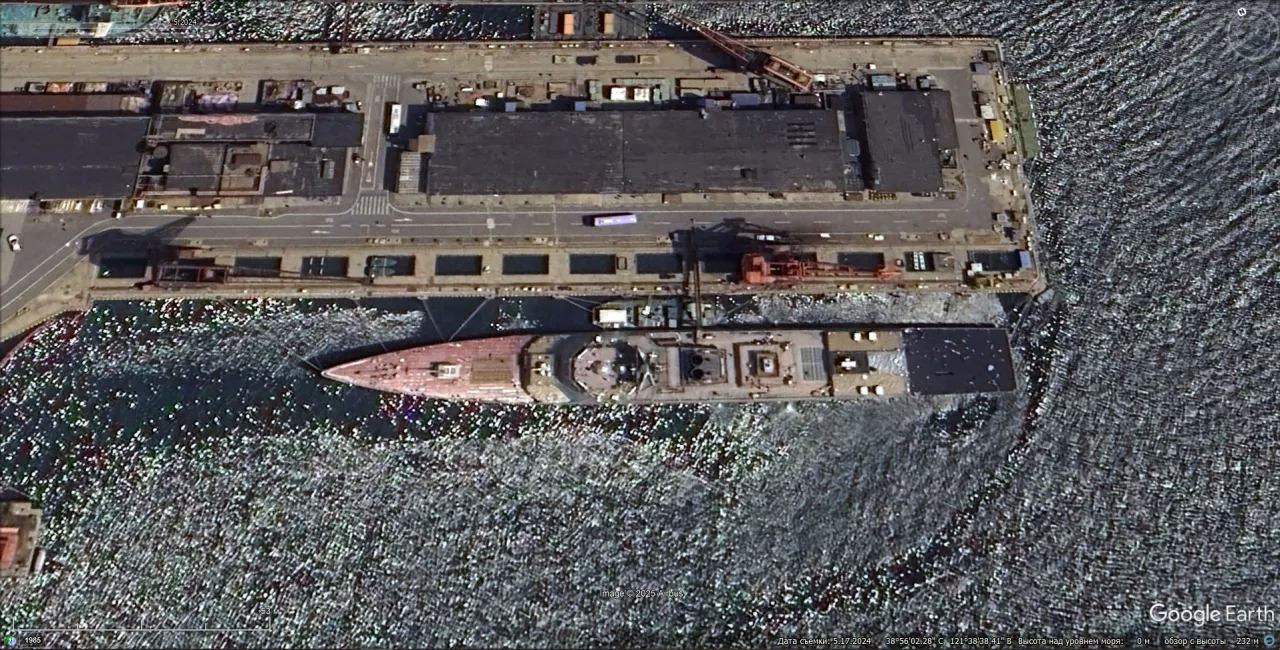
Google Earth satellite image of the Type 055 destroyer at the outfitting yard of the Dalian Shipbuilding Company. The image was taken in May 2024.
The late-series Type 055 destroyers being built in Dalian are planned to be armed with a navalized version of the HQ-19 interceptor or a specially developed HQ-26 interceptor, which will enable them to intercept ballistic missiles and low-orbit satellites at altitudes of up to 150 km and ranges of up to 450 km. This will enable them to not only provide cover for a carrier-led squadron, but also to use the Type 055 ships to provide missile defense for China's coastal areas.
The ending should ...
Information