"Beat the damned locusts to death! There is no point in retreating!"
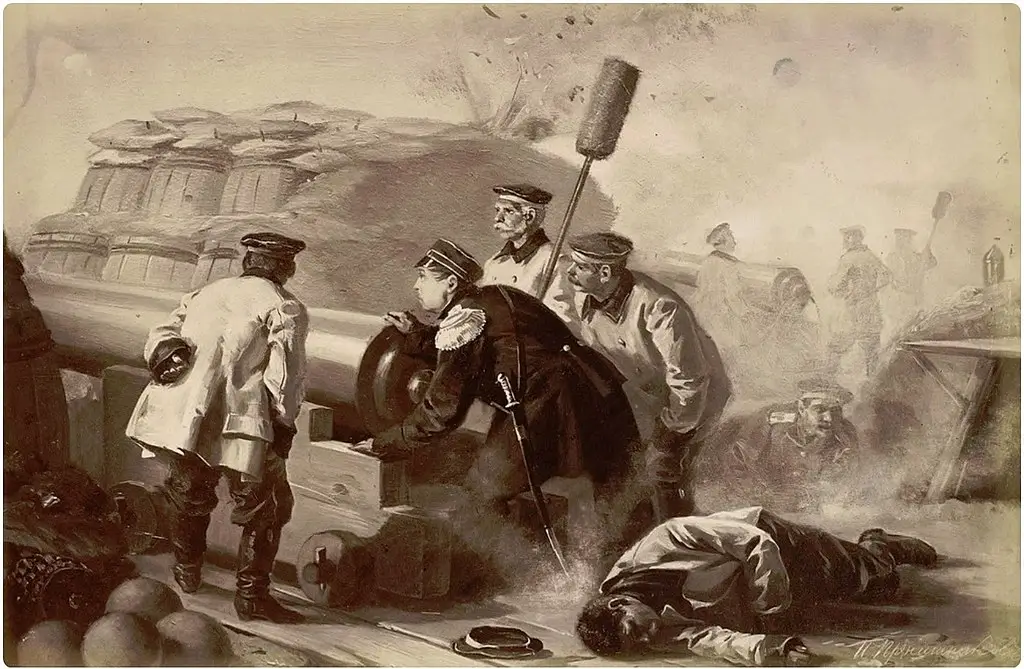
Reproduction of the painting by I. M. Pryanishnikov "Admiral Nakhimov on the Sevastopol bastion".
Preparing for a decisive assault
Having taken the advanced fortifications on June 7, 1855 – the Selenginsky and Volynsky redoubts, the Kamchatka lunette – the allies prepared for a decisive assault (How the Allies Tried to Repeat Waterloo in Crimea). They were able to shell the entire Korabelnaya side, the left flank of the Russian defensive line.
The English troops were aimed at the 3rd bastion, as they called it, the "Great Redan". The French were attacking in the center on the Malakhov Kurgan and on the right flank in three columns under the command of Generals d'Otmar, Brunet and Mayran.
Parts of 8 French and English divisions – 44 thousand soldiers – directly participated in the assault. They were opposed by 20 thousand Russians under the command of General Khrulyov.
The French commander-in-chief, Pélissier, and many of his generals were confident of success. They thought that the exhausting siege had exhausted the Russians and that a decisive assault would lead to victory.
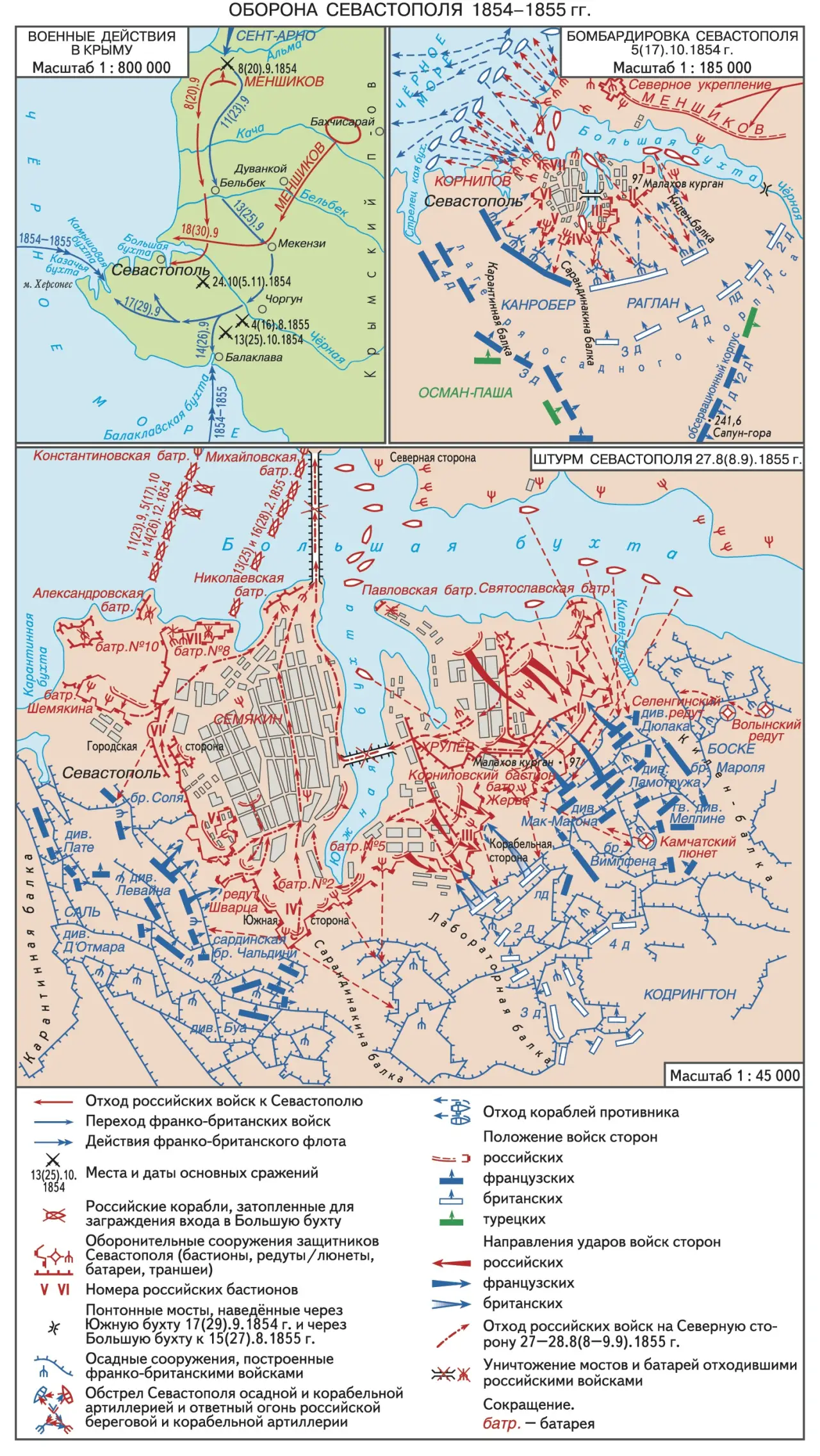
Map source: old.bigenc.ru
At the same time, Pélissier was very irritated by the fact that Napoleon III and his advisers were still trying to direct military operations from Paris. The Emperor was tired of the siege, which did not lead to a quick victory, exhausted the allied troops, and proposed turning against the Russian army, defeating it, taking Simferopol. Then besiege Sevastopol from the north, creating a complete blockade. General Pélissier did not want to listen to instructions from Paris and lift the siege of Sevastopol. On the contrary, he wanted to intensify efforts to capture the city.
On June 15, a meeting of the commanders-in-chief of the three armies took place: Pelissier, Lord Raglan and Omer Pasha. It was finally decided to attack the 1st and 2nd bastions, the Malakhov Kurgan, the Gervais battery and the 3rd bastion with the main forces of the French and English. Turkish and Sardinian troops (22 thousand) stood as a screen against the Russian army, they were reinforced with a 20-thousand corps by the French General Bosquet.
It is worth noting that Pierre François Joseph Bosquet, who distinguished himself in the battles of Alma, Balaclava and Inkerman, the most popular general of the French army, was against an immediate assault. He believed that the underground mine works at the Ship's side were not yet advanced enough and that the assault should be delayed. Therefore, Pélissier, completely unexpectedly for the entire army, suddenly removed General Bosquet from the post of commander of the troops intended to begin the assault.
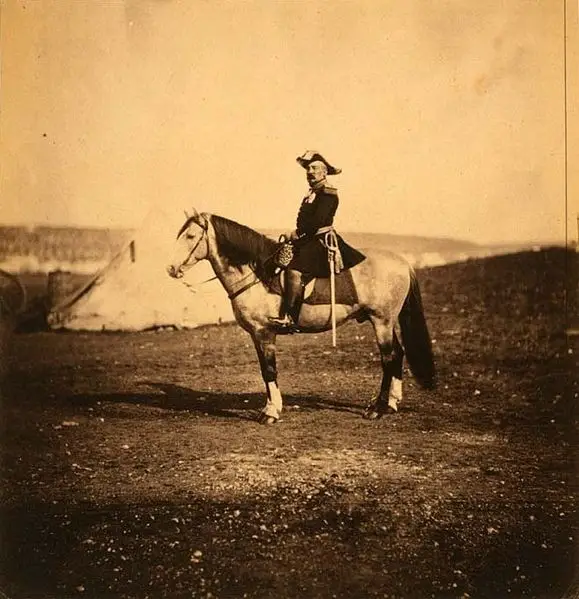
Pierre François Joseph Bosquet (1810-1861) was a French military leader and statesman, Marshal of France (March 18, 1856), and a participant in the Crimean War. Photo by British military photographer Roger Fenton
4th bombing
On June 17 there was an intensified artillery preparation — 4th bombardment of Sevastopol. During the night, the intensive fire continued. The siege batteries had 587 guns at their disposal, of which 421 were French and 166 English. At the same time, only 39 were intended to repel possible sorties and for actions in the raid and on the Northern side, and the remaining 548 were to bombard the defensive line. The French concentrated their fire on the 1st and 2nd bastions, on Malakhov Kurgan, on the Gervais battery, the British — on the 3rd bastion and on Peresyp. The allies hoped that the Russian fortifications would be destroyed and would not have time to be restored on the night of the 17th to the 18th.
The Russians could counter the enemy with 549 guns. But there were few shells and gunpowder. They had to take ammunition from the ships. The stock of shells for each Russian gun was approximately three to four times less than that of the allies, but there were guns that had even less ammunition. Therefore, the Russian batteries responded less often, saving ammunition.
The Allies decided that this was a good sign. They said that the Russian defense had been suppressed, significantly destroyed, and victory was near.
"Collection of manuscripts about the Sevastopol defense", from the letters of K. R. Semyakin:
“Everything merged into one common roar - along the entire line of Sevastopol there was the most powerful cannonade from both guns and mortars; evening came, we thought that it would die down, but it was not so: they added missiles, and steamships began to approach and fire volleys, now with grenades, now with rockets, - we had not seen enough of anything; this continued all night, and everyone was on their feet; the day was stifling, and the night was hot because of the fires and from the fires that began to appear in places, there was no one to put them out, and it was impossible, because the allies, as soon as they noticed this, immediately concentrated their shots there, assuming that there was a large concentration of people there."
According to eyewitnesses, the bombing on June 5 (17), in the evening and at night, seemed to be more terrible than all the previous ones.
"At a given signal, all batteries simultaneously flew at the city: 36-pound and 3-pood cannonballs, 5-pood bombs, grenades thrown by a pavilion from a barrel, and rockets; the fire was so frequent that there seemed to be no gaps, and all this burst in the air with a squeal and noise and fell on the city like hail!.. It was impossible to imagine a more terrible picture of destruction. This unexpectedly erupted hell alarmed the peaceful inhabitants, who until that day, contrary to orders and common sense, had remained in the city. With the terrible screams of women and children, everyone - whoever was in what they were wearing, in the middle of the night - jumped out of their houses and rushed to the bay ... Death ... in the full sense of the word feasted at that moment ... Thus continued this unprecedented in stories “wars hell or fire from both sides until late at night, without ceasing or weakening for a minute. The city was literally showered with bombs and rockets, but since all the houses were stone and half-ruined, there was nothing to burn... One bomb fell into a workshop where cartridges were being prepared and up to a thousand grenades were lying around. Instantly the cartridges flew into the air, and the grenades exploded little by little... And to the external horror was added internal horror - there was no one to put it out... The terrible night of the 6th came; the enemy fire noticeably became more frequent and stronger; bombs and rockets, describing fiery radii, furrowed the sky; all the batteries, ours and the enemy's, spewed flame and death all around them” (L. Dukhonin. Near Sevastopol in 1853-1856. Russian Starina, 1885).
The Allies hoped to take Sevastopol by the 40th anniversary of the Battle of Waterloo. This victory would restore Pélissier's reputation in France. Napoleon III had already threatened to dismiss him because the commander-in-chief had not sent his main forces against the Russian army in Crimea.
The allies were generally optimistic at this time. They hoped to quickly take Malakhov Kurgan, then Sevastopol. To defeat Gorchakov's army at Bakhchisarai, to occupy the whole of Crimea. To defeat the Russians in the Caucasus and enter Tiflis.
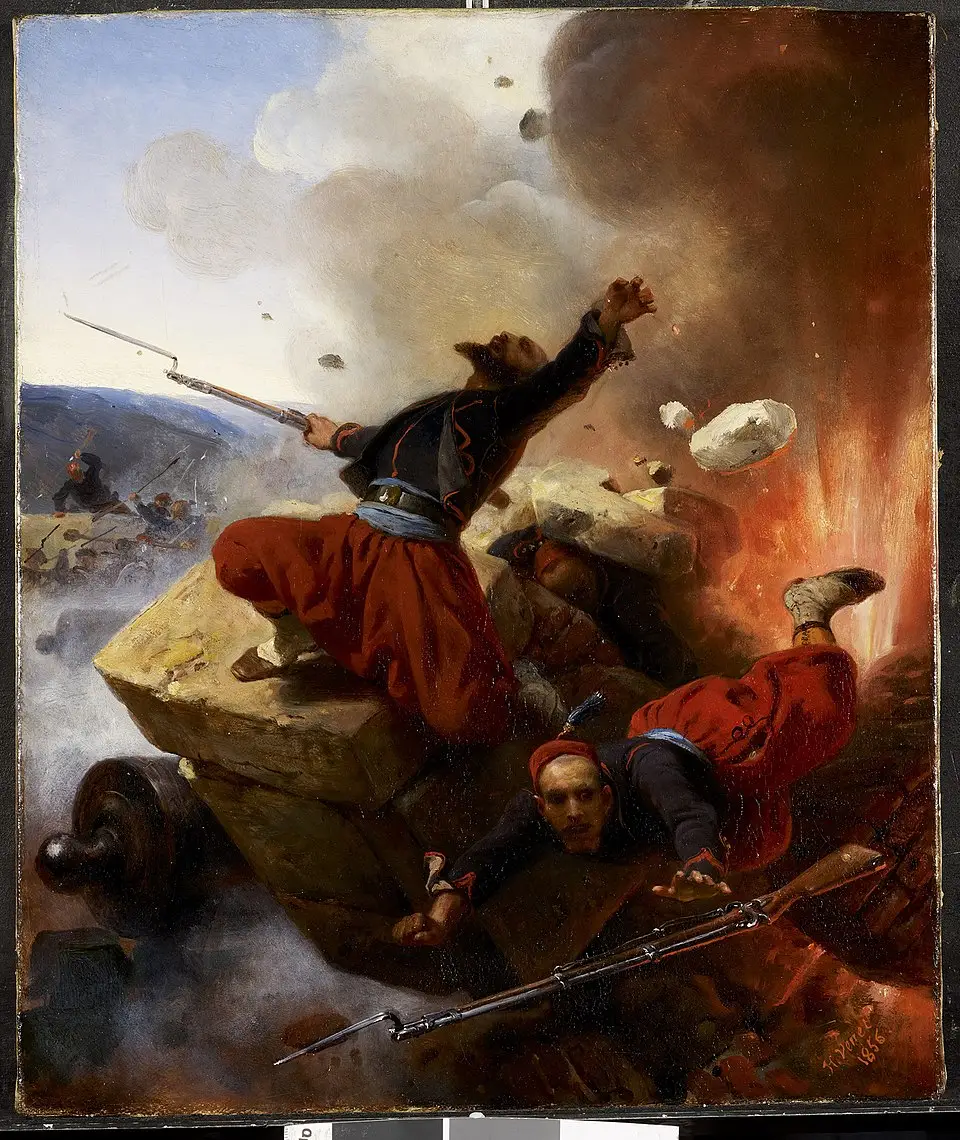 French artist Horace Vernet. Storming of Malakhov Kurgan by French Zouaves
Assault. 1st and 2nd bastions
The assault began with a mistake by the allies. Mayran's brigade on the far right flank attacked before the main forces, having begun moving at night. Mayran himself died at the beginning of the attack, so he could not tell about his decision.
Under cover of darkness, the French were able to approach the bastion ditch. The vanguard engaged in hand-to-hand combat with soldiers from the Suzdal and Yakut regiments. The Russians threw back the enemy in a bloody bayonet fight. Then the French column was literally shot at from the front and from the right flank by the steamship Vladimir of Captain Butakov and other ships. The French did not hold out for a quarter of an hour and retreated back to Kilen-balka, having lost hundreds of men killed and wounded.
Already at the agreed signal (three signal rockets), Brunet’s division went into the attack on Malakhov Kurgan, part of Otmar’s division attacked Gervais’ battery (located between Malakhov Kurgan and the 3rd bastion).
More than 13 thousand fighters took part in the offensive. Artillery officer Ershov, who was on the parapet of the 2nd bastion, recalled:
"Along the entire length of the enemy trenches in front of Malakhov Kurgan, a dense, blackened avalanche of the storming enemy was moving quickly. Officers with drawn sabres were running ahead. The impression was astonishing! It seemed as if the earth itself had given birth to all these stormy hordes, which in an instant densely covered the previously completely deserted space."
Russian soldiers fired point-blank from the bastions with grapeshot, bombs, cannonballs, and rifle fire:
“The enemy mass trembled, became agitated in one place, as if it boiled for a few moments and suddenly retreated, and our fire, especially rifle fire, increased to an incredible degree... I remember only the roar and crackle everywhere, waves of the enemy, several times running almost to the fortification ditch, smoke and dust to the right and left” (A. I. Ershov. Sevastopol Memories. St. Petersburg, 1858).
The French tried to break through the defensive wall that connected the 2nd bastion with Malakhov Kurgan. Here they were met by three battalions of the Suzdal, Selenginsk and Yakutsk regiments, hastily transferred to the dangerous place. The battalions of the last two regiments, the so-called "skirmisher battalions", especially distinguished themselves. The best shooters were gathered there, and some were armed with Belgian rifles.
Thus, the French fought with the best marksmen. A fierce battle ensued. The French fought desperately, but could not withstand the onslaught: "The cries of those caught in the wolf pits, the groans of the dying, the curses of the wounded, the cries and curses of the fighters, the deafening crack weapons “Everything mixed into one terrible, inexpressible roar.”
The French soldiers retreated to the Kamchatka redoubt, to their nearest trenches.
Mayran's brigade, having regrouped, tried to attack again. But again it was defeated and retreated. The French fought bravely, but were unable to break through the Russian defense.
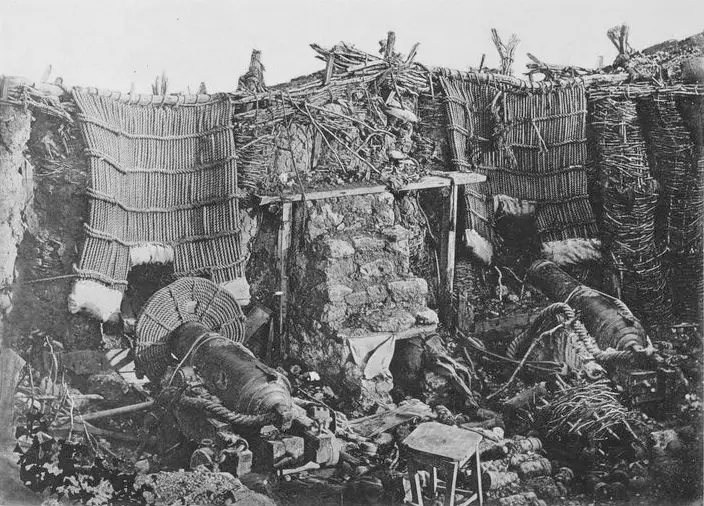
Russian battery on Malakhov Kurgan. Photo by James Robertson, 1855
Kornilov Bastion and the Gervais Battery
At the same time, the French tried to take the Kornilov Bastion, a key position near the Malakhov Kurgan, and the Zherve Battery (the battery was commanded by midshipman Pyotr Zherve, a hero of the city's defense), which allowed them to get behind the defenders of the Malakhov Kurgan and the 3rd Bastion.
General Yuferov, who commanded the Kornilov Bastion that day, met the French columns with terrible grapeshot fire, repelling two attacks. Then the French furiously attacked the Zherve battery, where the greatly depleted Poltava Regiment was defending itself. The French were shot at head-on, the Malakhov Kurgan batteries were firing from the right, and from the left – the 3rd bastion and Colonel Budishchev's strong battery, which had moved forward from this bastion.
However, the French light infantry (Zouaves), suffering terrible losses, captured the battery. Colonel Future was killed. Following the Zouaves, the line battalions arrived. Colonel Garnier further broke into the Korabelnaya Storona with his detachment, a suburb of Sevastopol separating the western slope of Malakhov Kurgan from the Southern Bay. Garnier asked General Otmar to send reinforcements, but the first messengers were killed. When the fourth reached the command, it was too late. The Russians had recaptured the position.
The situation was critical. If the French had thrown strong reinforcements into the breach, Sevastopol would have been threatened with, if not falling, then losing key positions.
General Stepan Khrulyov, who at that time commanded the 1st and 2nd defensive lines, rectified the situation. The soldiers who served under his command loved him. They trusted him. Having galloped up to the battery on a white horse and seeing that the troops defending it were retreating in complete disarray, Khrulyov shouted to them: “Guys, stop! The division is coming to the rescue.” The troops stopped. The remnants of the Poltava Regiment, led by Captain Horn, went into battle again.
Seeing the 5th company of Captain Ostrovsky of the Sevsky Regiment, which was returning from work on the 3rd line, Khrulyov flew up to it shouting: “My benefactors! Charge bayonets! Follow me! The division is coming to help!” The Sevsky men immediately rushed after their beloved commander. And these 138 people fulfilled the role of the division that Khrulyov had promised.
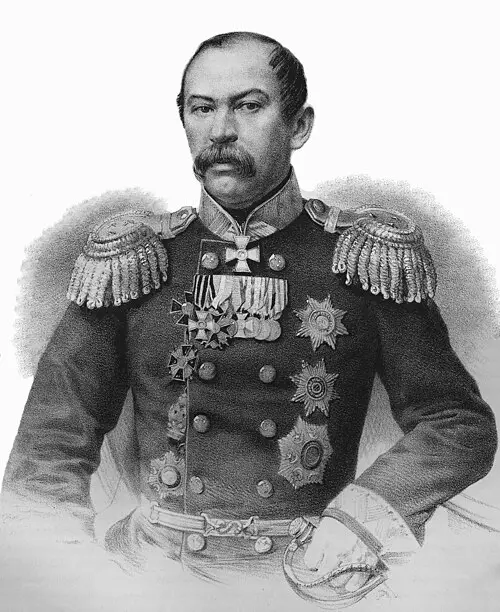
Hero of the Defense of Sevastopol, General Stepan Aleksandrovich Khrulyov (1807 - 1870). Source: Portrait Gallery of Russian Figures. St. Petersburg: typography and lit. A. Munster, 1864-1869. Volume I.
The battle was fierce. The French fought to the death. Every house and its ruins had to be taken by storm. Our soldiers climbed onto the roofs, took them apart, threw stones from above. They burst into doors and houses. They chopped and stabbed. Finally, they drove out the French, capturing about 100 people. The rest were killed, no one was able to escape from the forward position.
Then it was the turn of the Zherve battery. Six companies of the Yakut regiment came to the aid of the Sevsk and Poltava troops. The battery was recaptured. In a brutal hand-to-hand fight, most of the French were killed. Our troops also suffered serious losses in these skirmishes. Thus, in the 5th company of the Sevsk regiment, 133 out of 33 fighters remained.
Separate units of the French division of Otmar again tried to attack the battery of Gervais, but they were thrown back. Admiral Nakhimov also arrived here, who appeared, as usual, in the most dangerous places. For some time he led the defense of Malakhov Kurgan.
General Niol, who commanded the brigade, again led soldiers to storm the Kornilov Bastion and Malakhov Kurgan, but was driven back.
Meanwhile, the French commander-in-chief was informed that the commanders of the two columns, Mayran and Brunet, had been killed. Their troops had been driven back. When Pélissier was informed of the defeat of the English at the 3rd bastion, he ordered his troops to retreat to their positions.
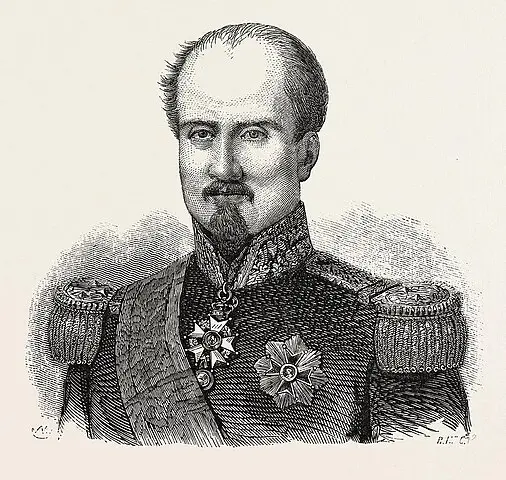
Jean-André Louis Brunet (February 3, 1803, Valençay – June 18, 1855, Crimea) – divisional general. Participant in the Crimean War. He died during the storming of Malakhov Kurgan.
Battle at the 3rd Bastion
Lord Raglan, who had previously quarreled with the arrogant Pelissier, waited at first and saw the defeat of the French divisions. The British moved in when the French were, in fact, already defeated.
The Commander-in-Chief frankly reported to the English Secretary of State, Lord Panmore:
"I was always wary of being bound to an obligation to attack at the same moment as the French, and I felt that I should have some hope of their success before I committed our troops to action; but when I saw what a powerful resistance they were met with, I judged that it was my duty to help them by beginning the attack myself."
That is, at first the British commander waited, hoping that the French would break through the Russian defense. Seeing that the French were beaten, he began the attack, so that later he would not be accused of disrupting the operation.
The English came out of the trenches and advanced in two columns on the 3rd Bastion. The Russians fired at them point-blank, the English suffered heavy losses, especially many of the officers killed. The brave General Campbell was killed at the very beginning of the attack. Now that the French attacks had been largely repelled, the 3rd Bastion could fully direct the fire of its powerful batteries on the English who had finally gathered to advance.
Unable to cross the ditch, the English retreated. At the same time, another column of Englishmen, advancing from the eastern side to the 3rd bastion, was thrown back to their original positions.
The secondary operation of the British (attack on the batteries located on Peresyp) was liquidated earlier by the batteries of the Okhotsk and Tomsk regiments. It did not come to hand-to-hand combat, the British fled halfway.
The English justified their defeat by the murderous fire of the Russian artillery. That the attack was poorly planned and even worse executed. It was expected that the Russians would already be broken and there would be no strong resistance. It turned out to be the opposite. The enemy was resilient and ready to attack. In some units, the English soldiers even refused to repeat the attacks.
One of the English staff officers noted:
"The French failure brought ours with it... We could see the French attack on Malakhov Kurgan - and we saw the ground thickly covered with corpses when the French retreated. Our losses were not even close to those of the French, who lost six thousand men, including two generals, but we also had a relatively large proportion of killed and wounded officers."
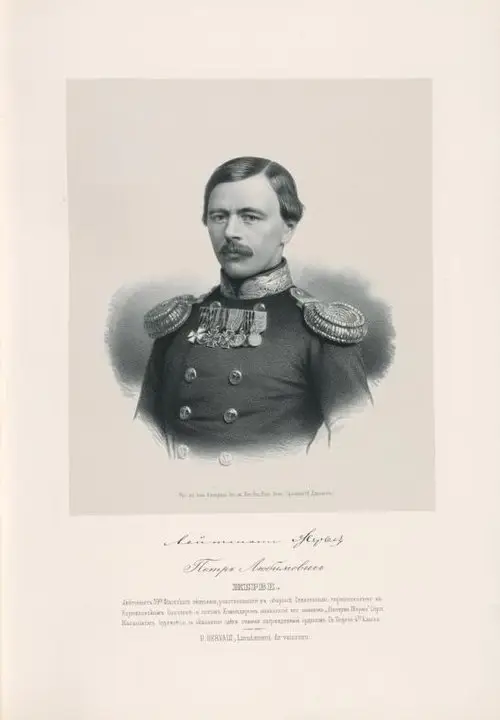
Lieutenant Pyotr Lyubimovich Zhervais (1829-1907). Hero of the Defense of Sevastopol. He rose to the rank of rear admiral. During all 11 months of the Sevastopol Defense, he commanded the battery named after him on the Kornilov Bastion. For his exploits during the repelling of assaults and his efficiency during bombardments, he was awarded the Order of St. Anne, 4th degree with the inscription "For Bravery", St. Anne, 3rd degree with swords, and St. Vladimir, 4th degree with swords. On July 2, 1855, he was promoted to lieutenant for distinction. On November 16, 1855, he received the Order of St. George, 4th degree, for bravery and efficiency. On July 10, 1855, Zhervais was wounded in the arm and shell-shocked in the head. As stated in Gervais’s record, “for the brilliant feat performed during the bombardment on October 5 and 6, 1854,” he received “the sincere and heartfelt gratitude of the Sovereign Emperor.”
Conclusion
As a result of the assault, the allies lost from 7 to 10 thousand people killed and wounded. The Russian side's losses during the shelling and assault amounted to 4800 people. At the same time, Russian losses on June 17 during the bombardment were greater than during the assault on the 18th.
The French blamed their British neighbours for the failure, as they were late in making their appearance. It is worth noting that the relations between the French and the English were not friendly. The historical enmity between the two great powers left its mark. In addition, the French despised the English for their traditional weakness on land.
Totleben believed that Pelissier had chosen the wrong direction for the main attack: “There is no doubt that if the French had chosen the 4th bastion, redoubt No. 1 (Schwartz) and the 5th bastion for the assault and had directed against them the same heavy fire as they had used against the Malakhov Kurgan, they would have completely disrupted the artillery defense of these fortifications... With the fall of the 4th and 5th bastions, further defense of Sevastopol... would have become absolutely impossible.”
The fact is that the French had to go to the 2nd bastion and Malakhov Kurgan about 200-300 fathoms (fathom is a Russian unit of length, 2,13 m) across open terrain under heavy Russian fire. From the left flank, the fire of the Russian batteries was supported by the steamships Vladimir, Khersones, Gromonosets, Krym, Odessa and Bessarabia. And at the 4th, 5th and 6th bastions, the allies had already dug trenches 30-50 fathoms deep.
The morale of the Russian army rose significantly. Already in battle, many were eager to counterattack. Thus, the Russians had just taken the Gervais battery from the French and rushed to pursue them further, right under the French batteries, ignoring the order to stop.
"The soldiers laughed in delight at the victory, showered them with puns, beat up those defending themselves, and chased those fleeing!.. About a hundred men rushed into the embrasures after the French and pursued them to the very trenches. This game was very dangerous. At any moment one could expect that the enemy would rely on its reserves and, with their help, immediately go on the offensive. Lieutenant Colonel Navashin ordered the signal to sound... Where are you going! They don't want to listen!.. They shout: "Beat the damned locusts to death! There is no point in retreating!" the soldiers shouted, intoxicated with success. The commanders barely forced the soldiers to retreat to their positions."
The Allies were demoralized for a time. The French and British blamed each other for the failures. Field Marshal Raglan, who was widely considered the main culprit for the failure, fell ill and died on June 28.
The Sardinian corps, having received news of the failure of the assault, fled in full force from the Black River to its camp. The Italians, who, like the Turks, were usually used as workers, did not want to fight, and did not understand at all why they were brought to Crimea.
In Vienna, after the Russian victory, the tone changed. They were no longer in a hurry to start a war against Russia. They were again waiting to see which way the wind would blow.
The French and British, who had previously thought the Crimean campaign a cakewalk, now treated the Russian soldiers and engineers with great respect. The French commanders, in particular, admired Totleben.
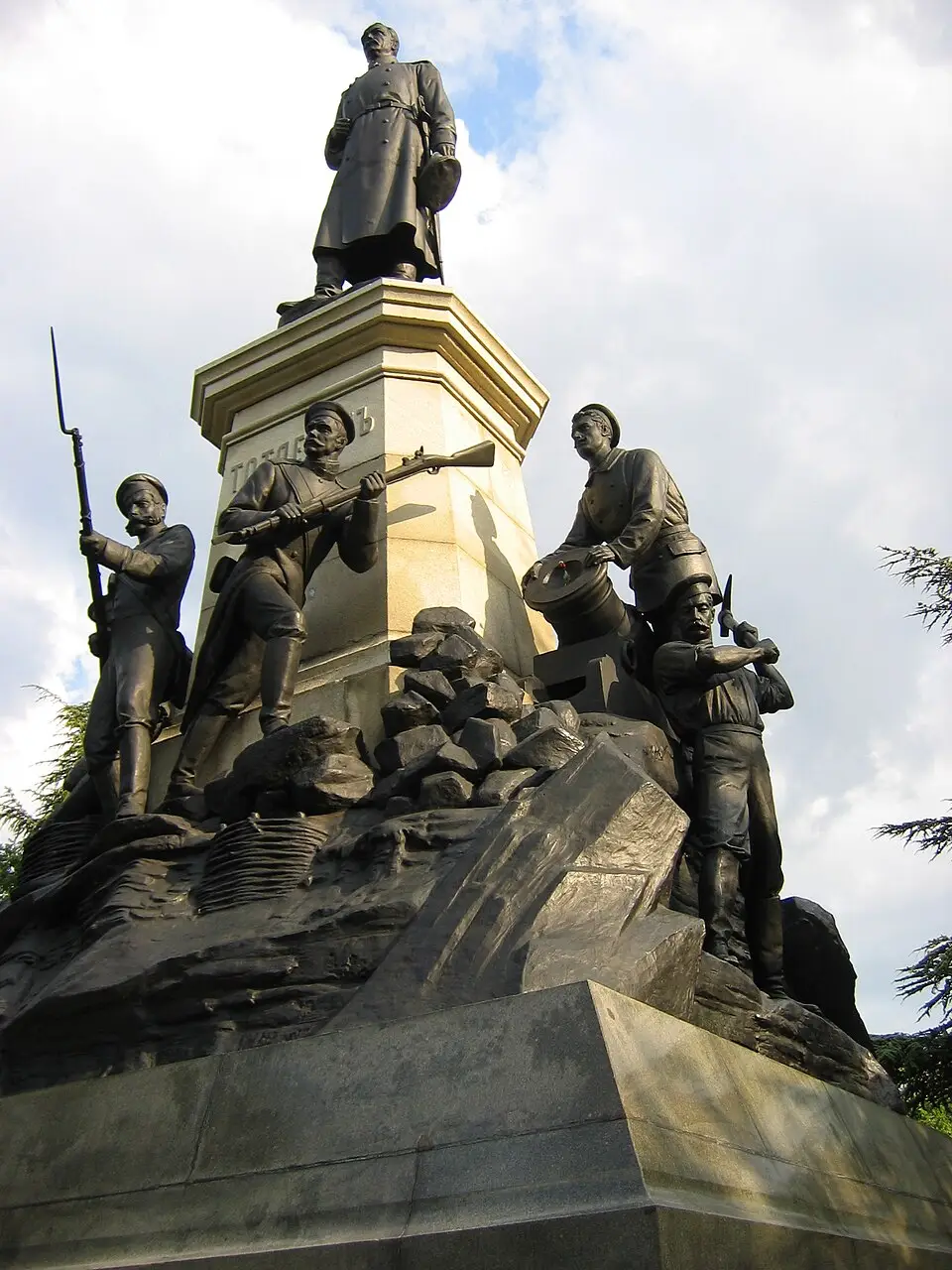
Monument to General E. I. Totleben on the Historical Boulevard in Sevastopol. Created in 1903, opened on August 5 (18), 1909, restored due to damage during the Great Patriotic War in 1945. Authors of the monument: amateur artist, General Alexander Bilderling and sculptor Ivan Schroeder.
Information