Zamvolta’s second life: will hypersonic missiles save the most problematic US Navy ship
Three drops in the sea
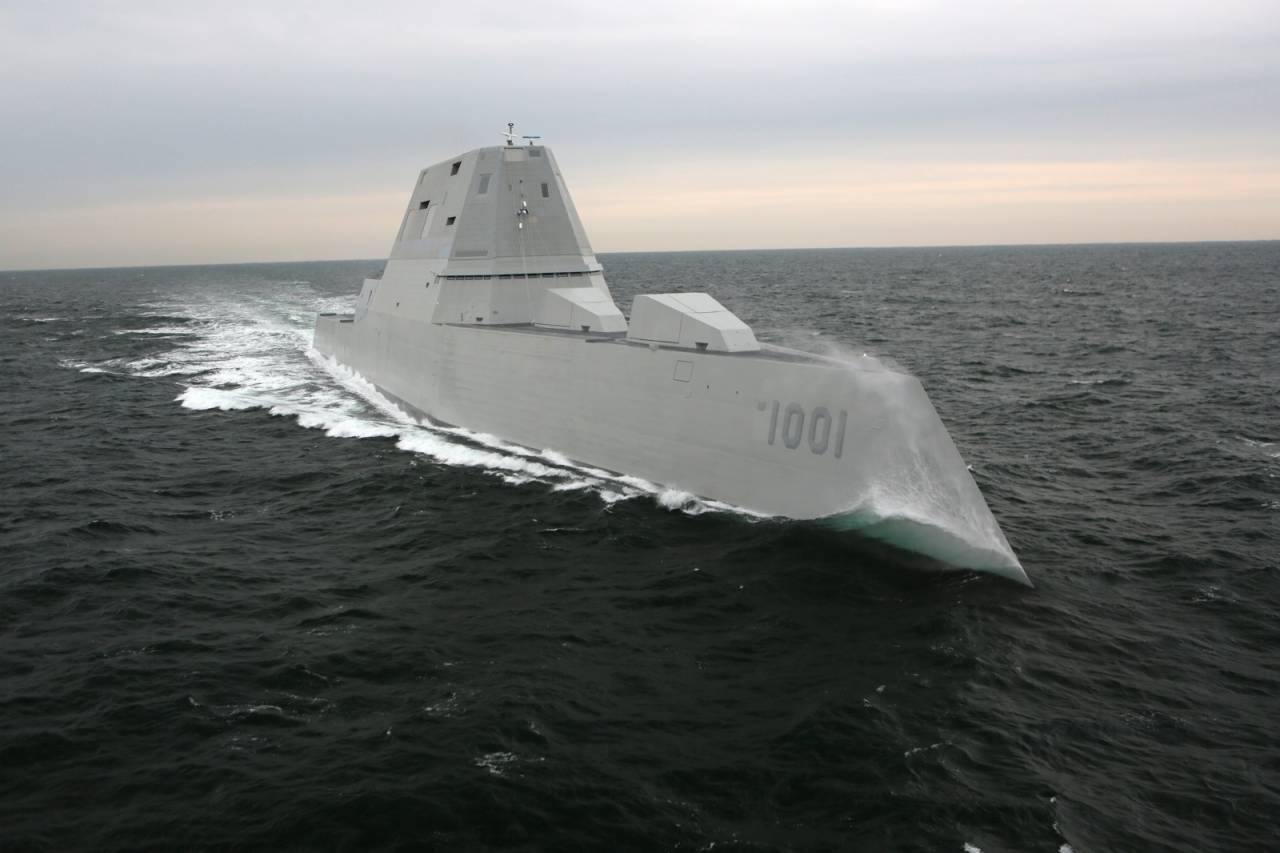
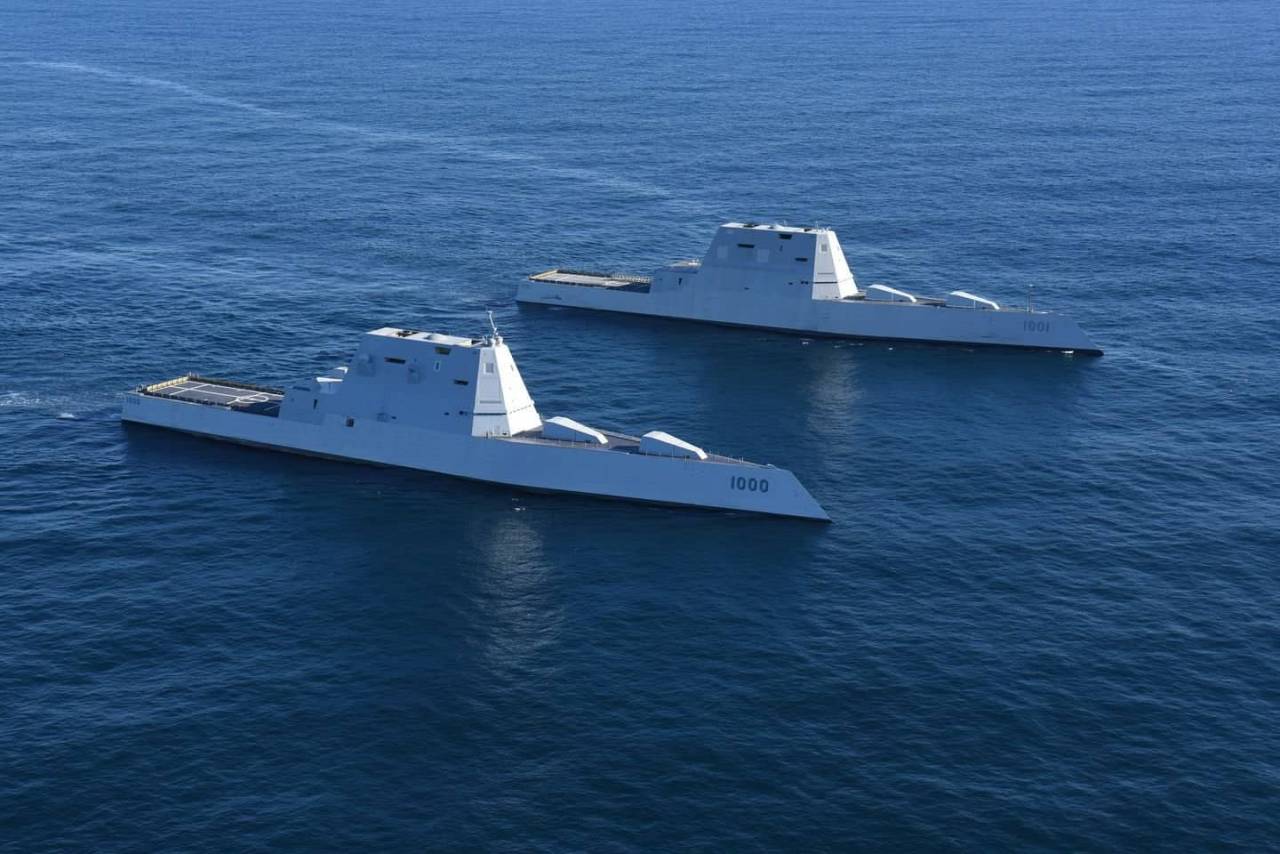
At one time, the destroyer Zumwalt could become one of the most revolutionary ships in stories. All thanks to its stealth and a set of advanced weapons systems. However, instead of the revolution, the Americans received a large pile of problems and very dubious prospects for the real manifestation of the capabilities of the destroyer. Ultimately, instead of 32 ships originally planned for construction, they were limited to three: USS Zumwalt (DDG-1000), USS Michael Monsoor (DDG-1001) and USS Lyndon B. Johnson (DDG-1002). It is difficult to name such a step as saving: experts estimated the cost of building three ships at more than twelve billion dollars with a total program price of over 22 billion.
It is noteworthy that the United States did not receive the ship they wanted to receive. There is almost no doubt that finding Zumwalt is much more difficult than, for example, an Arly Burke type destroyer, but the armament of the current destroyer is a pale shadow of what was planned earlier. Recall that at one time the Navy abandoned the idea of equipping the ship with a revolutionary railgun - an electromagnetic mass accelerator that accelerates a conductive projectile along two metal guides using the Lorentz force. It turned out to be technically difficult, expensive and energy intensive. Then the Americans abandoned yet another idea - to use a LRLAP guided long-range projectile for a 155 mm gun. As it turned out, the price of one shell is comparable to the cost of a cruise missile and amounts to about 800 thousand US dollars. “We were going to buy thousands of these shells, but the number of ships simply killed an affordable shell,” Gazeta.Ru quoted the representative of the US Navy as saying.
In addition, instead of the originally envisioned powerful 57-millimeter artillery systems, a modest 30-millimeter Mark 46 MOD 2 Gun Weapon System (GWS) based on Bushmaster II was mounted on the ship. Not so long ago, Zumwalt first performed firing from these artillery mounts: not a big achievement for a program with such a cost.
Zumwalt as a Supplement
It is not surprising that the role of the destroyer has been repeatedly reviewed and adjusted. In 2018, they wanted to make him a “killer” of the ships of a potential enemy (it is not entirely clear why this is necessary if the US Navy has many aircraft carriers). Now, it seems, the role of Zumwalt has again decided to reconsider. In the House of Representatives, they want to see the destroyer as the carrier of hypersonic weapons. According to US Naval Institute News, the defense budget of the House of Representatives for 2021 will contain a provision requiring the U.S. Navy to begin integration of the Prompt Global Strike (PGS) complex into the armament of destroyers by 2021.
Earlier, USNI News reported that the carrier of the Hypersonic Common Hypersonic Glide Body (C-HGB) unit, created as part of the Conventional Prompt Strike, chose a Virginia-type multipurpose nuclear submarine. According to the plan, the US Navy wants to get a two-stage missile with a diameter of 87 centimeters. It acts as the carrier for the C-HGB hypersonic glider, developed by Dynetics Technical Solutions. The project is based on the experimental hypersonic warhead Advanced Hypersonic Weapon (AHW), which, according to unofficial data, has a range of up to 6000 kilometers. It is known that during tests conducted in 2011 and 2012, the warhead reached a speed of 8 Machs.
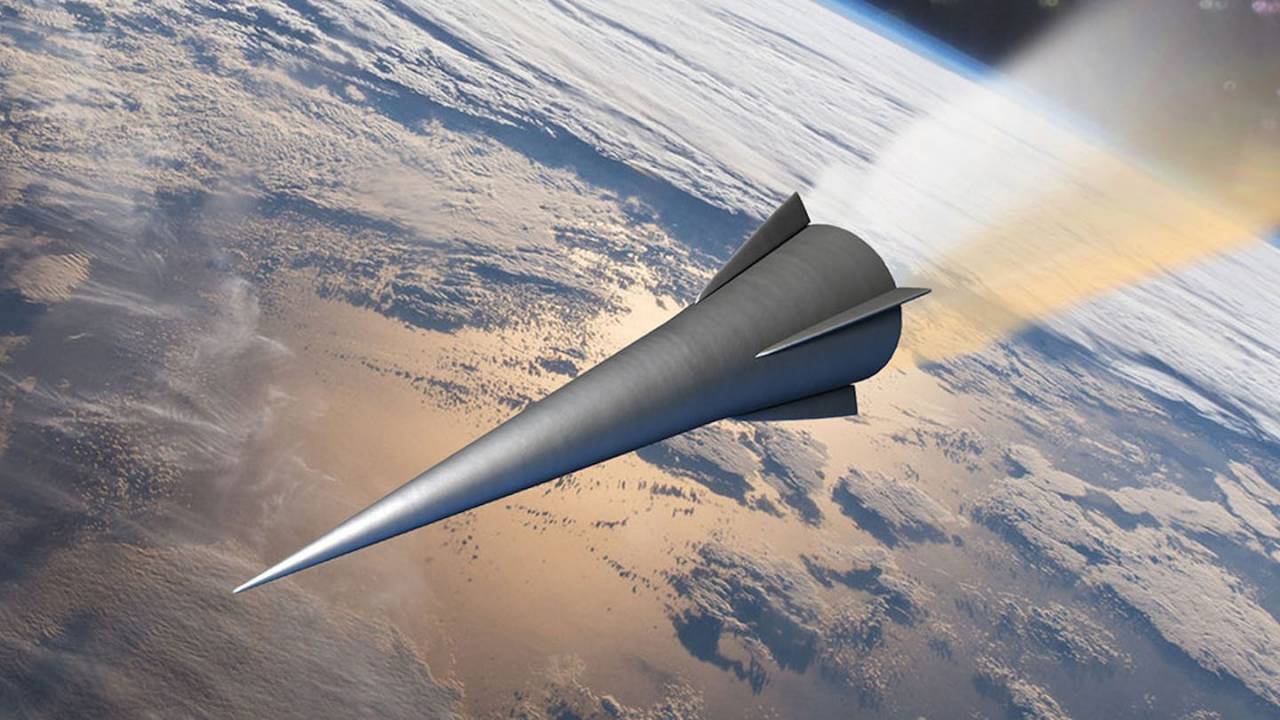
Not all boats want to arm the new hypersonic complex, but specifically the new Virginia Block V, equipped with additional Virginia Payload Module payload compartments - modules with 28 vertical launchers.
It is not entirely clear how exactly to enter into these Napoleonic plans a warship that is problematic and not yet ready for full operation. It is not clear how to add new missiles to Zumwalt. Popular Mechanics, in Congress Wants To Load Up Zumwalt-Class Destroyers With Hypersonic Weapons, believes the CPS is too complex to fit in Zumwalt vertical installations.
Recall that the main armament of the ship is twenty universal Mk-57 launchers with a total capacity of 80 missiles. Theoretically, the fleet could go for the dismantling of two AGS front guns, which became de facto unnecessary due to the refusal to purchase shells, and adding in their place blocks with missiles equipped with hypersonic missiles. However, this step may entail a decrease in stealth indicators: the Zumwalt profile is not an accident, but the result of the careful and painstaking work of many scientists. Changing it can lead to negative consequences for the stealth of the ship.
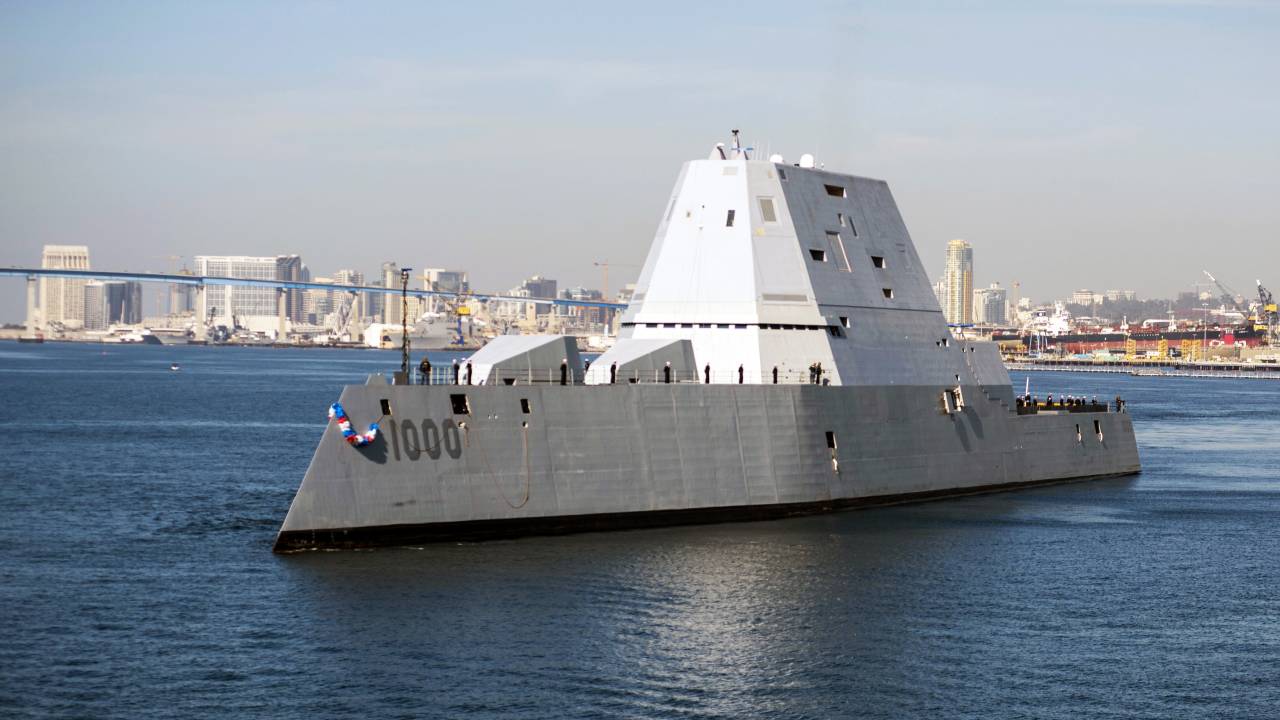
Other questions will come up. If the new hypersonic missile of the Navy does not have any anti-ship capabilities (which is very likely), the project will force once again to change the concept of Zumwalt. That is, the ship will again become a tool for hitting targets on the coast instead of the previously proposed anti-ship role. Already, American experts believe that such a "ping pong" will only further delay the full start of operation fleet three destroyers. Despite the fact that the first of them should be ready for service now.
In theory, Zumwalt, having stealth (provided that these characteristics are preserved), will be able to approach the enemy at a minimum distance and launch hypersonic missiles. However, modernized submarines like Virginia can do the same. Fortunately for the United States, they belong to the last - fourth generation of nuclear submarines. Which, among other things, boasts a minimum noise level and, as a result, the difficulty of detection.
With all this, one should not forget that there are only three Zumwalt type destroyers, and the modifications needed to add missiles developed as part of the Conventional Prompt Strike can be very expensive.
Residual phenomenon
The plans voiced now are not so much a desire to unleash the potential of Zumwalt, but to make maximum use of the capabilities of new hypersonic missiles. The irony is that there is no such weapon in the arsenal of Americans yet: if everything goes as they plan, then the new systems will replenish the arsenal of the Navy around the mid-2020s. By that time, the very concept of using hypersonic weapons may change.

Much, of course, depends on how successful (or unsuccessful) the trials will be. In general, the situation with Zumwalt is similar to that which we can see in the Russian fleet. Recall that many large surface ships and nuclear submarines, including the heavy nuclear missile cruisers Peter the Great and Admiral Nakhimov, wanted to equip the new Zircon hypersonic missile. “If everything goes as it is now, it will have (Admiral Nakhimov’s. - Auth.), Probably the most powerful weapon we have,” said Alexey Rakhmanov, head of the United Shipbuilding Corporation in 2019. Just so far, none of the mere mortals have seen any Zircons, and even heavy cruisers are not eternal.
Information